

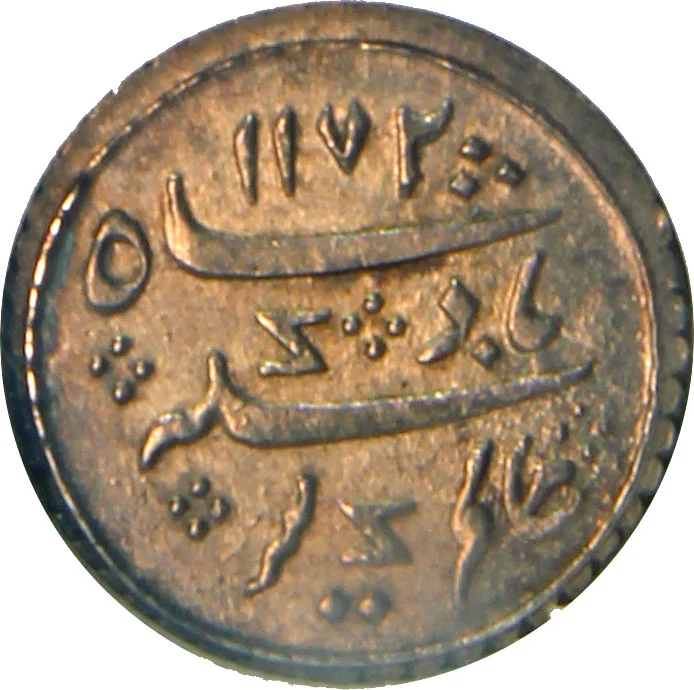
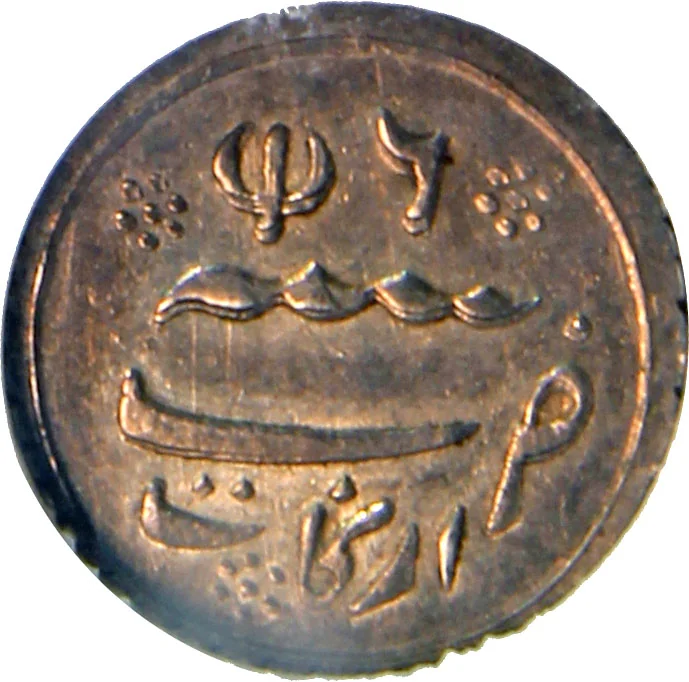
⅛ Rupee – Madras Presidency
India
Context
Year: 1813
Islamic (Hijri) Year: 1172
Country: India 
Issuer: Madras Presidency
Currency:
(1691—1835)
Demonetized: Yes
Material
References
KM: #Click to copy to clipboard408
Numista: #22931
Value
Bullion value: $4.13
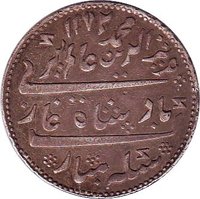
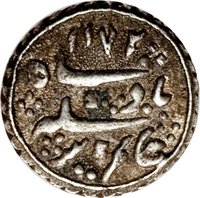
Obverse
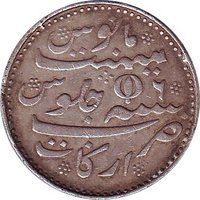
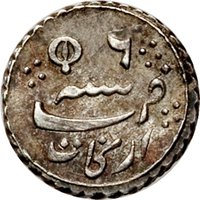
Reverse
Description:
Persian legend in beaded circle.
Inscription:
٦
سنه
ضرب
ارڬات
سنه
ضرب
ارڬات
Translation:
Year six
Struck
Arghat
Struck
Arghat
Language: Arabic
Edge
Oblique milling (grained right ///)
Mintings
| Year | Mint Mark | Mintage | Quality | Collection |
|---|---|---|---|---|
| 1813 | — | — |
Historical background
In 1813, the currency situation in the Madras Presidency was a complex and problematic system defined by chronic instability and multiple circulating media. The primary unit was the silver Star Pagoda, but the most ubiquitous coin in daily use was the gold pagoda, a variable coin whose value in relation to silver was officially set but constantly fluctuated in the bazaars. Alongside these, a plethora of silver and copper coins of various origins—including Arcot rupees, Mughal rupees, and fanams—circulated, each with its own fluctuating exchange rate. This multiplicity created a chaotic environment for commerce and revenue collection, as the Presidency's accounts were kept in pagodas while a significant portion of land revenue was collected in rupees.
The root of the instability lay in the tri-metallic system (gold, silver, and copper) without a fixed legal ratio, making the Presidency vulnerable to arbitrage and speculative attacks. Merchants would export the coin that was officially undervalued and import the overvalued one, draining the government's treasuries of particular species and causing acute shortages. Furthermore, the East India Company's own financial demands, including remittances to Bengal and payments for its military and administrative apparatus, were often complicated by this disorder, requiring constant and often contentious adjustments to the Company's Rate of exchange.
By 1813, the system was widely recognized as untenable. The chaos hampered both internal trade and the Presidency's financial integration with the wider British imperial economy. The situation catalyzed a move toward reform, which would culminate a few years later (in 1818) with the Coinage Act of Lord Hastings. This act demonetized the gold pagoda and established the Silver Rupee as the sole standard of value and unit of account, finally imposing a uniform and stable currency system on the Madras Presidency. Thus, 1813 represents the final years of a failing monetary order on the brink of decisive, colonial-driven standardization.
The root of the instability lay in the tri-metallic system (gold, silver, and copper) without a fixed legal ratio, making the Presidency vulnerable to arbitrage and speculative attacks. Merchants would export the coin that was officially undervalued and import the overvalued one, draining the government's treasuries of particular species and causing acute shortages. Furthermore, the East India Company's own financial demands, including remittances to Bengal and payments for its military and administrative apparatus, were often complicated by this disorder, requiring constant and often contentious adjustments to the Company's Rate of exchange.
By 1813, the system was widely recognized as untenable. The chaos hampered both internal trade and the Presidency's financial integration with the wider British imperial economy. The situation catalyzed a move toward reform, which would culminate a few years later (in 1818) with the Coinage Act of Lord Hastings. This act demonetized the gold pagoda and established the Silver Rupee as the sole standard of value and unit of account, finally imposing a uniform and stable currency system on the Madras Presidency. Thus, 1813 represents the final years of a failing monetary order on the brink of decisive, colonial-driven standardization.
💎 Extremely Rare