

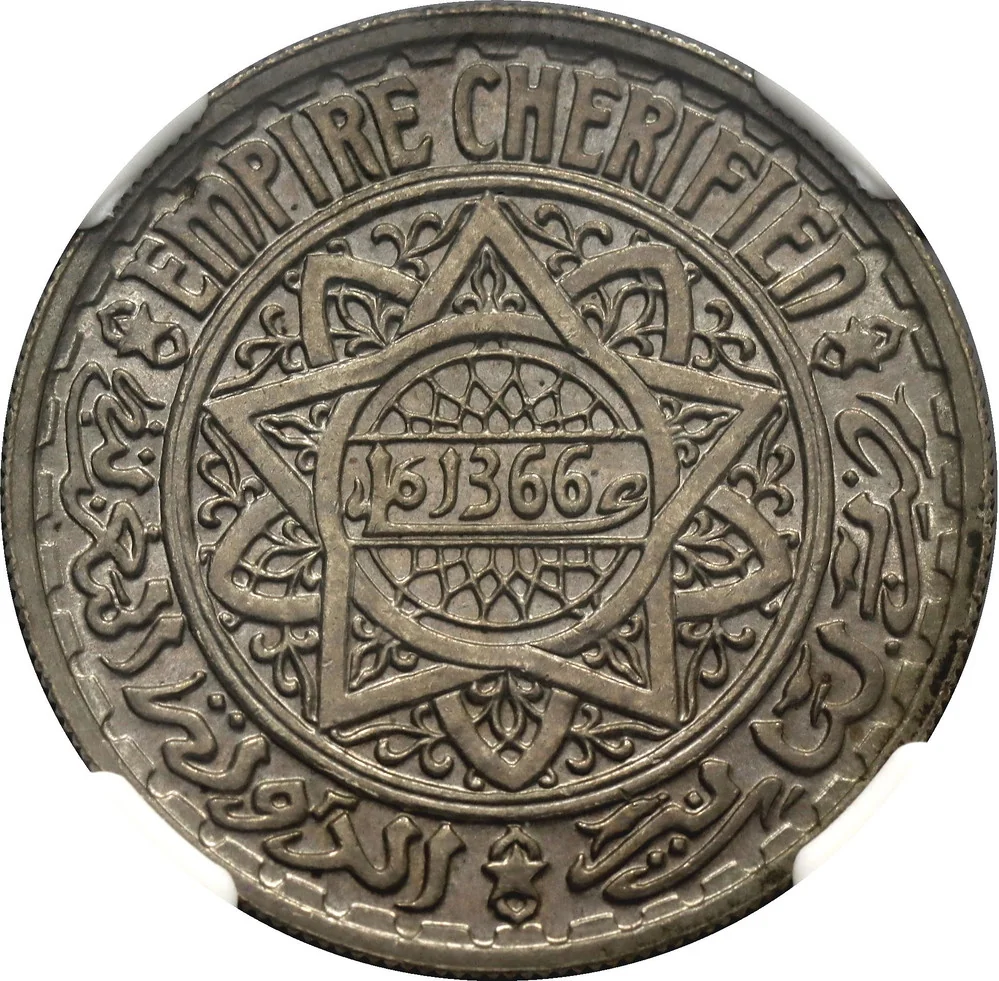
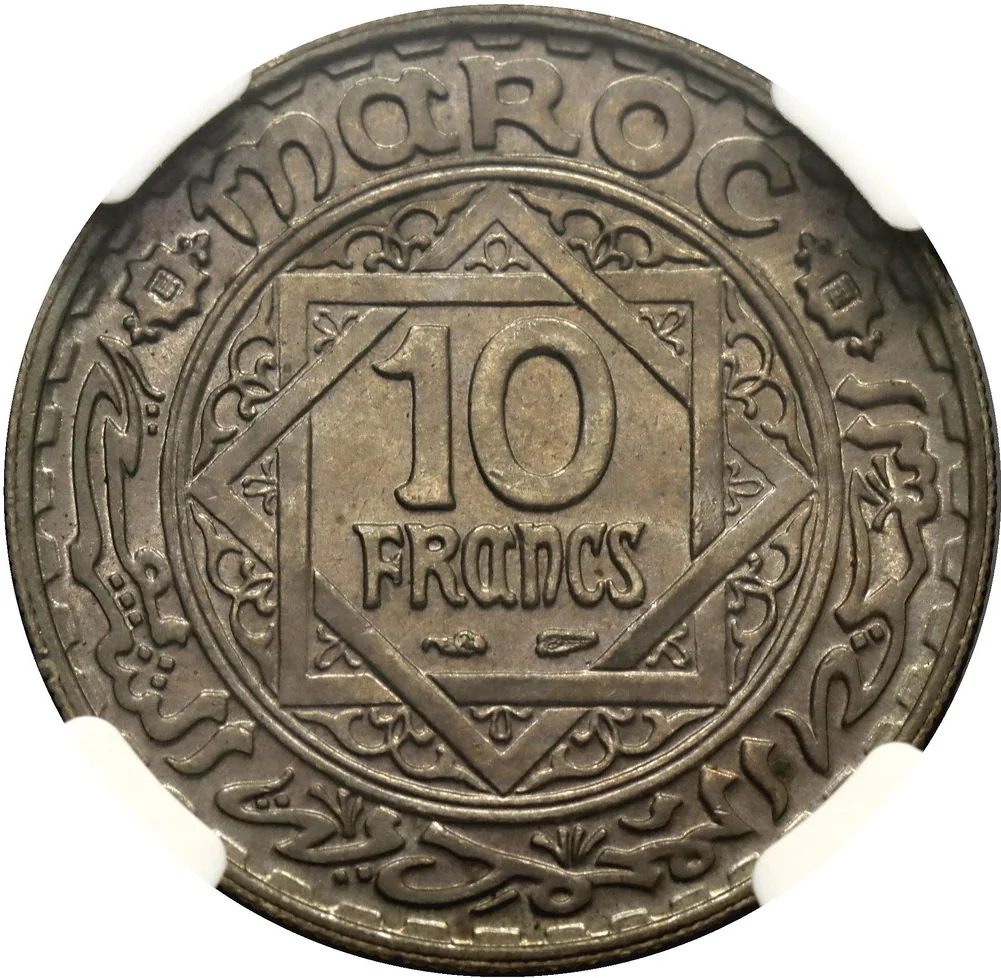
10 francs – Morocco
Add to wishlist
Morocco
Context
Year: 1947
Islamic (Hijri) Year:: 1366
Issuer: Morocco
Ruler: Mohammed V
Currency:
(1910—1959)
Demonetized: Yes
Total mintage: 20,000,000
Material
Diameter: 26 mm
Weight: 7.1 g
Thickness: 1.7 mm
Shape: Round
Composition: Copper-nickel
Technique: Milled
Alignment: Coin alignment
flip
References
Y: #
Numista: #2289
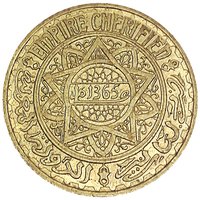
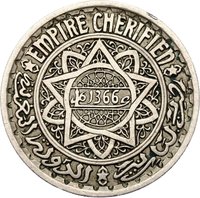
Obverse
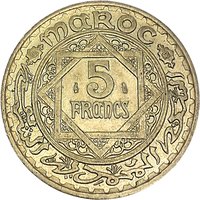
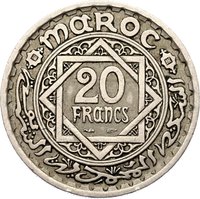
Reverse
Edge
Reeded
Mints
| Name | Mark |
|---|---|
| Monnaie de Paris | — |
Mintings
| Year | Mint Mark | Mintage | Quality | Collection |
|---|---|---|---|---|
| 1947 | — | 20,000,000 |
Historical background
In 1947, Morocco's currency situation was a direct reflection of its complex political status as a protectorate jointly administered by France and Spain. The country operated under a bimetallic currency system, where the official Moroccan franc (introduced in 1921) was pegged at par to the French franc and served as the primary currency in the French zone. Meanwhile, the Spanish peseta circulated in the northern Spanish protectorate zone and the southern enclave of Tarfaya. This monetary division underscored the fragmented sovereignty of the nation, with the Alawite sultan's authority nominally acknowledged but economic policy largely dictated by the respective European powers.
Economically, the post-World War II period brought significant inflationary pressures to Morocco, as it did globally. The fixed peg to the French franc, which itself was experiencing devaluation and instability, imported these financial troubles into the Moroccan economy. This inflation eroded purchasing power and created social strain, particularly in urban areas. Furthermore, the circulation of two distinct currencies hampered domestic trade and integration between the zones, creating an artificial economic barrier within the territory.
The year 1947 is also notable for Sultan Mohammed V's pivotal speech in Tangier, where he openly called for national independence and unity. While not solely focused on finance, this political awakening implicitly challenged the fragmented economic control symbolized by the dual-currency system. The monetary arrangement was increasingly viewed by a growing nationalist movement as an instrument of colonial control, laying groundwork for future calls for a unified, sovereign Moroccan currency, which would eventually be realized a decade after independence with the introduction of the dirham in 1960.
Economically, the post-World War II period brought significant inflationary pressures to Morocco, as it did globally. The fixed peg to the French franc, which itself was experiencing devaluation and instability, imported these financial troubles into the Moroccan economy. This inflation eroded purchasing power and created social strain, particularly in urban areas. Furthermore, the circulation of two distinct currencies hampered domestic trade and integration between the zones, creating an artificial economic barrier within the territory.
The year 1947 is also notable for Sultan Mohammed V's pivotal speech in Tangier, where he openly called for national independence and unity. While not solely focused on finance, this political awakening implicitly challenged the fragmented economic control symbolized by the dual-currency system. The monetary arrangement was increasingly viewed by a growing nationalist movement as an instrument of colonial control, laying groundwork for future calls for a unified, sovereign Moroccan currency, which would eventually be realized a decade after independence with the introduction of the dirham in 1960.
🌱 Very Common