

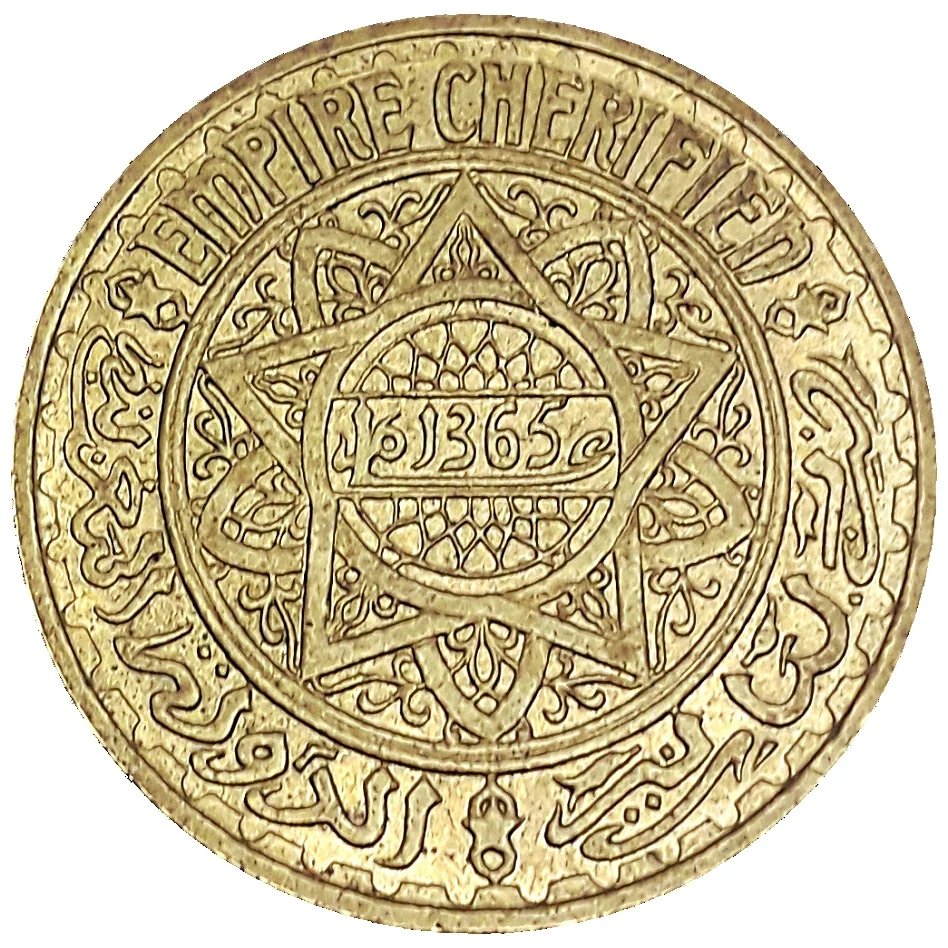
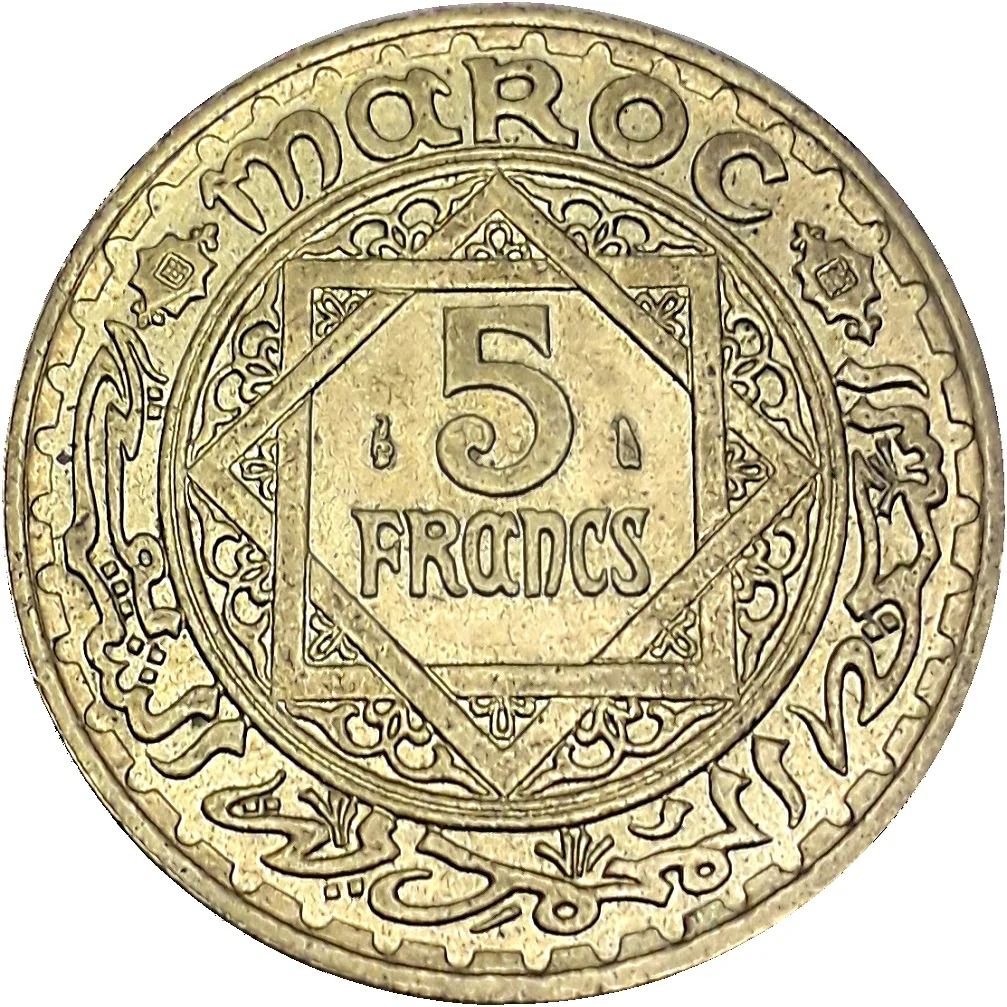
5 francs – Morocco
Add to wishlist
Morocco
Context
Year: 1946
Islamic (Hijri) Year:: 1365
Issuer: Morocco
Ruler: Mohammed V
Currency:
(1910—1959)
Demonetized: Yes
Total mintage: 20,000,000
Material
Diameter: 31 mm
Weight: 12 g
Thickness: 2.2 mm
Shape: Round
Composition: Aluminium bronze
Magnetic: No
Technique: Milled
Alignment: Coin alignment
flip
References
Y: #
Numista: #1706
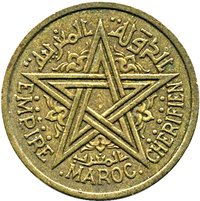
Obverse
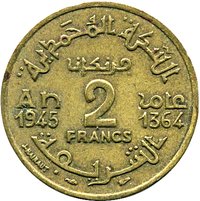
Reverse
Edge
Plain
Mints
| Name | Mark |
|---|---|
| Monnaie de Paris | — |
Mintings
| Year | Mint Mark | Mintage | Quality | Collection |
|---|---|---|---|---|
| 1946 | — | 20,000,000 |
Historical background
In 1946, Morocco's currency situation was a direct reflection of its complex political status as a protectorate divided between French and Spanish zones, with the international city of Tangier operating under a separate administration. The French franc, issued by Bank Al-Maghrib (a state-controlled bank established under French authority), was the official currency in the larger French zone. The Spanish peseta circulated in the northern Spanish zone and the southern enclave of Sidi Ifni, while the Tangier franc (pegged to the French franc but a distinct issue) was used in Tangier. This monetary fragmentation complicated trade and movement within the country itself.
Economically, the post-World War II period brought significant inflationary pressures to Morocco, as it did globally. The fixed exchange rate between the Moroccan franc and the French franc tied Morocco's economy directly to France's, which was itself struggling with reconstruction and devaluation concerns. This linkage meant that inflation in France was imported into the protectorate, eroding purchasing power and creating economic hardship. Furthermore, a thriving black market for foreign currencies, particularly US dollars and British pounds, existed alongside the official system, responding to trade demands and a lack of confidence in the franc zone.
This fragmented and inflationary monetary landscape underscored the broader colonial economic structure, where currency policy was designed to bind Morocco to its protecting powers and facilitate the export of raw materials. There was no independent Moroccan monetary authority; decisions were made to serve French and Spanish interests. Consequently, the currency situation of 1946 was a point of growing tension, highlighting economic dependence and fueling nationalist sentiments that would intensify in the following decade in the push for political and economic sovereignty.
Economically, the post-World War II period brought significant inflationary pressures to Morocco, as it did globally. The fixed exchange rate between the Moroccan franc and the French franc tied Morocco's economy directly to France's, which was itself struggling with reconstruction and devaluation concerns. This linkage meant that inflation in France was imported into the protectorate, eroding purchasing power and creating economic hardship. Furthermore, a thriving black market for foreign currencies, particularly US dollars and British pounds, existed alongside the official system, responding to trade demands and a lack of confidence in the franc zone.
This fragmented and inflationary monetary landscape underscored the broader colonial economic structure, where currency policy was designed to bind Morocco to its protecting powers and facilitate the export of raw materials. There was no independent Moroccan monetary authority; decisions were made to serve French and Spanish interests. Consequently, the currency situation of 1946 was a point of growing tension, highlighting economic dependence and fueling nationalist sentiments that would intensify in the following decade in the push for political and economic sovereignty.
🌱 Very Common