

100 Dinars – Yugoslavia
Non-circulating coins
Commemoration: 1984 Winter Olympics Figure Skating
Context
Year: 1983
Issuer: Yugoslavia
Period:
(1963—1992)
Currency:
(1966—1989)
Demonetized: Yes
Total mintage: 110,000
Material
References
KM: #Click to copy to clipboard98
Numista: #22868
Value
Exchange value: 100 YUD
Bullion value: $34.18
Obverse
Description:
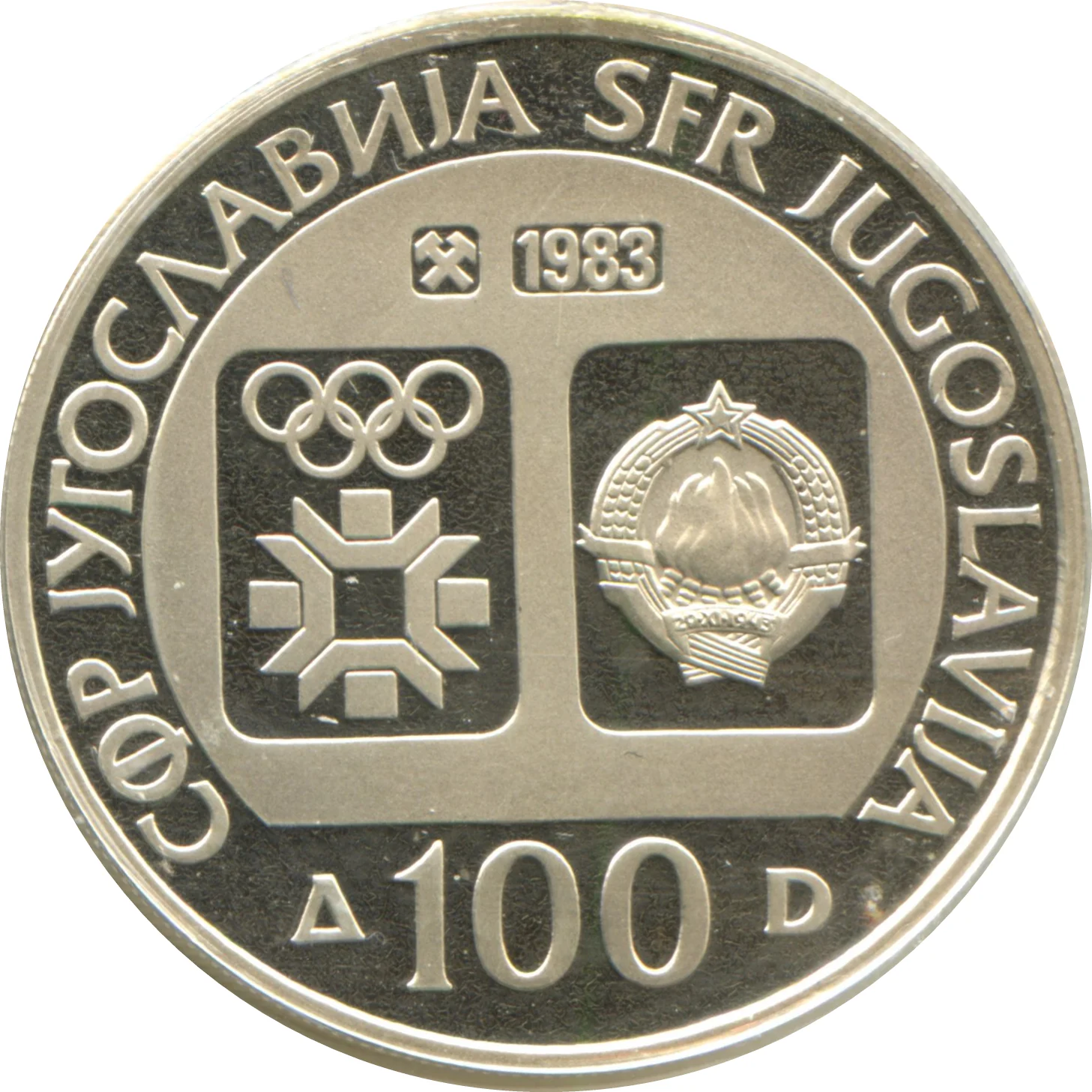
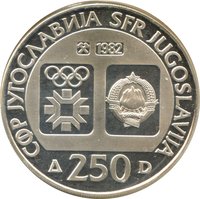
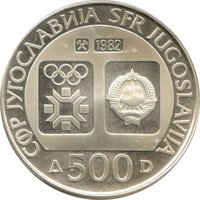
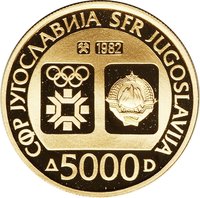
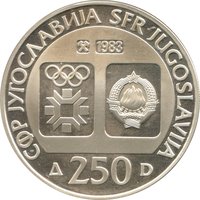
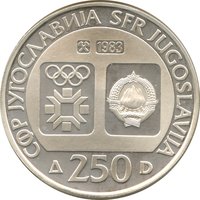
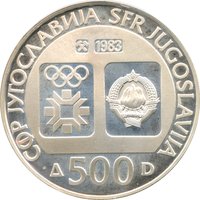
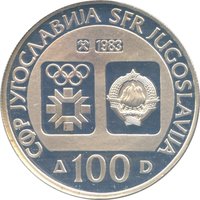
Olympic logo above Sarajevo 1984 logo and SFRY coat of arms in side shields, within a flat-bottomed circle. Denomination below.
Inscription:
СФР ЈУГОСЛАВИЈА SFR JUGOSLAVIJA
1983
29·XI·1943
Д 100 D
1983
29·XI·1943
Д 100 D
Translation:
Socialist Federal Republic Yugoslavia
1983
29 November 1943
100 Dinars
1983
29 November 1943
100 Dinars
Engraver: Zlatara Majdanpek
Reverse
Description:
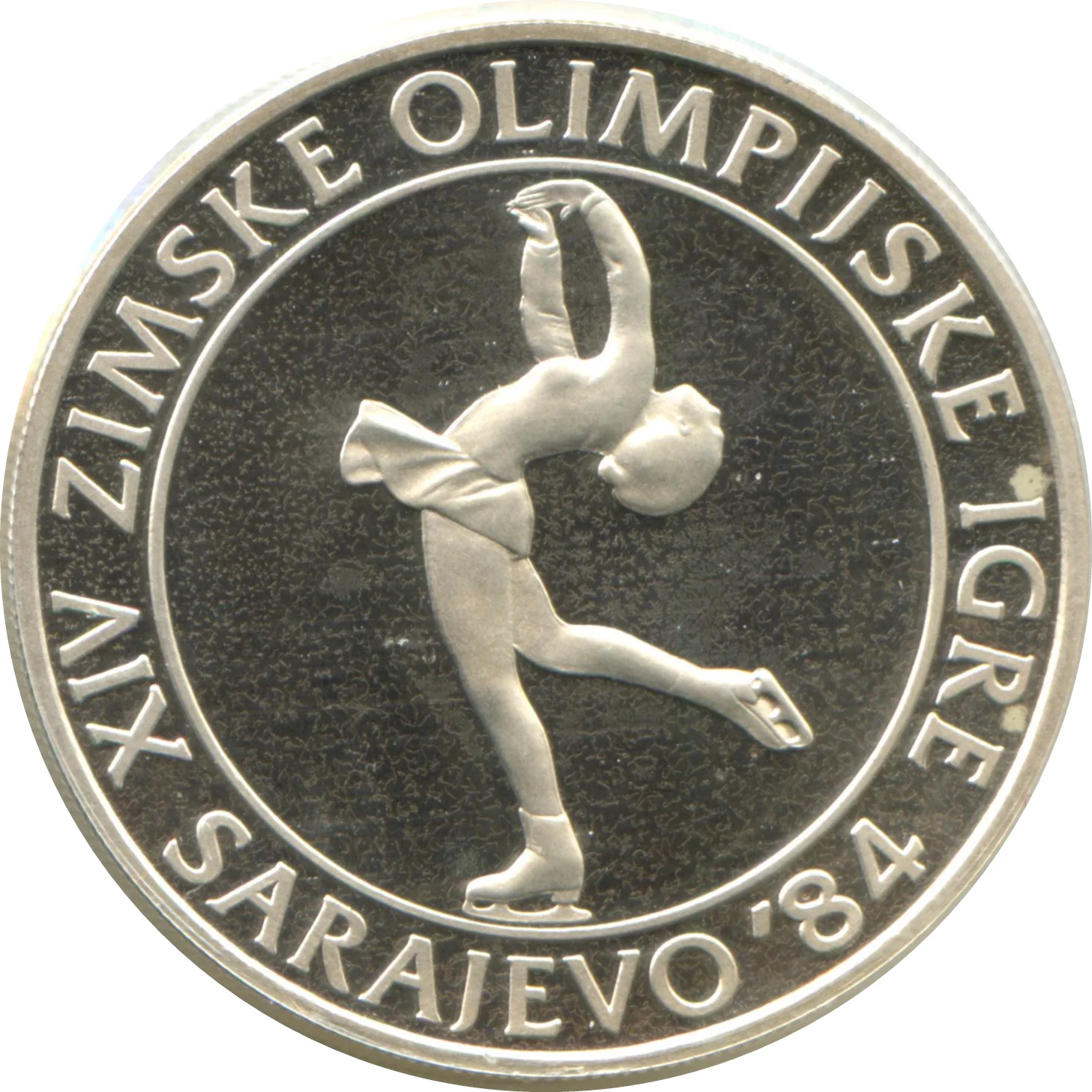
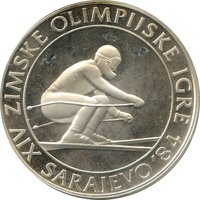
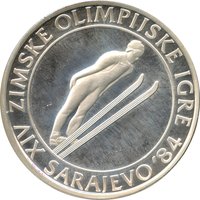
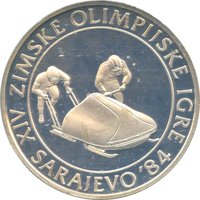
Ice skater
Inscription:
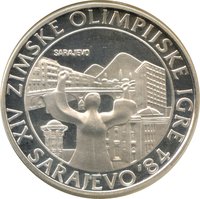
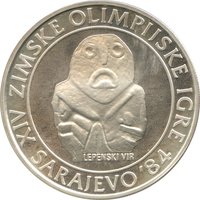
XIV ZIMSKE OLIMPIJSKE IGRE
SARAJEVO '84
SARAJEVO '84
Translation:
XIV Winter Olympic Games
Sarajevo '84
Sarajevo '84
Script: Latin
Language: Serbo-Croatian
Engraver: Zlatara Majdanpek
Edge
Reeded
Categories
| Sport> Winter Olympic Games |
| Symbols> Coat of Arms |
Mintings
| Year | Mint Mark | Mintage | Quality | Collection |
|---|---|---|---|---|
| 1983 | — | 110,000 | Proof |
Historical background
In 1983, the Socialist Federal Republic of Yugoslavia was in the grip of a severe and worsening economic crisis, with its currency, the Yugoslav dinar, at the center of the turmoil. The nation was burdened by massive foreign debt exceeding $20 billion, high inflation, and chronic trade deficits. While the official exchange rate was artificially pegged by the government, a vast and thriving black market for hard currencies like the US dollar and Deutsche Mark had become the real benchmark for economic activity. This parallel economy reflected a profound loss of confidence in the dinar, as citizens and businesses alike sought to preserve value outside the crumbling official financial system.
The root causes were deeply structural. Yugoslavia’s unique model of "self-managing socialism" involved complex monetary financing of inefficient state enterprises and republic-level banks, leading to excessive money creation. Furthermore, the decentralized political structure allowed the six constituent republics and two autonomous provinces to borrow independently abroad, creating an uncontrollable aggregate debt. By 1983, the International Monetary Fund (IMF) had stepped in with a stringent stabilization program, demanding devaluation, austerity, and market reforms in exchange for debt rescheduling. This imposed a harsh squeeze on living standards, causing widespread social discontent.
Consequently, the currency situation was one of duality and distortion. The government maintained strict foreign exchange controls and an overvalued official dinar to service its debt, but this only stifled legitimate exports and encouraged capital flight. Meanwhile, the black market rate told the true story of hyperinflation in its early stages, eroding savings and wages. This monetary dysfunction was a critical symptom of the deeper fractures within the Yugoslav federation, exposing the unsustainable gap between its decentralized political system and the need for coherent federal economic policy, setting the stage for the more extreme hyperinflation and political collapse of the subsequent decade.
The root causes were deeply structural. Yugoslavia’s unique model of "self-managing socialism" involved complex monetary financing of inefficient state enterprises and republic-level banks, leading to excessive money creation. Furthermore, the decentralized political structure allowed the six constituent republics and two autonomous provinces to borrow independently abroad, creating an uncontrollable aggregate debt. By 1983, the International Monetary Fund (IMF) had stepped in with a stringent stabilization program, demanding devaluation, austerity, and market reforms in exchange for debt rescheduling. This imposed a harsh squeeze on living standards, causing widespread social discontent.
Consequently, the currency situation was one of duality and distortion. The government maintained strict foreign exchange controls and an overvalued official dinar to service its debt, but this only stifled legitimate exports and encouraged capital flight. Meanwhile, the black market rate told the true story of hyperinflation in its early stages, eroding savings and wages. This monetary dysfunction was a critical symptom of the deeper fractures within the Yugoslav federation, exposing the unsustainable gap between its decentralized political system and the need for coherent federal economic policy, setting the stage for the more extreme hyperinflation and political collapse of the subsequent decade.

🌟 Uncommon