

1 Dollar – United States
United States
Context
Material
References
KM: #Click to copy to clipboard59.1
Numista: #22797
Value
Exchange value: 1 USD = $1.00
Bullion value: $68.82
Obverse
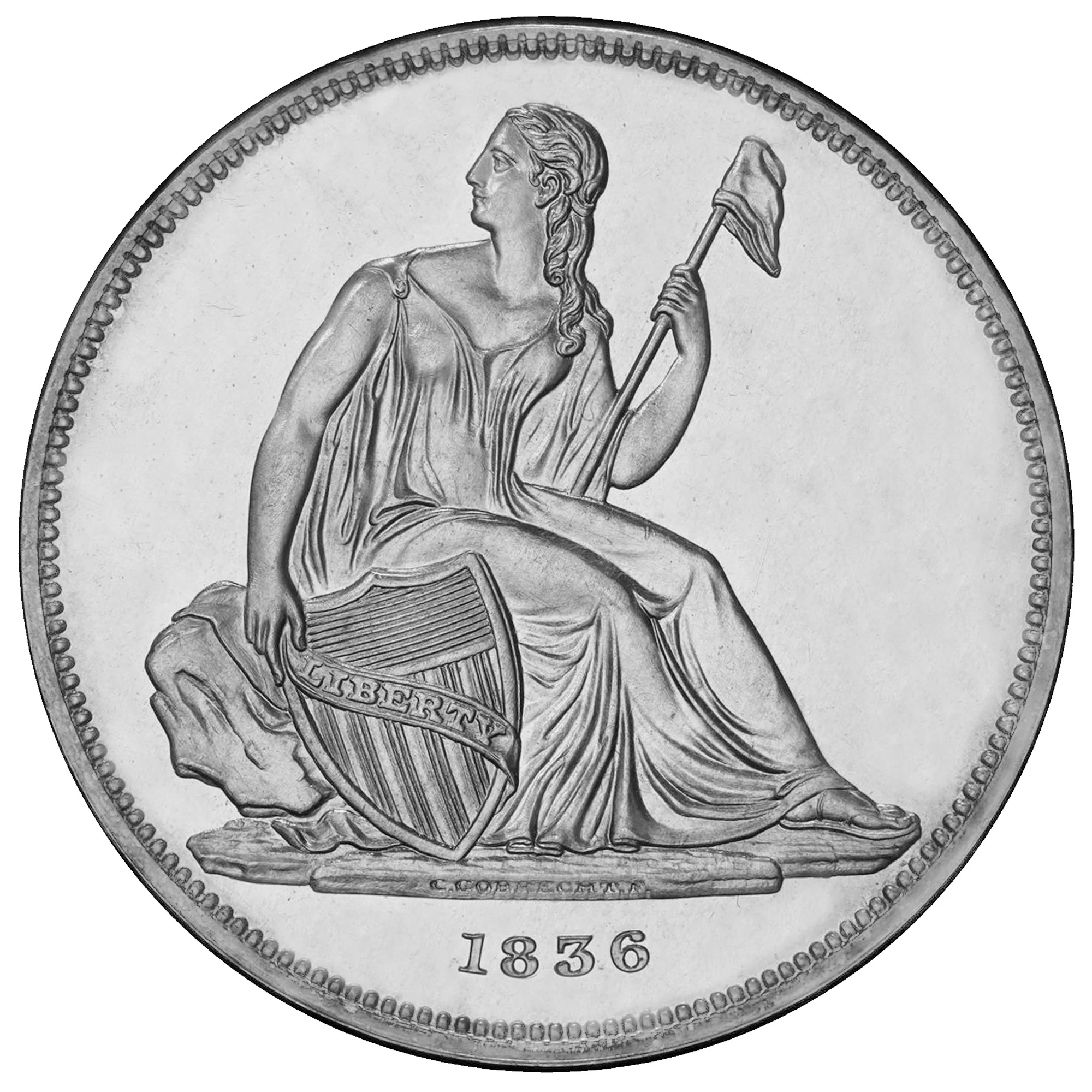
Description:
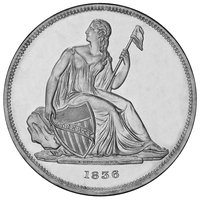
Liberty Seated
Inscription:
LIBERTY
C. GOBRECHT F.
1836
C. GOBRECHT F.
1836
Script: Latin
Engraver: Christian Gobrecht/Thomas Sully
Reverse
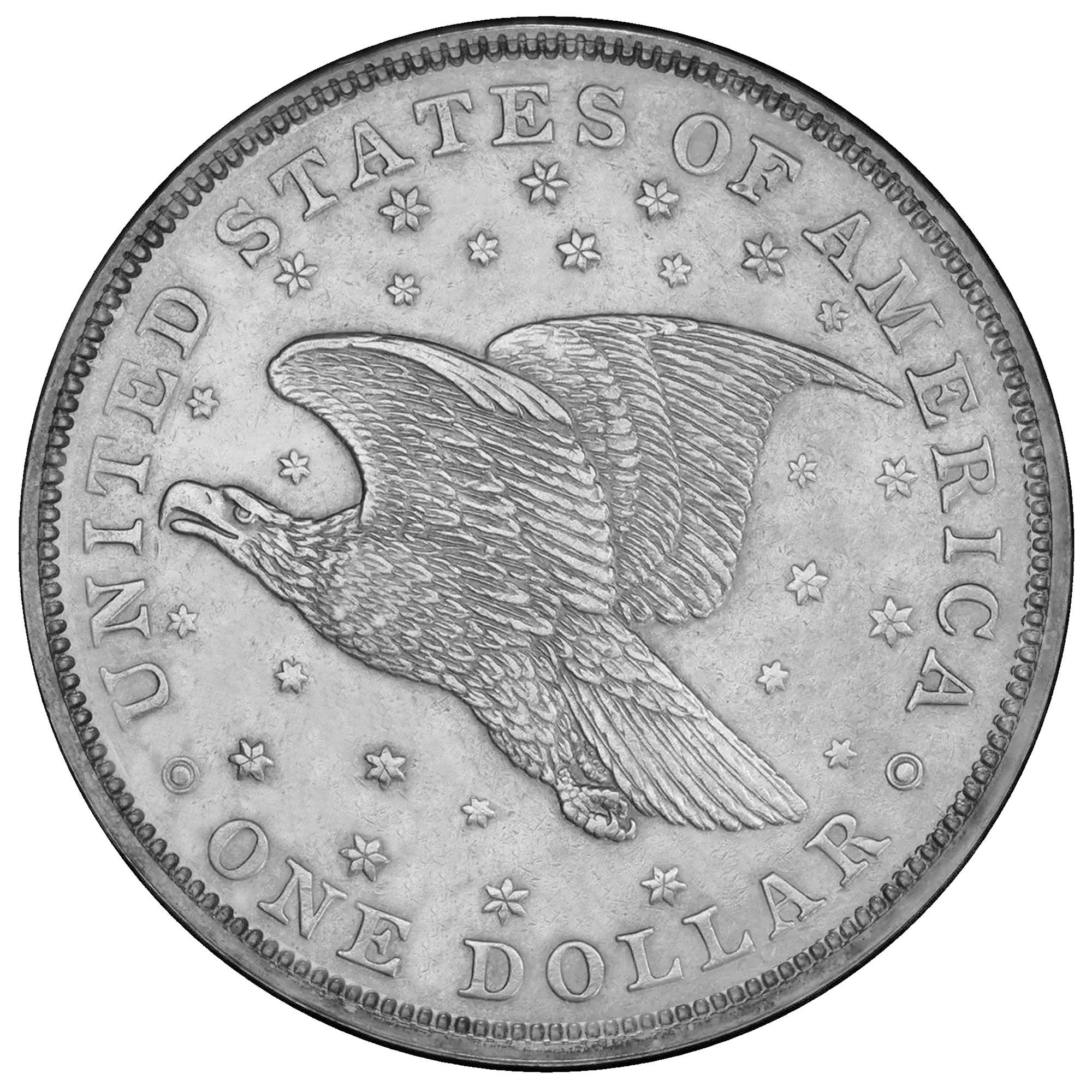
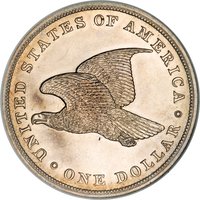
Description:
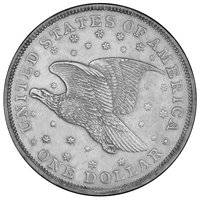
Eagle soaring left over 26 stars.
Inscription:
UNITED STATES OF AMERICA
ONE DOLLAR
ONE DOLLAR
Script: Latin
Engraver: Christian Gobrecht/Titian Peale
Edge
Plain
Mints
| Name | Mark |
|---|---|
| United States Mint of Philadelphia | — |
Mintings
| Year | Mint Mark | Mintage | Quality | Collection |
|---|---|---|---|---|
| 1836 | — | 1,000 |
Historical background
In 1836, the United States operated under a monetary system that was a complex and often unstable mix of national and private currencies, largely defined by the "Bank War" between President Andrew Jackson and the Second Bank of the United States. The nation lacked a uniform federal paper currency; instead, money consisted of gold and silver coins (specie) and a vast array of paper banknotes issued by hundreds of state-chartered private banks. The Second Bank, which held the federal government's deposits and was supposed to regulate credit and ensure note stability, served as a central check on this system. However, Jackson, distrustful of concentrated financial power and believing the Bank favored elites, had vetoed its recharter in 1832 and began withdrawing federal funds in 1833, distributing them to favored state banks (derisively called "pet banks").
This redistribution of federal deposits triggered a dramatic expansion of credit and paper money. With the restraining influence of the Second Bank removed, state banks rapidly increased their lending and issuance of banknotes, many of which were not fully backed by specie reserves. This led to rampant inflation and a speculative boom, particularly in western lands purchased with easy credit. Concurrently, the federal government, fueled by land sales and tariff revenue, found itself with a budget surplus. In a move to distribute this surplus and curb speculation, Congress passed the Deposit Act of 1836, which distributed federal funds to the states. Crucially, the act also included the Specie Circular, an executive order Jackson issued in July 1836, which required that all purchases of federal lands be made in gold or silver coin.
The combined effect of these policies set the stage for severe economic contraction. The Specie Circular abruptly drained gold and silver from Eastern banks as settlers scrambled to obtain coin for land, exposing the fragility of the overextended state banking system. As specie reserves dwindled, confidence in paper banknotes collapsed, forcing banks to suspend specie payments (refusing to redeem notes for coin). This credit crunch, combined with international factors like a tightening of British capital, culminated in the Panic of 1837, a devastating financial crisis that began just months after Jackson left office. Thus, the currency situation of 1836 was one of artificial expansion, federal intervention, and ultimately, the unraveling of a system that lacked a stable regulatory foundation.
This redistribution of federal deposits triggered a dramatic expansion of credit and paper money. With the restraining influence of the Second Bank removed, state banks rapidly increased their lending and issuance of banknotes, many of which were not fully backed by specie reserves. This led to rampant inflation and a speculative boom, particularly in western lands purchased with easy credit. Concurrently, the federal government, fueled by land sales and tariff revenue, found itself with a budget surplus. In a move to distribute this surplus and curb speculation, Congress passed the Deposit Act of 1836, which distributed federal funds to the states. Crucially, the act also included the Specie Circular, an executive order Jackson issued in July 1836, which required that all purchases of federal lands be made in gold or silver coin.
The combined effect of these policies set the stage for severe economic contraction. The Specie Circular abruptly drained gold and silver from Eastern banks as settlers scrambled to obtain coin for land, exposing the fragility of the overextended state banking system. As specie reserves dwindled, confidence in paper banknotes collapsed, forcing banks to suspend specie payments (refusing to redeem notes for coin). This credit crunch, combined with international factors like a tightening of British capital, culminated in the Panic of 1837, a devastating financial crisis that began just months after Jackson left office. Thus, the currency situation of 1836 was one of artificial expansion, federal intervention, and ultimately, the unraveling of a system that lacked a stable regulatory foundation.
💎 Extremely Rare