

1 Tala – Samoa
Samoa
Context
Material
Diameter: 21.5 mm
Weight: 6 g
Thickness: 2.74 mm
Shape: Equilateral curve heptagon
Composition: Aluminium bronze
Magnetic: No
Technique: Milled
Alignment: Medal alignment
flip
References
KM: #Click to copy to clipboard171
Numista: #22744
Value
Exchange value: 1 WST
Obverse
Description:
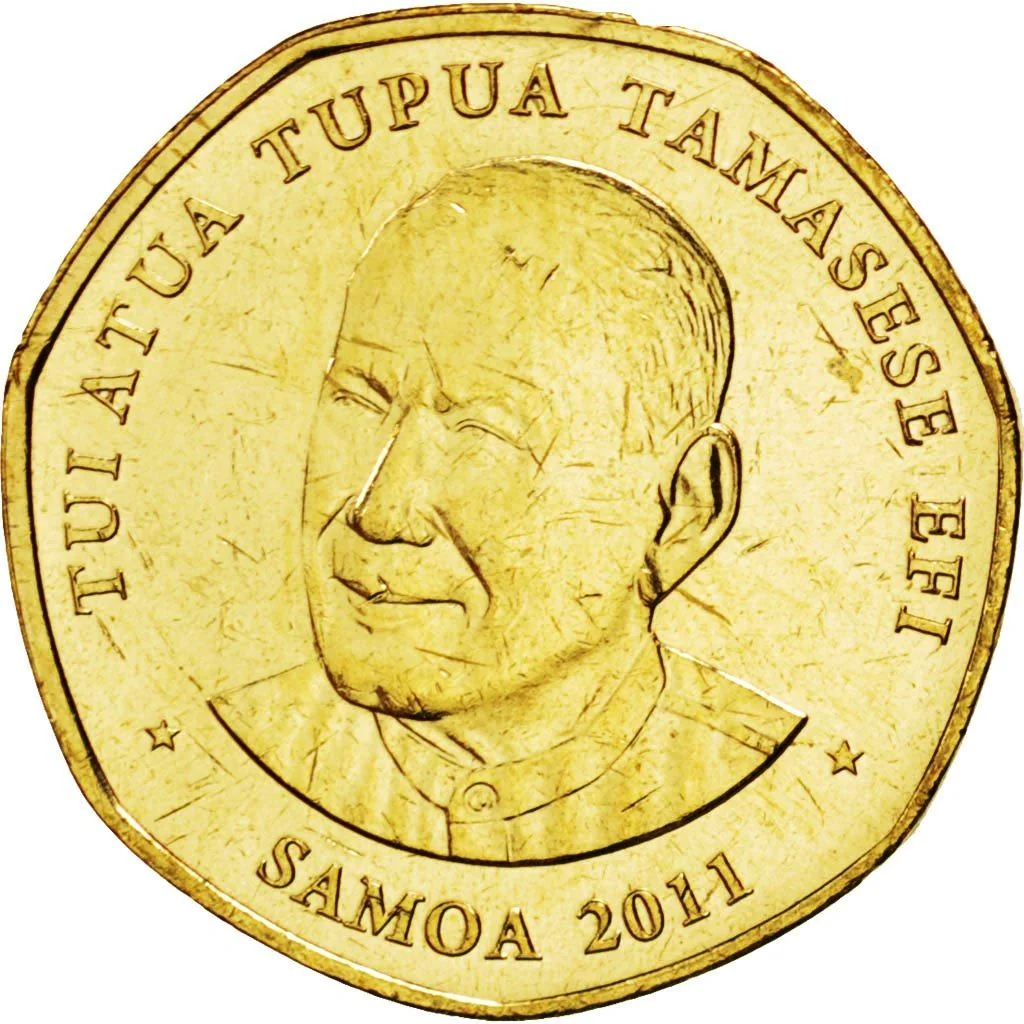
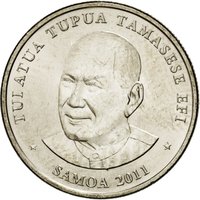
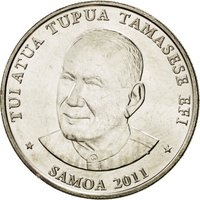
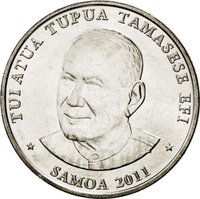
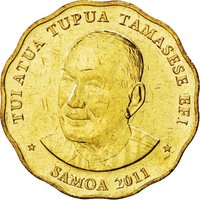
Bust of Tui Atua Tupua Tamasese Efi facing left, with date below.
Inscription:
TUI ATUA TUPUA TAMASESE EFI
SAMOA 2011
SAMOA 2011
Script: Latin
Engraver: Vladimir Gottwald
Reverse
Description:
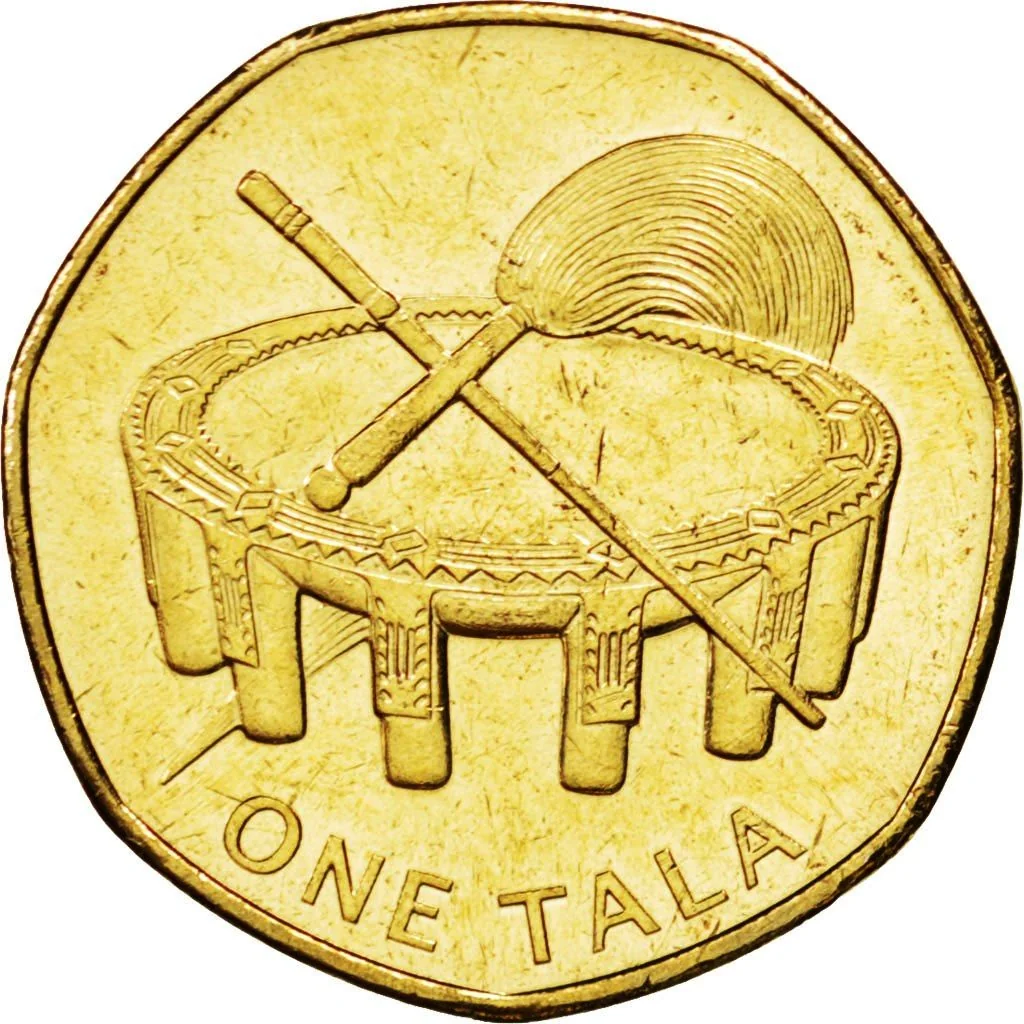
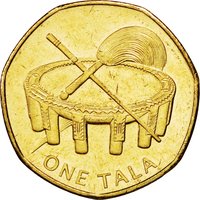
Large wooden kava bowl with stirrer, fly swatter, and denomination.
Inscription:
ONE TALA
Script: Latin
Engraver: Aaron Baggio
Edge
Plain
Categories
| Person> Politician |
| Object> Container or tableware |
Mints
| Name | Mark |
|---|---|
| Royal Australian Mint | — |
Mintings
| Year | Mint Mark | Mintage | Quality | Collection |
|---|---|---|---|---|
| 2011 | — | 7,021,000 | ||
| 2015 | — | 1,017,500 |
Historical background
In 2011, Samoa made a significant and logistically complex monetary transition, moving its national currency from the Samoan tala (WST) to simply the tala (SAT). This change was not a redenomination or a change in value, but a formal rebranding and modernization of its currency. The core driver was to align the nation's legal tender more closely with its indigenous identity by removing the "Western" prefix, a legacy of the country's former name, Western Samoa, which it had officially dropped in 1997. The government framed the move as an assertion of national sovereignty and cultural pride.
The practical execution involved the introduction of new banknotes and coins bearing the updated currency title, "tala," and its subunit, "sene." The Central Bank of Samoa managed a careful phasing-out process throughout the year, where both old and new currency circulated simultaneously to allow for a smooth public transition. This required a public awareness campaign to educate citizens and businesses about the change, ensuring confidence that the value of their money remained unchanged—one new tala was equal to one old tala.
Ultimately, the 2011 currency change was a symbolic political act rather than an economic reform. It concluded a process of national rebranding that began with the country's name change over a decade earlier. The transition was successfully implemented without economic disruption, and the tala (SAT) has remained pegged to a basket of currencies, historically weighted toward the Australian, New Zealand, and US dollars, ensuring monetary stability for the nation.
The practical execution involved the introduction of new banknotes and coins bearing the updated currency title, "tala," and its subunit, "sene." The Central Bank of Samoa managed a careful phasing-out process throughout the year, where both old and new currency circulated simultaneously to allow for a smooth public transition. This required a public awareness campaign to educate citizens and businesses about the change, ensuring confidence that the value of their money remained unchanged—one new tala was equal to one old tala.
Ultimately, the 2011 currency change was a symbolic political act rather than an economic reform. It concluded a process of national rebranding that began with the country's name change over a decade earlier. The transition was successfully implemented without economic disruption, and the tala (SAT) has remained pegged to a basket of currencies, historically weighted toward the Australian, New Zealand, and US dollars, ensuring monetary stability for the nation.
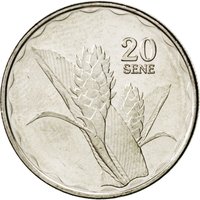
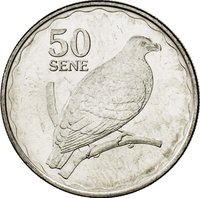
Series: 2011 Samoa circulation coins
🌱 Common