Logo Title

1 Cash – Empire of China

China
Context
Year: 1902
Country: China Country flag
Ruler: Guangxu
Demonetized: Yes
Material
Diameter: 22 mm
Composition: Brass
Magnetic: No
Technique: Cast
Alignment: Medal alignment
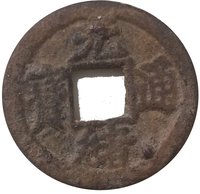
Obverse
OBVERSE ↑
flip
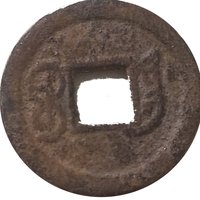
Reverse
REVERSE ↑
References
Numista: #226737

Obverse

Description:
Four Chinese characters read vertically, right to left.
Inscription:


寶 通

 緒
Translation:
Guangxu

Tong Bao
Language: Chinese

Reverse

Description:
Two Manchu words flank the hole.
Inscription:
ᠪᠣᠣ ᠯᡳᠩ
Translation:
Boo Ling
Languages: Manchu, Mongolian

Edge

Plain

Mintings

YearMint MarkMintageQualityCollection
1902

Historical background

In 1902, the currency situation in the Qing Empire was one of profound complexity and instability, reflecting the dynasty's political and economic frailty. The system was not unified but a chaotic mosaic of different mediums. The primary foundation was the silver tael (liang), a unit of weight rather than a coin, leading to hundreds of local variants and severe complications in inter-regional trade. Alongside this, a vast array of silver dollars (Mexican, Spanish, and later Chinese provincial mintages), copper cash coins for daily small transactions, and privately issued banknotes from native banks (qianzhuang) all circulated simultaneously. This fragmentation crippled the central government's fiscal authority and hampered national commerce.

The period was further strained by the aftermath of the Boxer Uprising (1899-1901). The crushing Boxer Protocol, signed in 1901, imposed a massive indemnity of 450 million taels of silver on China, payable in gold-backed foreign currency over 39 years. This created a severe drain on imperial finances, as falling global silver prices meant the Qing had to convert ever-greater quantities of silver to meet gold-based payments. This silver depreciation exacerbated domestic inflation, increased the tax burden on the peasantry, and accelerated the outflow of silver bullion, further destabilizing the already fragile monetary system.

Recognizing the crisis, the Qing court initiated late and halting reforms. In 1902, efforts were underway to standardize the silver tael and establish a national mint, precursors to the official silver dollar (yuan) launched in 1910. However, these centralizing measures faced entrenched resistance from provincial authorities and foreign powers who controlled their own banking and currency spheres within treaty ports. Thus, in 1902, the Empire's currency was caught between a decaying traditional order, the heavy exactions of imperialism, and nascent, struggling modernization attempts—a microcosm of the dynasty's impending collapse.
Legendary