Logo Title
Context
Years: 1862–1864
Country: China Country flag
Ruler: Tongzhi
Demonetized: Yes
Material
Diameter: 29 mm
Composition: Brass
Magnetic: No
Technique: Cast
Alignment: Medal alignment
Obverse
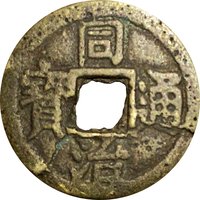
OBVERSE ↑
flip
Reverse
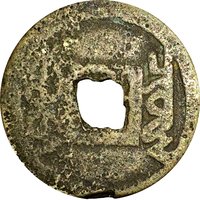
REVERSE ↑
References
Numista: #226536

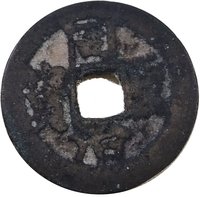
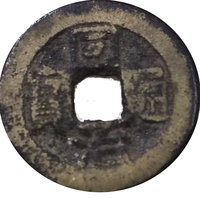
Obverse

Description:
Four Chinese characters read vertically, right to left.
Inscription:


寶 重

 豐
Translation:
Xianfeng

Treasured Coin

Valuable
Language: Chinese

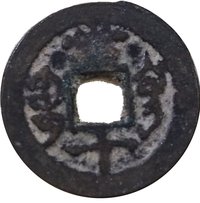
Reverse

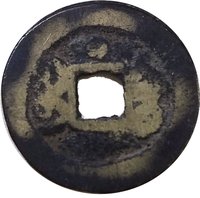
Description:
Two Manchu words flank a central hole, each with a Chinese character above and below.
Inscription:


ᠪᠣᠣ ᡤᡠᠩ

Translation:
Dang

Boo gung

Five
Languages: Chinese, Manchu

Edge

Plain

Mints

NameMark
Gongchang Mint

Mintings

YearMint MarkMintageQualityCollection

Historical background

In 1862, the currency system of the Qing Empire was in a state of profound and chaotic crisis, a direct reflection of its political and military fragility. The core of the system was the silver tael, a unit of weight rather than a coin, which was used for large transactions and tax payments. However, the scarcity of domestically minted silver coins meant a bewildering variety of regional tael standards existed, alongside a flood of foreign silver dollars (like Mexican and Spanish coins) that circulated at fluctuating values. Simultaneously, the everyday economy for the masses relied on cast copper-alloy cash coins, strung together in guan. The chronic debasement of these coins and the shortage of copper had created a severe inflation in the copper currency, drastically widening the exchange rate between copper and silver.

This monetary disintegration was exacerbated by two catastrophic events: the Taiping Rebellion (1850-1864), which devastated the empire's heartland and disrupted mining and minting operations, and the massive indemnity payments from the Second Opium War (1856-1860). The indemnity, payable in silver sterling, drained vast quantities of bullion from the economy. Furthermore, the imperial government's response to fund military campaigns—including the reckless issuance of Great Qing Treasure Note paper money and copper token notes—led to hyperinflation and a complete loss of public confidence in fiduciary currency by the early 1860s.

Consequently, the year 1862 stands at a pivotal low point, marked by extreme fragmentation, severe inflation in the copper sector, and a crippling silver drain. It was within this context of monetary failure that progressive officials like Zeng Guofan, recognizing the stabilizing influence of foreign coins, initiated the first successful modern minting experiment in Tianjin in 1862, producing machine-struck silver coins modeled on the Mexican dollar. This small but significant step represented the beginning of a long and fraught transition from a traditional, decentralized currency system toward a modern, standardized one, driven by the urgent need to restore fiscal order and sovereign control.

Series: 1862 Empire of China circulation coins

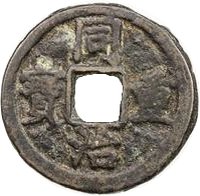
1 Cash obverse
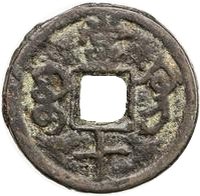
1 Cash reverse
1 Cash
1862-1874
10 Cash obverse
10 Cash reverse
10 Cash
1862-1864
10 Cash obverse
10 Cash reverse
10 Cash
1862-1864
5 Cash obverse
5 Cash reverse
5 Cash
1862-1864
1 Cash obverse
1 Cash reverse
1 Cash
1862-1874
1 Cash obverse
1 Cash reverse
1 Cash
1862-1864
1 Cash obverse
1 Cash reverse
1 Cash
1862-1864
Legendary