

2 Zlotys – Poland
Circulating commemorative coins
Commemoration: Lazienki Royal Palace
Series: Castles and Palaces of Poland
Poland
Context

Material
Diameter: 29.5 mm
Weight: 10.8 g
Thickness: 2 mm
Shape: Round
Composition: Copper-nickel
Technique: Milled
Alignment: Medal alignment
flip
References
Y: #Click to copy to clipboard310
Numista: #22642
Value
Exchange value: 2 PLN = $0.56
Inflation-adjusted value: 10.24 PLN
Obverse
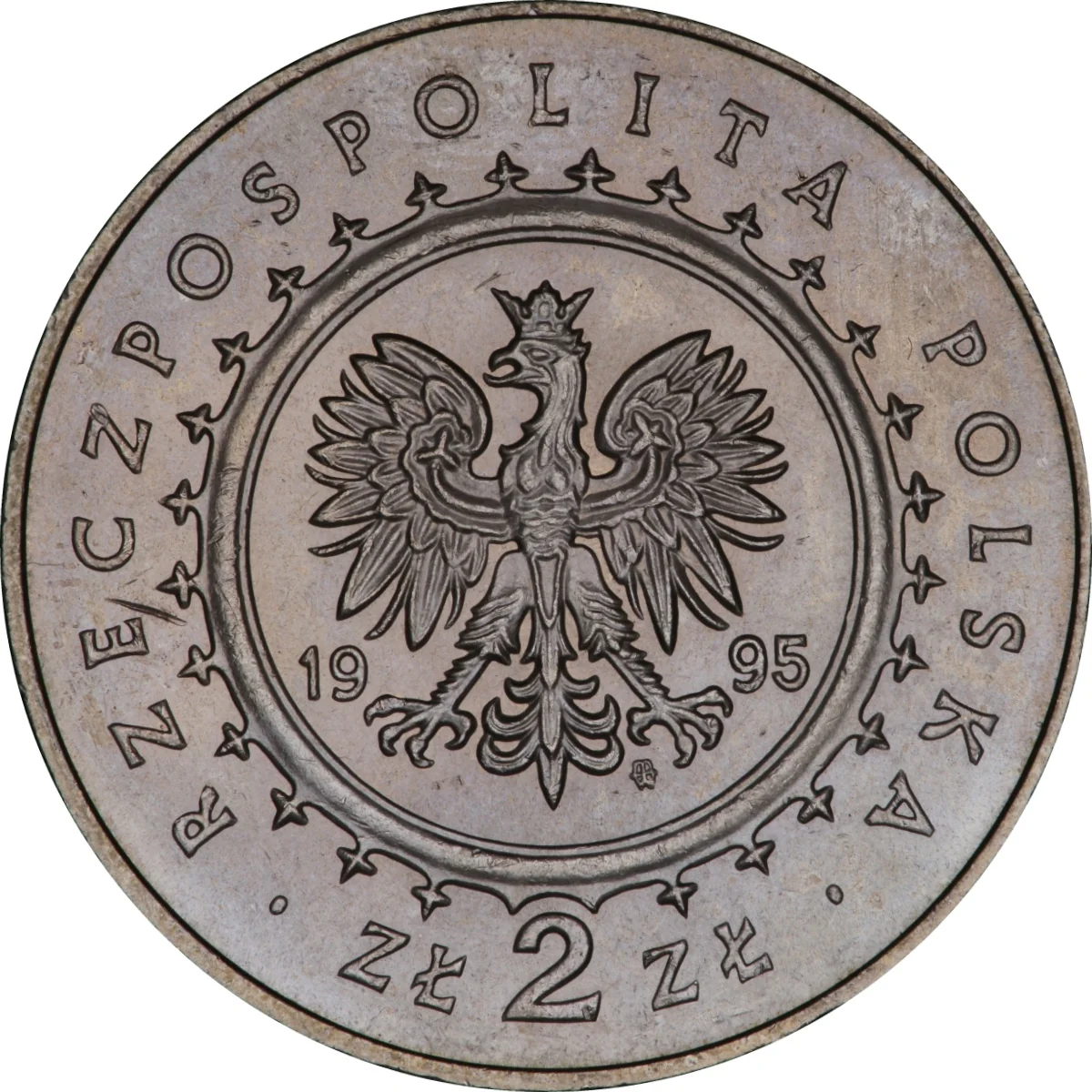
Description:
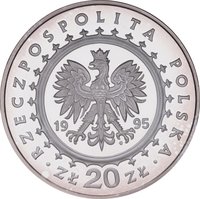
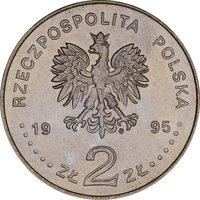
Polish eagle in a circle.
Inscription:
RZECZPOSPOLITA POLSKA
1995
mw
ZŁ 2 ZŁ
1995
mw
ZŁ 2 ZŁ
Translation:
REPUBLIC OF POLAND
1995
mw
2 ZŁOTY 2 ZŁ
1995
mw
2 ZŁOTY 2 ZŁ
Script: Latin
Language: Polish
Designer: Ewa Tyc-Karpińska
Reverse
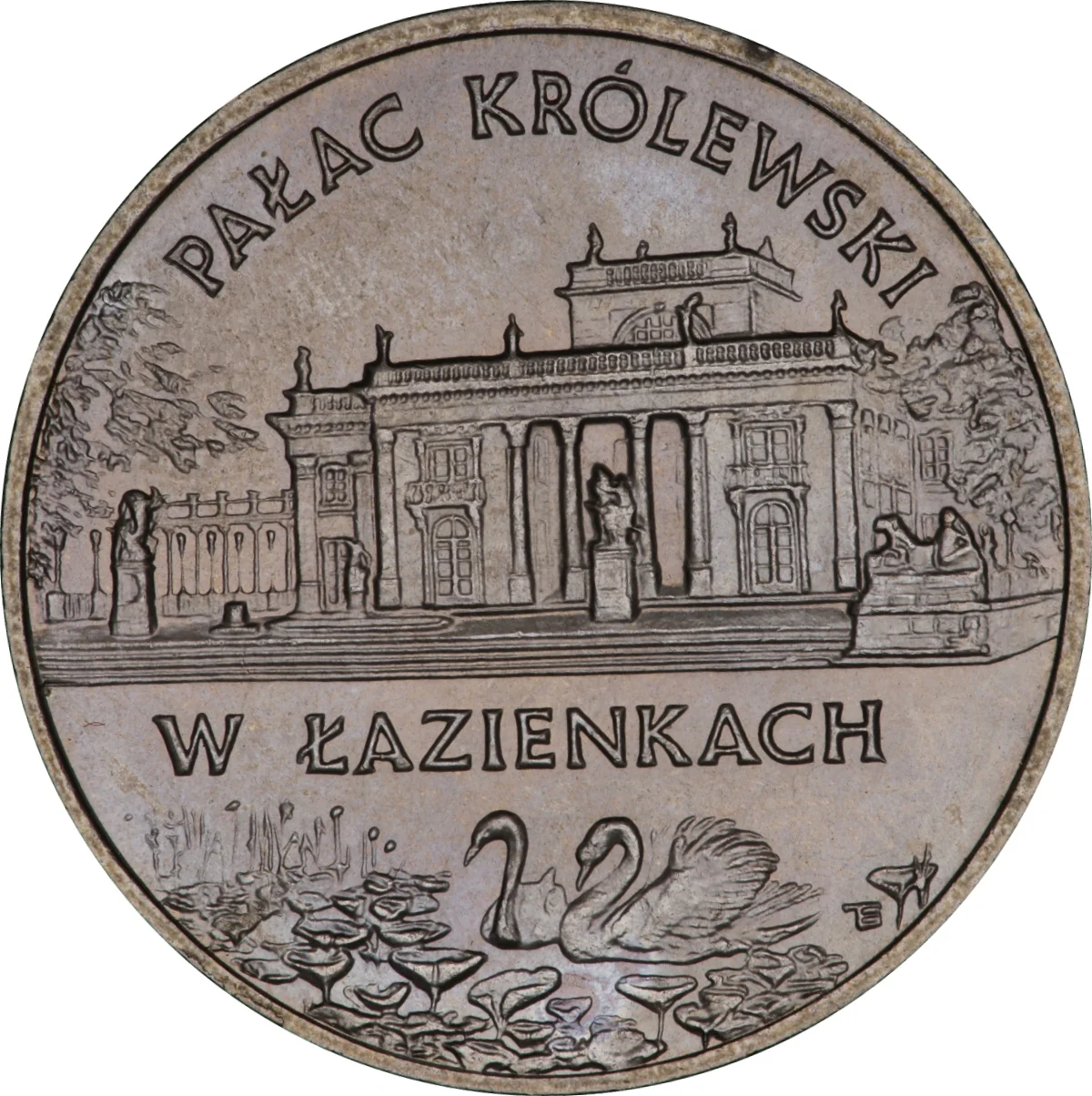
Description:
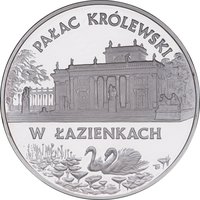
Lazienki Palace is a neoclassical summer residence set within a scenic park.
Inscription:
PAŁAC KRÓLEWSKI
W ŁAZIENKACH
W ŁAZIENKACH
Translation:
ROYAL PALACE
IN ŁAZIENKI
IN ŁAZIENKI
Script: Latin
Language: Polish
Designer: Ewa Tyc-Karpińska
Edge
Segmented reeding
Mints
| Name | Mark |
|---|---|
| Mint of Poland | (MW) |
Mintings
| Year | Mint Mark | Mintage | Quality | Collection |
|---|---|---|---|---|
| 1995 | MW | 287,300 |
Historical background
In 1995, Poland was in a period of profound economic transition and stabilization following the shock therapy reforms of the early 1990s. Hyperinflation had been tamed, dropping from over 600% in 1990 to a more manageable but still high 28% in 1995. The official currency remained the old Polish złoty (PLZ), but it was a unit carrying the psychological burden of the recent inflationary past. While the economy was growing robustly, the currency was not yet fully convertible or widely trusted for savings, and dollarization—the use of US dollars and Deutsche marks for large transactions and as a store of value—remained a common practice.
A central event of the year was the preparation for a dramatic redenomination. On January 1, 1995, the National Bank of Poland began introducing a new currency, the new Polish złoty (PLN), at a rate of 10,000 old złotys (PLZ) to 1 new złoty (PLN). This was not a devaluation but a technical recalibration, aimed at simplifying accounting, restoring public confidence in the national currency, and symbolically closing the chapter on the high-inflation era. The two currencies circulated in parallel throughout the year, with the old notes and coins being gradually withdrawn.
The redenomination was successfully implemented as a purely administrative measure, backed by a relatively stable exchange rate policy managed within a crawling peg band against a basket of currencies. This stability, coupled with continued economic growth and increasing foreign investment, helped build credibility. By the end of 1995, the new złoty was firmly established, representing a crucial step in Poland's integration into the global economy and paving the way for future financial market development and, ultimately, European Union accession.
A central event of the year was the preparation for a dramatic redenomination. On January 1, 1995, the National Bank of Poland began introducing a new currency, the new Polish złoty (PLN), at a rate of 10,000 old złotys (PLZ) to 1 new złoty (PLN). This was not a devaluation but a technical recalibration, aimed at simplifying accounting, restoring public confidence in the national currency, and symbolically closing the chapter on the high-inflation era. The two currencies circulated in parallel throughout the year, with the old notes and coins being gradually withdrawn.
The redenomination was successfully implemented as a purely administrative measure, backed by a relatively stable exchange rate policy managed within a crawling peg band against a basket of currencies. This stability, coupled with continued economic growth and increasing foreign investment, helped build credibility. By the end of 1995, the new złoty was firmly established, representing a crucial step in Poland's integration into the global economy and paving the way for future financial market development and, ultimately, European Union accession.
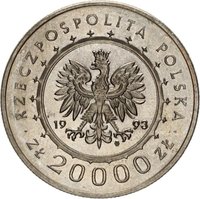
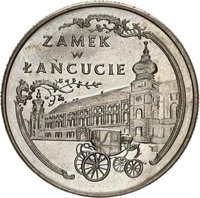
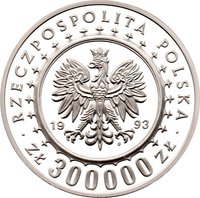
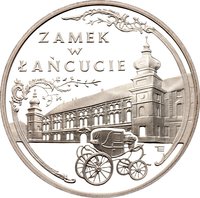
Series: Castles and Palaces of Poland

🌟 Uncommon