

25 centimes – Luxembourg
Add to wishlist
Luxembourg
Context
Year: 1938
Issuer: Luxembourg
Period:
Ruler: Charlotte
Currency:
(1854—2001)
Demonetization: 1 January 1953
Total mintage: 2,001,400
Material
References
KM: #
Numista: #2261
Value
Exchange value: 0.25 LUF
Obverse
Description:
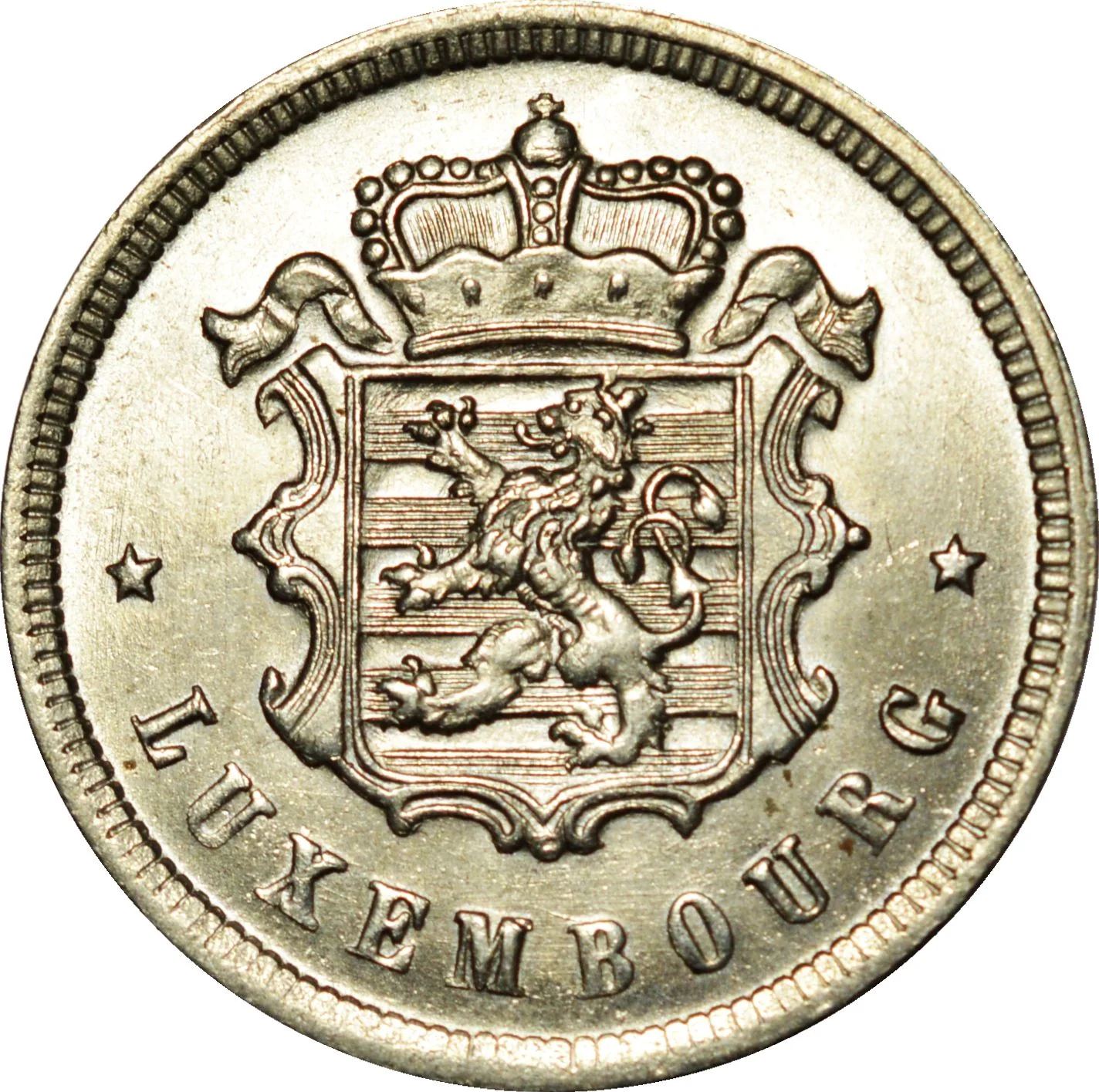
Shield with a forked-tail Luxembourg lion, crowned and on a ten-piece field, encircled by the country's name between stars and an outer girdle.
Inscription:
* LUXEMBOURG *
Script: Latin
Engraver: Alexandre Everaerts
Reverse
Description:
Face value and mint year
in three lines, flanked by
an oak branch. Engraver's name
in exergue.
in three lines, flanked by
an oak branch. Engraver's name
in exergue.
Inscription:
25
CMES
1938
EVERAERTS
CMES
1938
EVERAERTS
Script: Latin
Engraver: Alexandre Everaerts
Edge
Plain
Categories
| Symbols> Coat of Arms |
Mints
| Name | Mark |
|---|---|
| Royal Mint of Belgium | — |
Mintings
| Year | Mint Mark | Mintage | Quality | Collection |
|---|---|---|---|---|
| 1938 | — | 2,001,400 |
🌱 Common