

20 cents – Zimbabwe
Add to wishlist
Zimbabwe
Context
Years: 1980–1997
Issuer: Zimbabwe
Period:
(since 1980)
Currency:
(1980—2006)
Demonetized: Yes
Total mintage: 20,500
Material
Diameter: 23 mm
Weight: 5.6 g
Thickness: 1.8 mm
Shape: Round
Composition: Copper-nickel
Technique: Milled
Alignment: Medal alignment
flip
References
KM: #
Numista: #1098
Value
Exchange value: 0.20 ZWD
Obverse
Description:
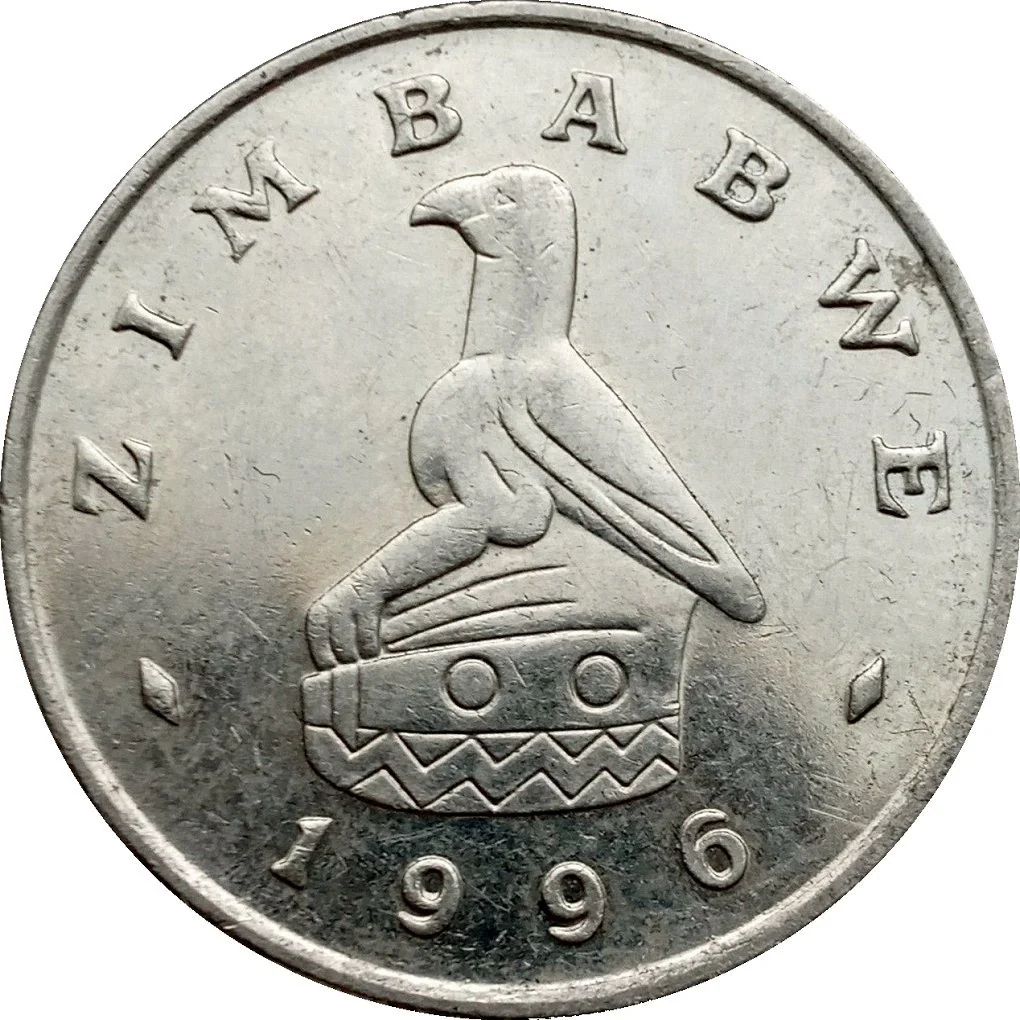
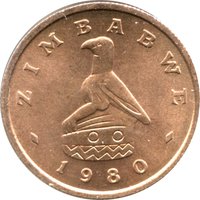
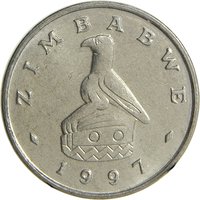
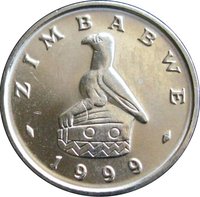
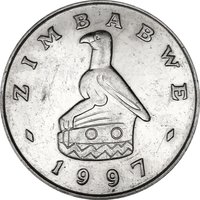
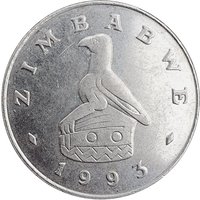
The famous Zimbabwe Bird, a protective sculpture from the 12th-14th century capital of the Monomotapa Empire, carved by the Shona people's ancestors.
Inscription:
ZIMBABWE
1996
1996
Script: Latin
Engraver: Barry Stanton
Reverse
Description:
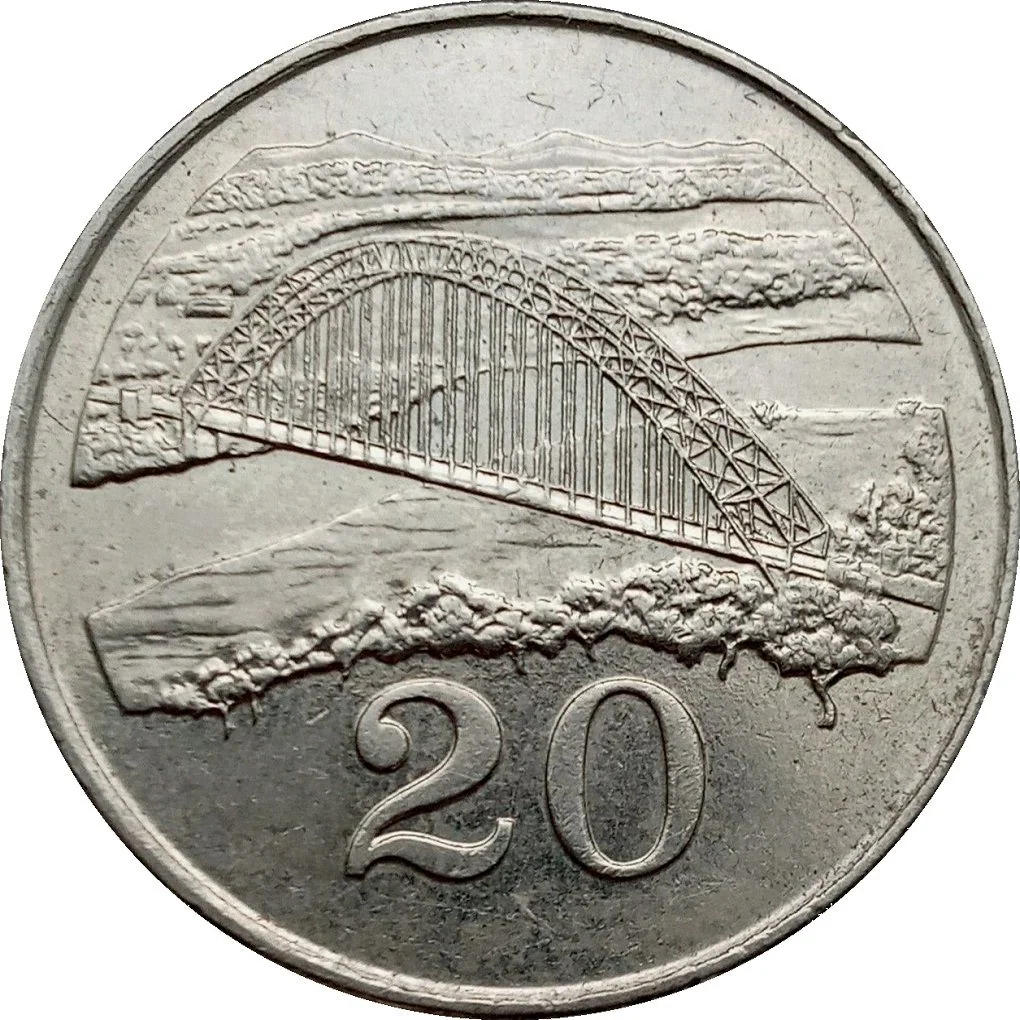
The Birchenough Bridge spans the Sabi River in eastern Zimbabwe's Manicaland Province and is named for Sir Henry Birchenough, the company director who envisioned it.
Inscription:
20
Script: Latin
Engraver: Jeff Huntly
Edge
Plain
Mints
| Name | Mark |
|---|---|
| Royal Mint | — |
Mintings
| Year | Mint Mark | Mintage | Quality | Collection |
|---|---|---|---|---|
| 1980 | — | — | ||
| 1980 | — | 15,000 | Proof | |
| 1983 | — | — | ||
| 1987 | — | — | ||
| 1988 | — | — | ||
| 1989 | — | — | ||
| 1991 | — | — | ||
| 1994 | — | — | ||
| 1996 | — | — | ||
| 1997 | — | — | ||
| 1997 | — | 5,500 | Proof |
Historical background
At independence in 1980, Zimbabwe inherited a relatively stable and strong currency system from Rhodesia. The Rhodesian dollar (R$) had been introduced in 1970, replacing the pound, and was pegged to a basket of currencies. Despite international sanctions during the UDI period, the economy had remained resilient, and the currency maintained its value. The new government, led by Robert Mugabe, initially pursued cautious economic policies, and simply rebadged the Rhodesian dollar as the Zimbabwean dollar (Z$), maintaining its parity and the existing peg. This continuity provided early stability, with the Z$ trading at a rate roughly stronger than the US dollar.
This initial strength, however, was underpinned by a robust and diversified economy with strong agricultural, mining, and manufacturing sectors. The currency's value was seen as a symbol of national pride and economic sovereignty. For the first decade, the Zimbabwean dollar remained convertible and was managed conservatively by the Reserve Bank of Zimbabwe, with inflation kept in check. The situation presented a solid monetary foundation, but one that was vulnerable to future fiscal pressures and political decisions.
Consequently, the currency scenario in 1980 was one of optimistic stability, but with underlying fragility. The new government faced immense expectations for social spending and land reform, creating future tensions between political promises and monetary discipline. The strong Zimbabwean dollar at independence stood as a legacy of the past system, not yet tested by the economic policies of the new state, setting the stage for the profound monetary challenges that would emerge decades later.
This initial strength, however, was underpinned by a robust and diversified economy with strong agricultural, mining, and manufacturing sectors. The currency's value was seen as a symbol of national pride and economic sovereignty. For the first decade, the Zimbabwean dollar remained convertible and was managed conservatively by the Reserve Bank of Zimbabwe, with inflation kept in check. The situation presented a solid monetary foundation, but one that was vulnerable to future fiscal pressures and political decisions.
Consequently, the currency scenario in 1980 was one of optimistic stability, but with underlying fragility. The new government faced immense expectations for social spending and land reform, creating future tensions between political promises and monetary discipline. The strong Zimbabwean dollar at independence stood as a legacy of the past system, not yet tested by the economic policies of the new state, setting the stage for the profound monetary challenges that would emerge decades later.
Series: 1980 Zimbabwe circulation coins

🌱 Very Common