Logo Title
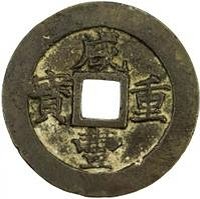
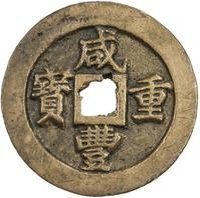
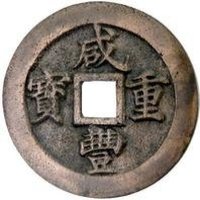
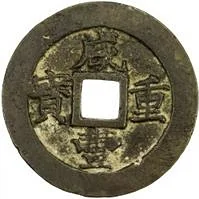
obverse
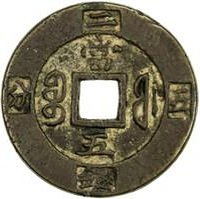
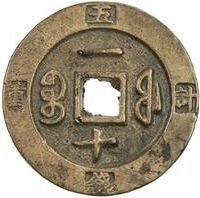
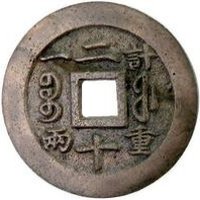
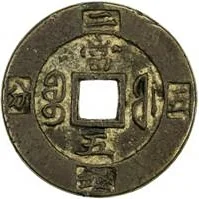
reverse
Stephen Album Rare Coins
Context
Years: 1853–1855
Country: China Country flag
Ruler: Xianfeng
Demonetized: Yes
Material
Diameter: 31 mm
Composition: Brass
Magnetic: No
Technique: Cast
Alignment: Medal alignment
Obverse
OBVERSE ↑
flip
Reverse
REVERSE ↑
References
Numista: #225980

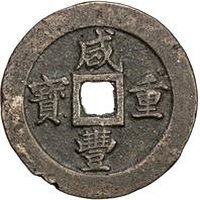
Obverse

Description:
Four Chinese characters read vertically, right to left.
Inscription:


寶 重

 豐
Translation:
Xianfeng

Treasured Coin

Valuable
Language: Chinese

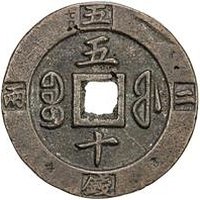
Reverse

Description:
Manchu words flank the hole, each with a Chinese character above and below. Four more characters are on the rim, read top-to-bottom, right-to-left.
Inscription:
二錢五分


ᠪᠣᠣ ᡶᡠ

Translation:
Two mace and five candareens

Paid

Boo fu

Five
Languages: Manchu, Chinese

Edge

Plain

Mints

NameMark
Fuzhou Mint

Mintings

YearMint MarkMintageQualityCollection

Historical background

In 1853, the Qing Dynasty's monetary system was in a state of severe crisis, primarily driven by the immense costs of suppressing the Taiping Rebellion (1850-1864). The imperial treasury was depleted, and the traditional system of bimetallic coinage—silver taels (by weight) for large transactions and bronze cash coins for daily use—was under enormous strain. A critical shortage of silver, exacerbated by the Opium Wars and subsequent trade imbalances, caused a sharp rise in the silver-to-copper exchange rate. This devastated peasants and laborers who earned in copper but paid taxes assessed in silver, leading to widespread economic hardship and social unrest.

In response to this fiscal emergency, the Xianfeng Emperor's court, under the guidance of officials like Grand Secretary Sengge Rinchen, embarked on a radical and ultimately disastrous experiment with fiduciary currency. Beginning in 1853, the government introduced hubu guanpiao (official banknotes) and tieqian (iron cash coins) intended to circulate at parity with their silver and copper counterparts. Most infamously, it also issued "Great Qing Treasure Note" paper money and large-denomination copper coins with wildly inflated face values, such as the daqian worth 500 or even 1000 standard cash coins.

These measures, however, were not backed by precious metal reserves or public confidence. The government printed notes and minted debased coins excessively to fund military campaigns, leading to rapid hyperinflation. Merchants refused to accept the new currencies at their nominal values, and the economy teetered on collapse. By the mid-1850s, the experiment had failed utterly; the new currencies became virtually worthless, severely damaging the state's credibility and exacerbating the very economic turmoil it was meant to solve, further weakening the Qing regime amidst the colossal internal rebellion.

Series: 1853 Empire of China circulation coins

5 Cash obverse
5 Cash reverse
5 Cash
1853-1861
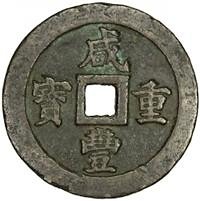
50 Cash obverse
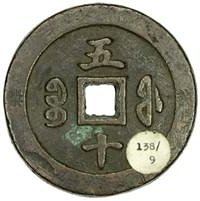
50 Cash reverse
50 Cash
1853-1855
10 Cash obverse
10 Cash reverse
10 Cash
1853-1855
5 Cash obverse
5 Cash reverse
5 Cash
1853-1855
50 Cash obverse
50 Cash reverse
50 Cash
1853-1855
10 Cash obverse
10 Cash reverse
10 Cash
1853-1855
20 Cash obverse
20 Cash reverse
20 Cash
1853-1855
Legendary