

1 rupee (UNICEF) – Sri Lanka
Add to wishlist
Circulating commemorative coins
Commemoration: UNICEF 50th Anniversary
Sri Lanka
Context
Material
Diameter: 25 mm
Weight: 7.04 g
Thickness: 1.9 mm
Shape: Round
Composition: Copper-nickel
Technique: Milled
Alignment: Medal alignment
flip
References
KM: #
Numista: #22547
Value
Exchange value: 1 LKR
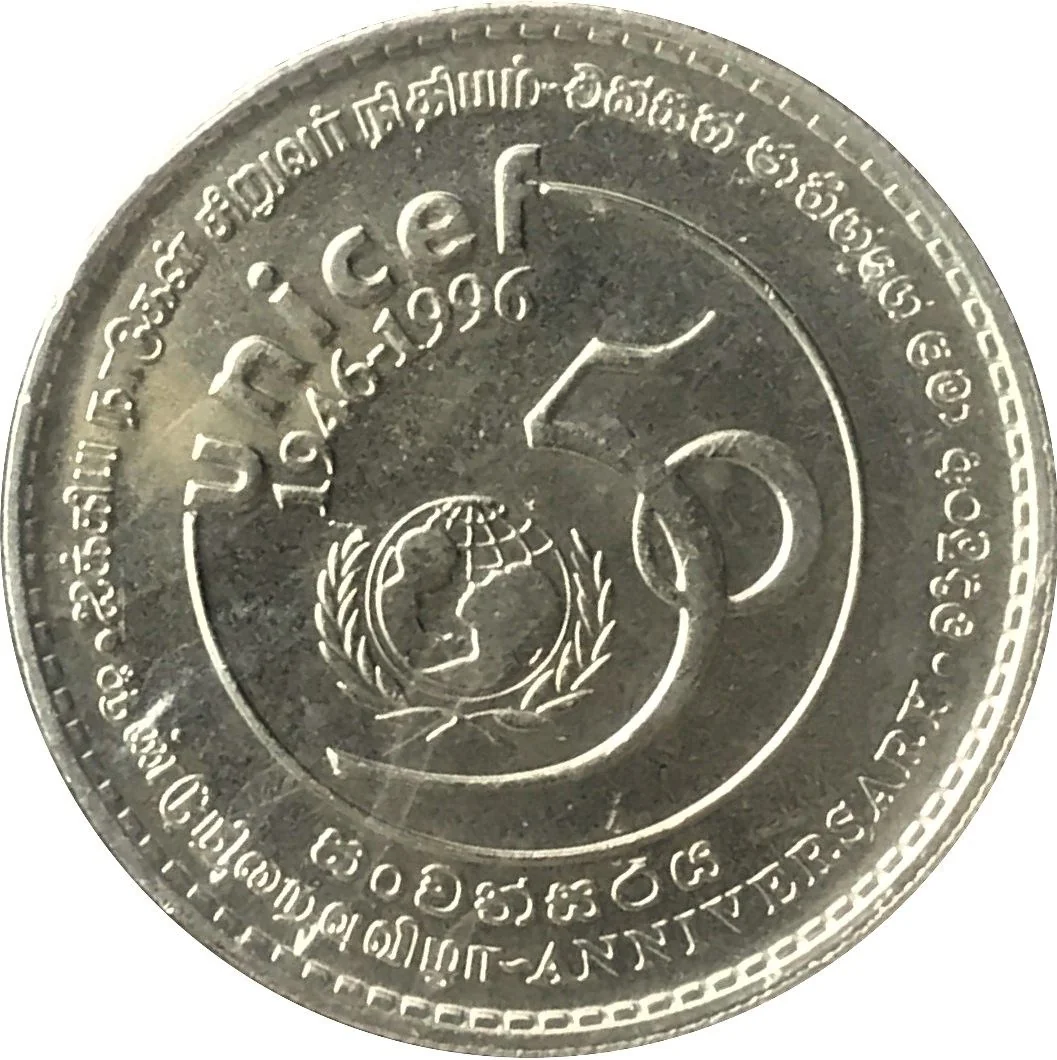
Obverse
Description:
50 encircled with UNICEF logo.
Inscription:
UNICEF
1946 - 1996
50
ANNIVERSARY
1946 - 1996
50
ANNIVERSARY
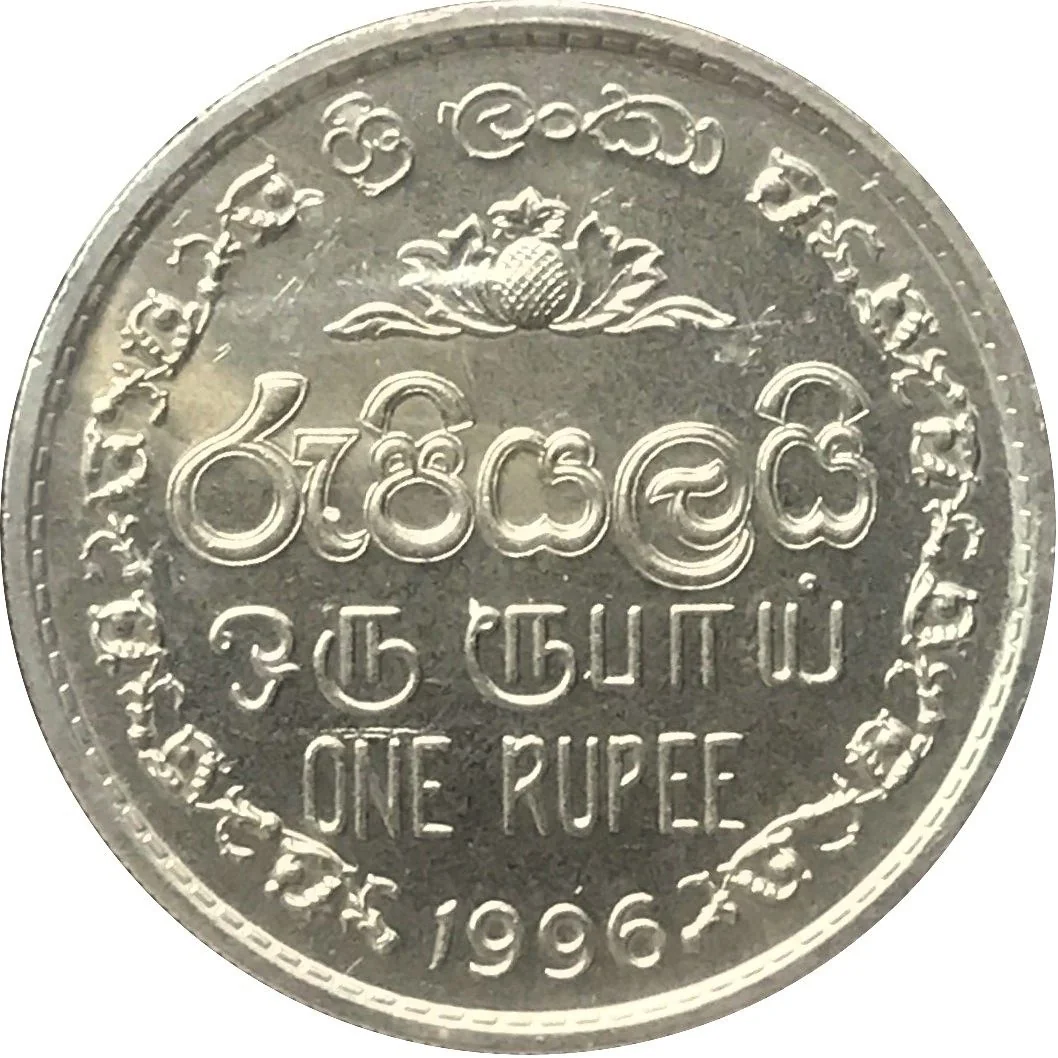
Reverse
Description:
Inscription and value within wreath.
Inscription:
ONE RUPEE
1996
1996
Edge
Reeded
Categories
| Organization> UNICEF |
Mints
| Name | Mark |
|---|---|
| Royal Mint | — |
Mintings
| Year | Mint Mark | Mintage | Quality | Collection |
|---|---|---|---|---|
| 1996 | — | 5,000,000 |
Historical background
In 1996, Sri Lanka's currency situation was defined by a managed float regime under significant pressure, navigating the dual challenges of a protracted civil war and ambitious economic liberalization. The year saw the Sri Lankan Rupee (LKR) continue a trend of controlled depreciation against major currencies, particularly the US Dollar, a policy orchestrated by the Central Bank of Sri Lanka (CBSL) to maintain export competitiveness. This was a period of transition following the major economic reforms of 1977, which opened the economy and moved away from a fixed exchange rate, but the ongoing conflict in the North and East created a persistent drain on foreign reserves, elevated defence spending, and investor uncertainty.
Economically, the government was pursuing structural adjustment programs supported by the International Monetary Fund (IMF) and the World Bank, which advocated for market-oriented policies. These programs included conditions for further exchange rate flexibility and trade liberalization. Consequently, 1996 was marked by a careful balancing act: the CBSL intervened in forex markets to smooth volatility and prevent a freefall, while allowing a gradual devaluation to correct imbalances. Inflation remained a concern, influenced by both domestic monetary policy and the pass-through effects of a weaker rupee on import costs, particularly for oil and essential goods.
Overall, the currency landscape in 1996 was one of fragility and managed adjustment. The rupee's value was not solely determined by market forces but was heavily influenced by central bank intervention aimed at stabilizing the economy amidst conflict. While exports, notably garments and tea, benefited from a more competitive exchange rate, the cost was felt in higher import inflation and pressure on foreign reserves. This period set the stage for the persistent macroeconomic tensions that would continue to characterize Sri Lanka's economy in the decades to follow.
Economically, the government was pursuing structural adjustment programs supported by the International Monetary Fund (IMF) and the World Bank, which advocated for market-oriented policies. These programs included conditions for further exchange rate flexibility and trade liberalization. Consequently, 1996 was marked by a careful balancing act: the CBSL intervened in forex markets to smooth volatility and prevent a freefall, while allowing a gradual devaluation to correct imbalances. Inflation remained a concern, influenced by both domestic monetary policy and the pass-through effects of a weaker rupee on import costs, particularly for oil and essential goods.
Overall, the currency landscape in 1996 was one of fragility and managed adjustment. The rupee's value was not solely determined by market forces but was heavily influenced by central bank intervention aimed at stabilizing the economy amidst conflict. While exports, notably garments and tea, benefited from a more competitive exchange rate, the cost was felt in higher import inflation and pressure on foreign reserves. This period set the stage for the persistent macroeconomic tensions that would continue to characterize Sri Lanka's economy in the decades to follow.
🌱 Fairly Common