

5 rupees (United Nations) – Sri Lanka
Add to wishlist
Circulating commemorative coins
Commemoration: 50th Anniversary of the United Nations
Sri Lanka
Context
Material
Diameter: 23.5 mm
Weight: 9.5 g
Thickness: 3 mm
Shape: Round
Composition: Nickel brass
Magnetic: No
Technique: Milled
Alignment: Medal alignment
flip
References
KM: #
Numista: #15273
Value
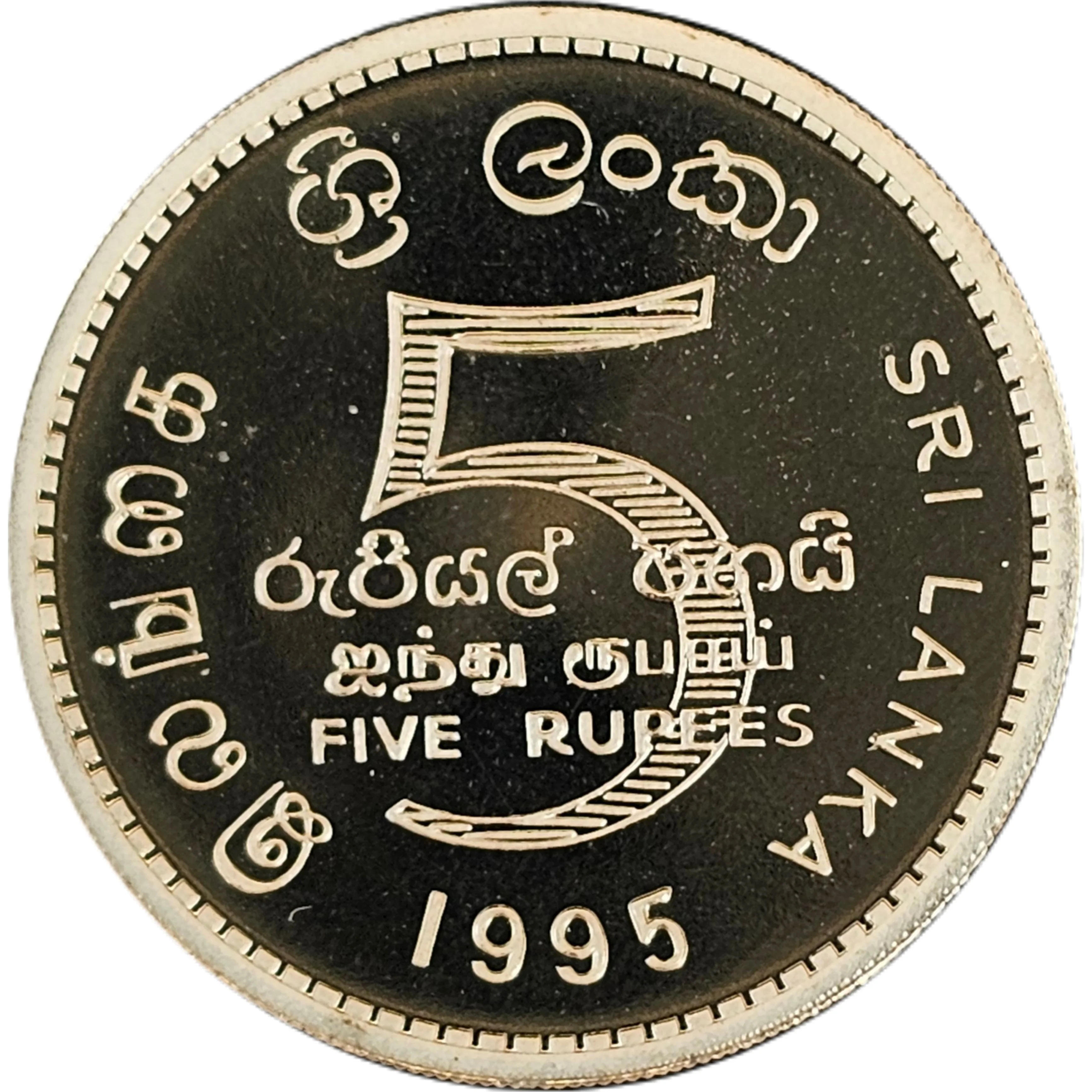
Exchange value: 5 LKR
Obverse
Description:
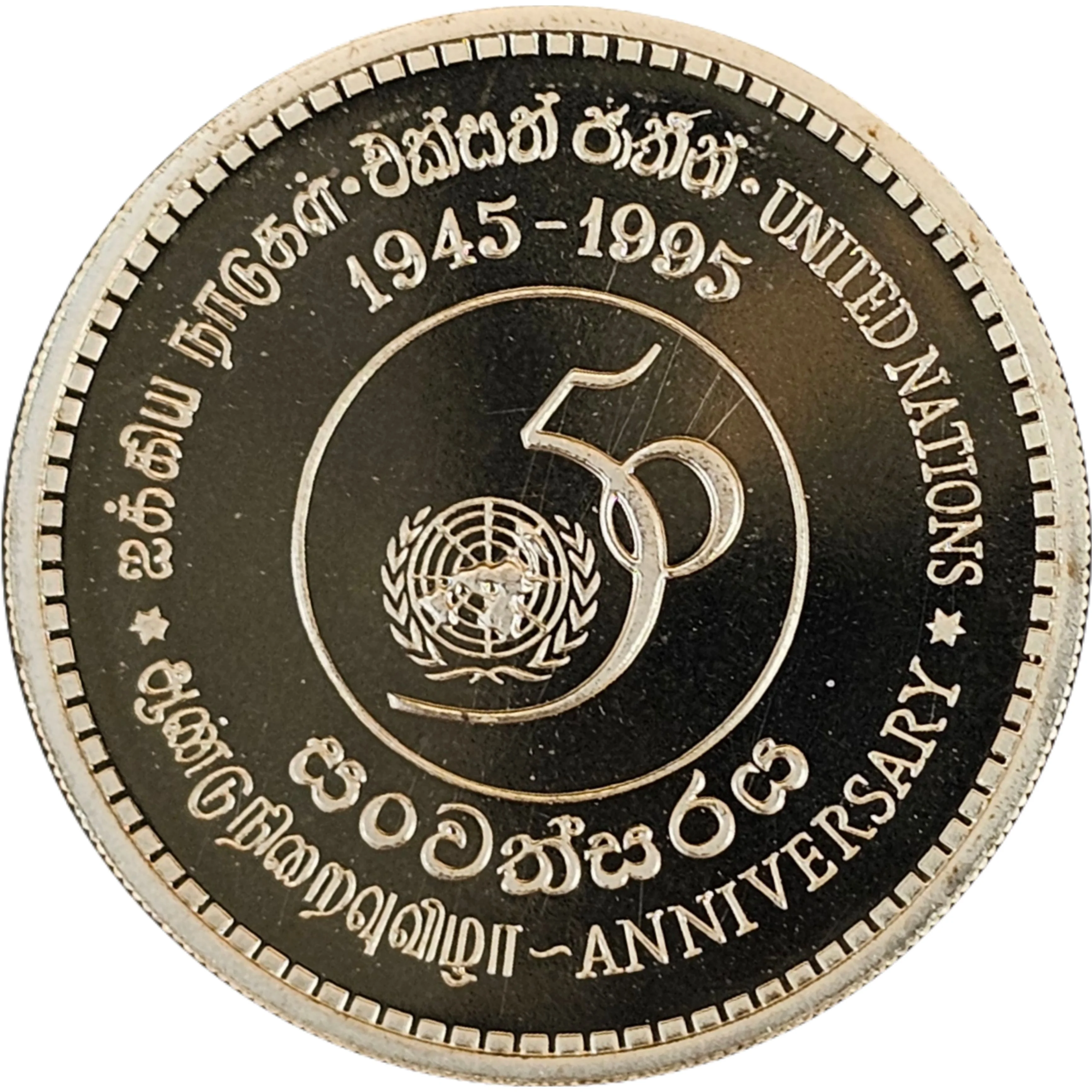
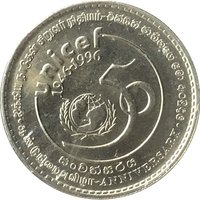
UN 50th Anniversary logo in a circle with 1945-1995 above and "සංවත්සරය" below. "UNITED NATIONS" in Sinhala, Tamil, and English encircles the top; "ANNIVERSARY" in Tamil and English is below, separated by stars.
Inscription:
UNITED NATIONS
1945-1995
50
ANNIVERSARY
1945-1995
50
ANNIVERSARY
Reverse
Categories
| Organization> United Nations |
Mints
| Name | Mark |
|---|---|
| Royal Mint | — |
Mintings
| Year | Mint Mark | Mintage | Quality | Collection |
|---|---|---|---|---|
| 1995 | — | 5,000 | Proof | |
| 1995 | — | 50,000,000 |
Historical background
In 1995, Sri Lanka's currency situation was characterized by a managed float regime under significant pressure, shaped by the dual challenges of a protracted civil war and ambitious economic liberalization. The government, led by President Chandrika Kumaratunga, was engaged in a major military offensive against the Liberation Tigers of Tamil Eelam (LTTE), which demanded enormous fiscal resources. Defense spending consumed a large portion of the national budget, contributing to substantial budget deficits that were often monetized, fueling inflationary pressures. Concurrently, the government was continuing the open-market economic policies initiated in 1977, which aimed to integrate Sri Lanka into the global economy but also exposed the rupee to external vulnerabilities.
The Sri Lankan Rupee (LKR) was under persistent depreciation pressure against major currencies, particularly the US Dollar. This was driven by a widening trade deficit, as imports (including essential goods and war materiel) far exceeded exports like tea, garments, and rubber. While worker remittances from the Middle East and tourism provided some foreign exchange relief, the ongoing conflict deterred greater investment and tourist inflows. The Central Bank of Sri Lanka actively intervened in the foreign exchange market to manage the rupee's decline, utilizing limited foreign reserves to smooth volatility rather than resist fundamental trends, leading to a controlled but steady depreciation.
Overall, the currency dynamics of 1995 reflected a fragile balancing act. The government sought to maintain macroeconomic stability and investor confidence to support growth, while the war effort created relentless fiscal and balance-of-payments strains. This period underscored the profound impact of political instability on economic management, with the rupee's value becoming a key indicator of the country's struggle to finance both a war and a modernizing economy amidst limited foreign exchange resources.
The Sri Lankan Rupee (LKR) was under persistent depreciation pressure against major currencies, particularly the US Dollar. This was driven by a widening trade deficit, as imports (including essential goods and war materiel) far exceeded exports like tea, garments, and rubber. While worker remittances from the Middle East and tourism provided some foreign exchange relief, the ongoing conflict deterred greater investment and tourist inflows. The Central Bank of Sri Lanka actively intervened in the foreign exchange market to manage the rupee's decline, utilizing limited foreign reserves to smooth volatility rather than resist fundamental trends, leading to a controlled but steady depreciation.
Overall, the currency dynamics of 1995 reflected a fragile balancing act. The government sought to maintain macroeconomic stability and investor confidence to support growth, while the war effort created relentless fiscal and balance-of-payments strains. This period underscored the profound impact of political instability on economic management, with the rupee's value becoming a key indicator of the country's struggle to finance both a war and a modernizing economy amidst limited foreign exchange resources.
🌱 Very Common