

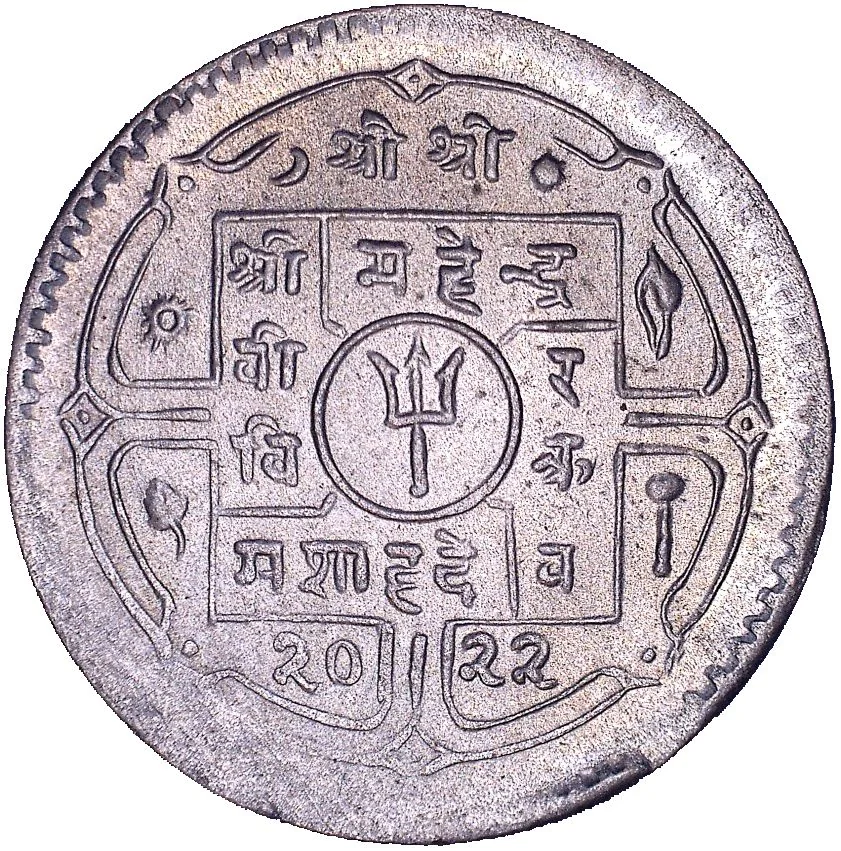
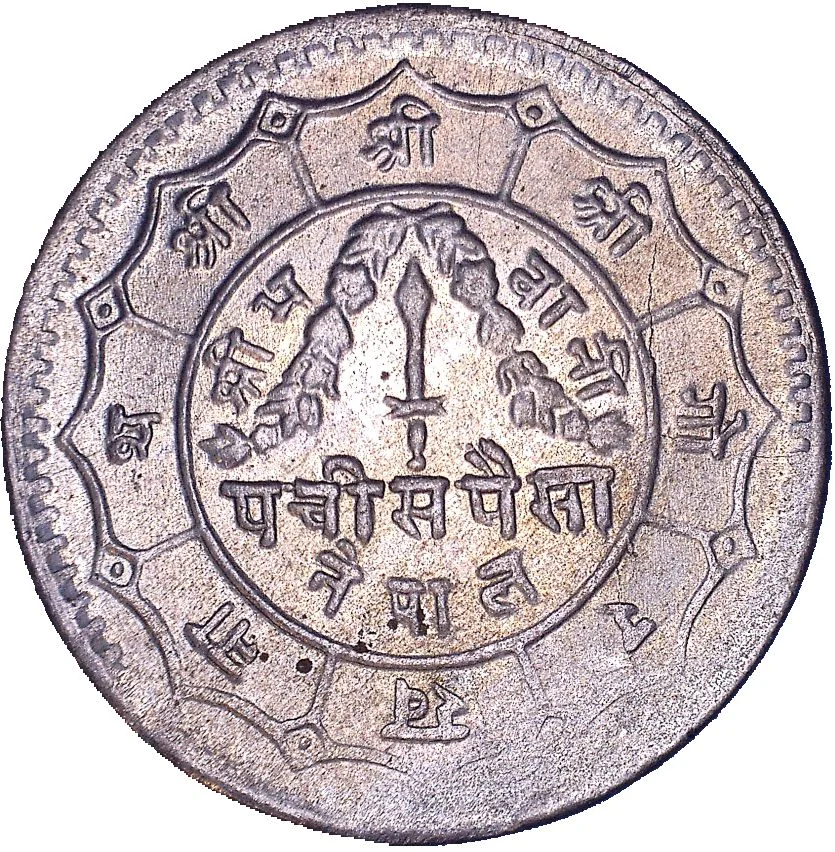
25 paisa – Nepal
Add to wishlist
Nepal
Context
Material
Diameter: 19 mm
Weight: 3.05 g
Thickness: 1.4 mm
Shape: Round
Composition: Copper-nickel
Standard: Gold tenth ounce
Technique: Milled
Alignment: Medal alignment
flip
References
KM: #
Numista: #22513
Value
Exchange value: 0.25 NPR
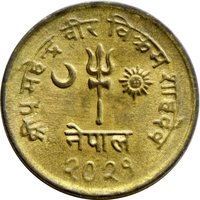
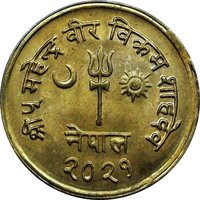
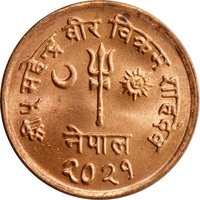
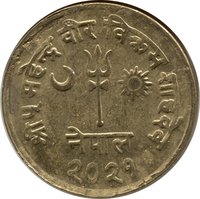
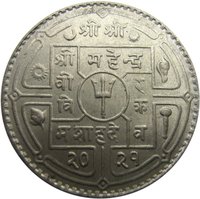
Obverse
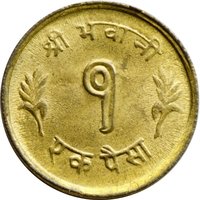
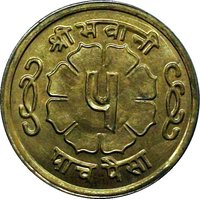
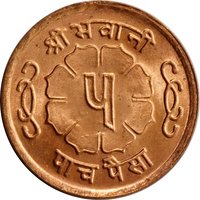
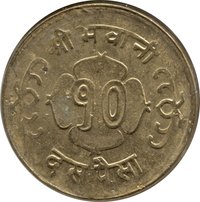
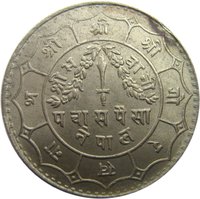
Reverse
Edge
Reeded
Mintings
| Year | Mint Mark | Mintage | Quality | Collection |
|---|---|---|---|---|
| 1964 | — | — | ||
| 1965 | — | — | ||
| 1966 | — | — |
Historical background
In 1964, Nepal's currency situation was characterized by a period of transition and formalization under a centralized system. The country had recently established the Nepal Rastra Bank as its central bank in 1956, ending the private, multi-currency chaos of the past where Indian rupees and various feudal notes circulated. By 1964, the Nepalese rupee (NPR) was firmly established as the sole legal tender, but its value remained pegged to the Indian rupee at a fixed rate of 1:1. This peg was a legacy of the 1960 Treaty of Trade and Transit, which deeply integrated the two economies and made the Indian rupee also widely accepted, especially for larger transactions and in border regions.
The economy was predominantly agrarian, with limited industrialization, resulting in a chronic trade deficit heavily skewed towards imports from India. This dependency meant that Nepal's monetary policy and currency stability were effectively anchored to India's economic performance and policies. Foreign exchange reserves were modest and primarily managed through this relationship. The government, under King Mahendra's Panchayat system, focused on developmental projects, but the currency system itself was not a tool for independent economic policy; it was a facilitator of trade and a symbol of nascent national sovereignty within a constrained framework.
Overall, the currency situation in 1964 was stable but not autonomous. The fixed peg provided predictability for trade and curbed inflation, but it also meant Nepal had surrendered control over its monetary policy to the Reserve Bank of India. The financial infrastructure was still developing, with a limited banking network outside Kathmandu. Thus, while the formal, unified Nepalese rupee represented a significant administrative achievement, the currency's fate and value in 1964 were inextricably linked to its powerful southern neighbor.
The economy was predominantly agrarian, with limited industrialization, resulting in a chronic trade deficit heavily skewed towards imports from India. This dependency meant that Nepal's monetary policy and currency stability were effectively anchored to India's economic performance and policies. Foreign exchange reserves were modest and primarily managed through this relationship. The government, under King Mahendra's Panchayat system, focused on developmental projects, but the currency system itself was not a tool for independent economic policy; it was a facilitator of trade and a symbol of nascent national sovereignty within a constrained framework.
Overall, the currency situation in 1964 was stable but not autonomous. The fixed peg provided predictability for trade and curbed inflation, but it also meant Nepal had surrendered control over its monetary policy to the Reserve Bank of India. The financial infrastructure was still developing, with a limited banking network outside Kathmandu. Thus, while the formal, unified Nepalese rupee represented a significant administrative achievement, the currency's fate and value in 1964 were inextricably linked to its powerful southern neighbor.
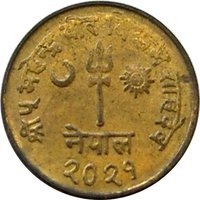
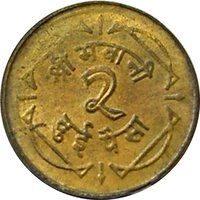
Series: 1964 Nepal circulation coins
🌱 Fairly Common