

100 réis – Brazil
Add to wishlist
Brazil
Context
Material
Diameter: 27 mm
Weight: 10 g
Thickness: 2 mm
Shape: Round
Composition: Copper-nickel
Technique: Milled
Alignment: Coin alignment
flip
References
KM: #
Numista: #2251
Obverse
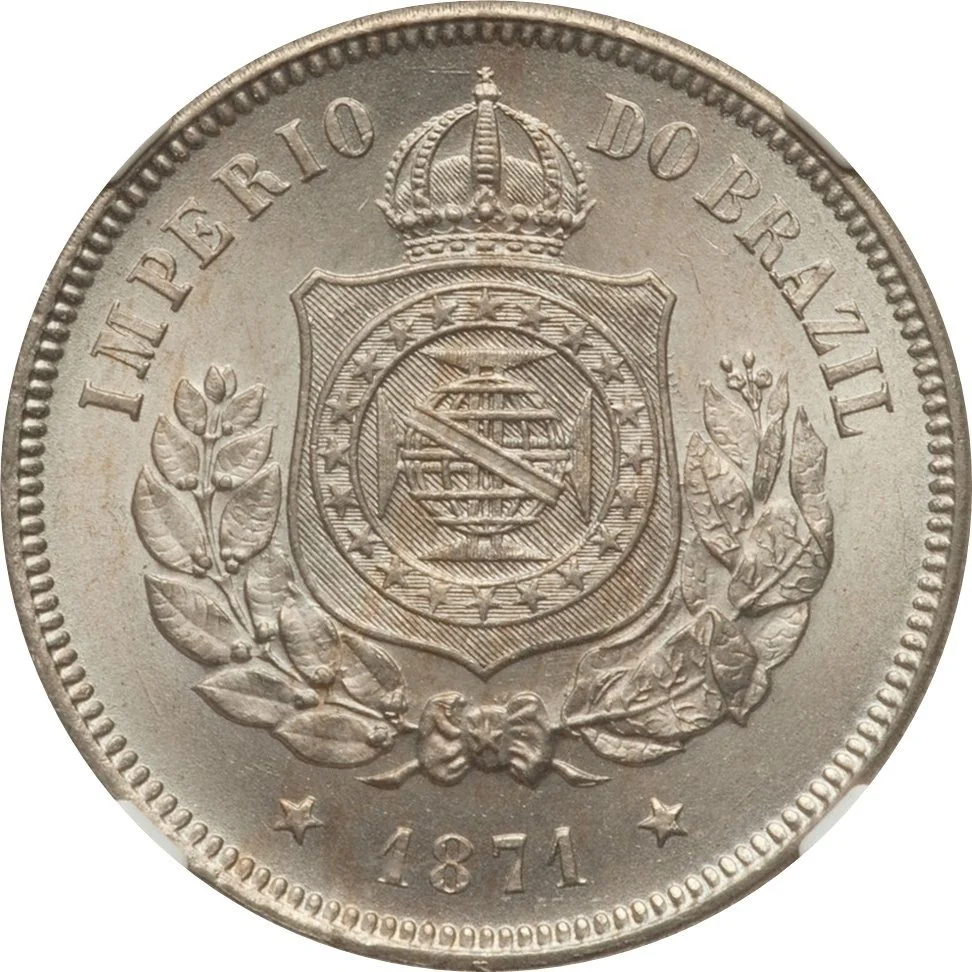
Description:
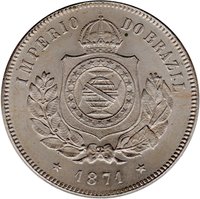
Imperial Brazil's coat of arms.
Inscription:
IMPERIO DO BRAZIL
1872
1872
Translation:
EMPIRE OF BRAZIL
1872
1872
Script: Latin
Language: Portuguese
Reverse
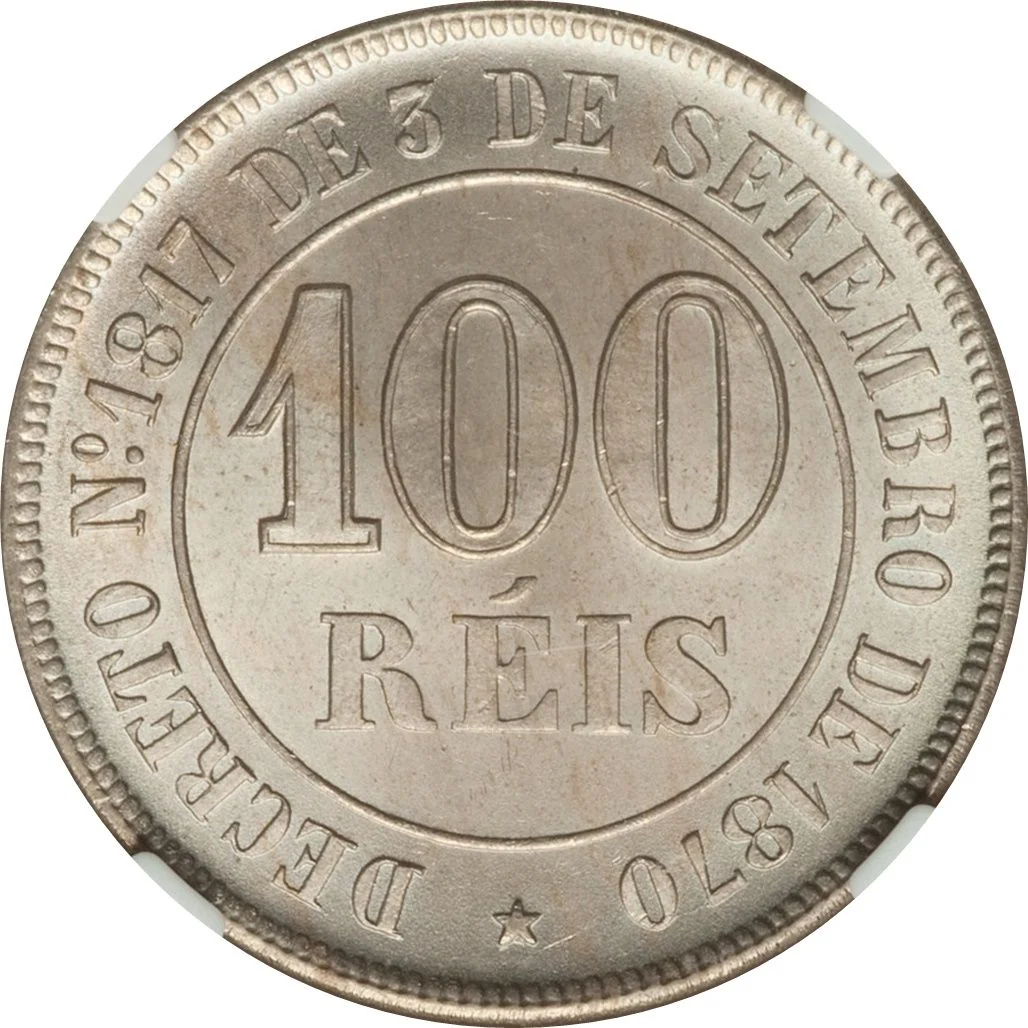
Description:
Denomination
Inscription:
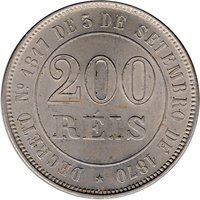
DECRETO N°1817 DE 3 DE SETEMBRO DE 1870
100
RÉIS
100
RÉIS
Translation:
By Decree No. 1817 of September 3, 1870
100
Réis
100
Réis
Script: Latin
Language: Portuguese
Edge
Plain
Categories
| Symbols> Coat of Arms |
Mints
| Name | Mark |
|---|---|
| Casa da Moeda do Brasil | — |
Mintings
| Year | Mint Mark | Mintage | Quality | Collection |
|---|---|---|---|---|
| 1871 | — | 4,000,000 | ||
| 1872 | — | 100 | ||
| 1874 | — | — | ||
| 1875 | — | — | ||
| 1876 | — | — | ||
| 1877 | — | — | ||
| 1878 | — | — | ||
| 1879 | — | — | ||
| 1880 | — | — | ||
| 1881 | — | — | ||
| 1882 | — | — | ||
| 1883 | — | 2,709,000 | ||
| 1884 | — | — | ||
| 1885 | — | — |
Historical background
In 1871, Brazil's currency situation was characterized by the widespread circulation of multiple, often depreciated, forms of money, creating a complex and unstable monetary environment. The primary unit was the milréis, but its value was not anchored to a specific metallic standard. While gold coins existed, the most common circulating mediums were paper money issued by the Treasury and, more problematically, copper and bronze coins that were heavily debased. These low-value coins, essential for everyday transactions, were chronically in short supply, leading to the proliferation of private tokens issued by businesses and even municipalities to facilitate commerce, further complicating the system.
This monetary fragmentation was a direct legacy of the Law of 1866, which aimed to curb inflation by restricting the issuance of paper money but failed to address the coinage crisis. Consequently, the value of the copper currency fluctuated wildly against the paper milréis, operating on a separate and unstable exchange rate. This created a dual-currency system where prices and contracts often had to account for the discrepancy between "paper" and "metal," causing confusion, facilitating fraud, and hindering both domestic trade and foreign investment.
The situation in 1871 was one of mounting pressure for reform. The government, led by the Viscount of Rio Branco, recognized that monetary disorder was an obstacle to economic modernization and the financial demands of a growing empire. While a comprehensive solution was still years away, the debates and studies of this period laid the groundwork for the pivotal Monetary Reform of 1888, which would finally unify the system by adopting the gold standard and resolving the long-standing issue of depreciated subsidiary coinage. Thus, 1871 represents a point of simmering crisis, setting the stage for transformative change.
This monetary fragmentation was a direct legacy of the Law of 1866, which aimed to curb inflation by restricting the issuance of paper money but failed to address the coinage crisis. Consequently, the value of the copper currency fluctuated wildly against the paper milréis, operating on a separate and unstable exchange rate. This created a dual-currency system where prices and contracts often had to account for the discrepancy between "paper" and "metal," causing confusion, facilitating fraud, and hindering both domestic trade and foreign investment.
The situation in 1871 was one of mounting pressure for reform. The government, led by the Viscount of Rio Branco, recognized that monetary disorder was an obstacle to economic modernization and the financial demands of a growing empire. While a comprehensive solution was still years away, the debates and studies of this period laid the groundwork for the pivotal Monetary Reform of 1888, which would finally unify the system by adopting the gold standard and resolving the long-standing issue of depreciated subsidiary coinage. Thus, 1871 represents a point of simmering crisis, setting the stage for transformative change.
🌱 Very Common