

1 Cash – Empire of China
China
Context

Material
Diameter: 24 mm
Weight: 4.2 g
Shape: Round with a square hole
Composition: Brass
Magnetic: No
Technique: Cast
Alignment: Medal alignment
flip
References
Numista: #224879
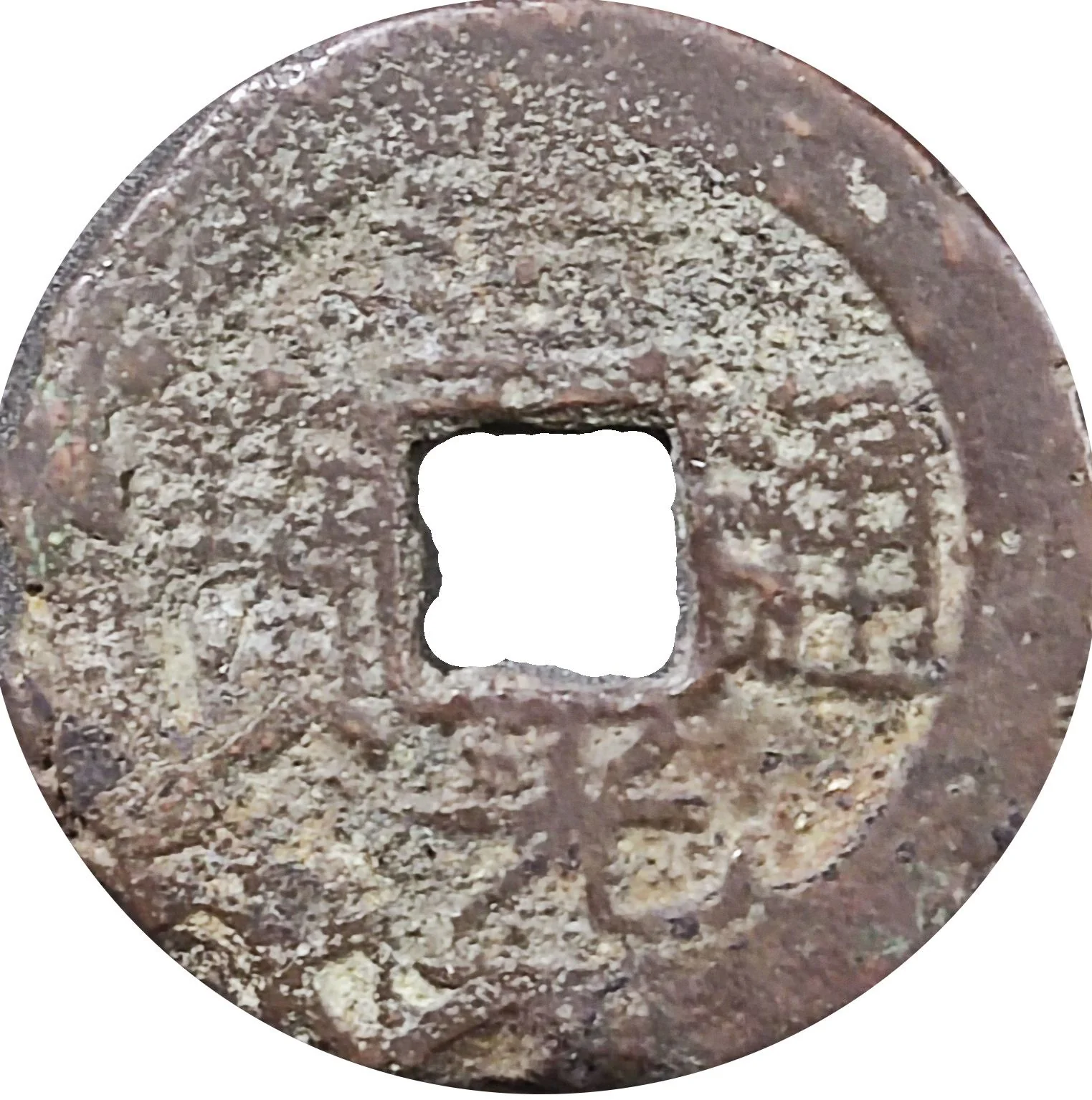
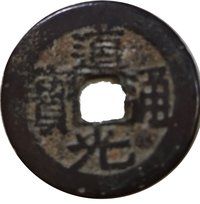
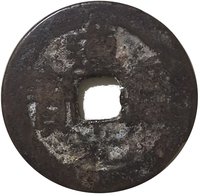
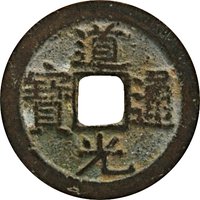
Obverse
Description:
Four Chinese characters read vertically, right to left.
Inscription:
道
寶 通
光
寶 通
光
Translation:
Daoguang
Tongbao
Tongbao
Scripts: Chinese (traditional, regular script)
Language: Chinese
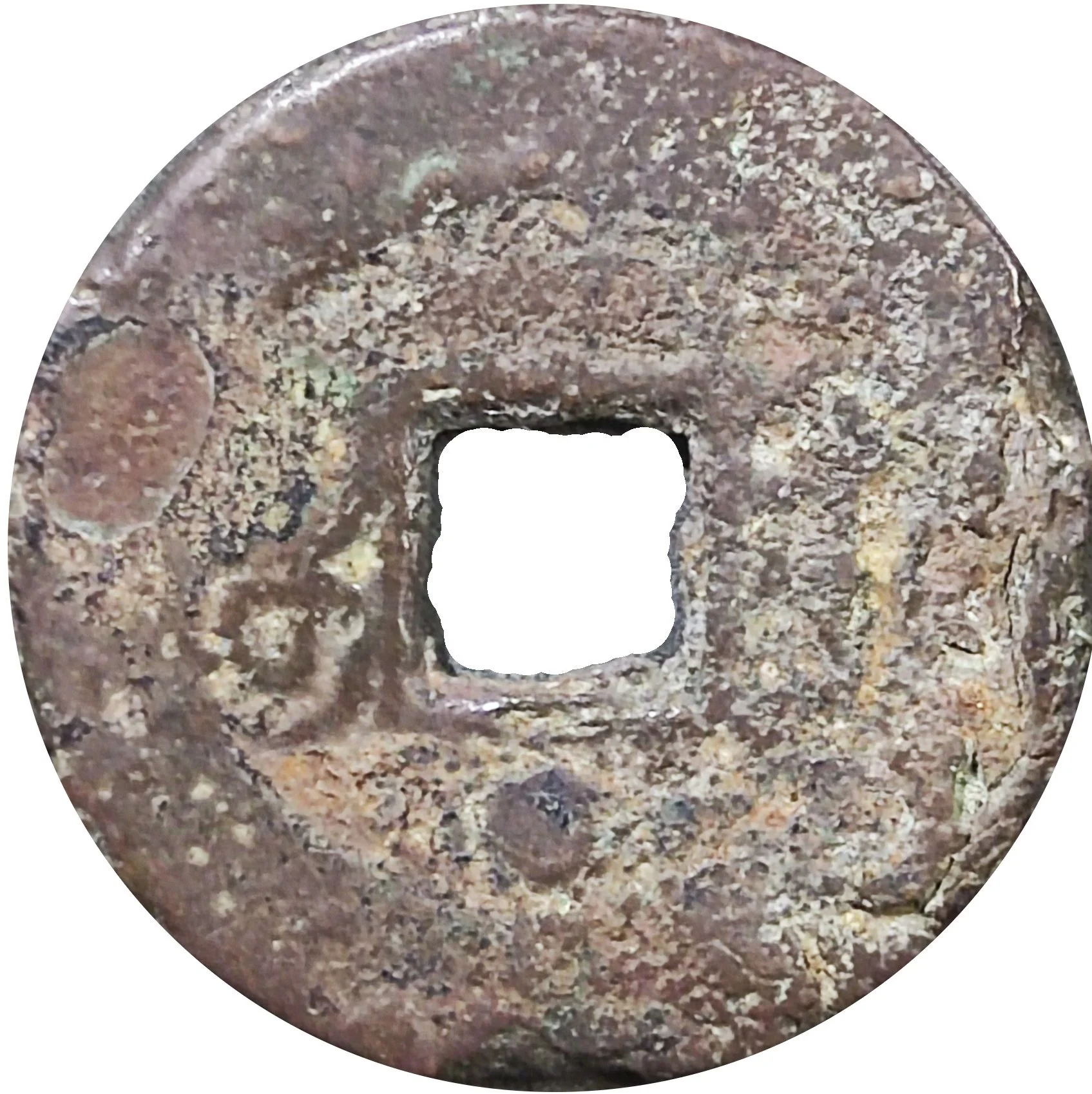
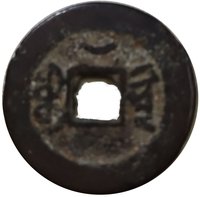
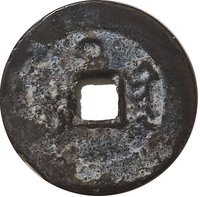
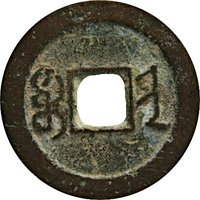
Reverse
Description:
Two Manchu words flank the hole, each marked by a circled dot.
Inscription:
ᠪᠣᠣ ᡴᠶᠠᠨ᠋
.
.
Translation:
Boo kiyan.
Script: Mongolian / Manchu
Language: Manchu
Edge
Plain
Mints
| Name | Mark |
|---|---|
| Guizhou Mint, Dading Branch | — |
| Guizhou Mint, Guiyang Branch | — |
Mintings
| Year | Mint Mark | Mintage | Quality | Collection |
|---|---|---|---|---|
| — | — | — |
Historical background
In 1825, the monetary system of the Qing Empire was a complex and fragmented bimetallic system, operating without a unified, state-minted coinage for everyday use. The primary units of account were the silver tael (a weight unit, not a coin) and copper cash coins. High-value transactions, tax assessments, and long-distance trade were conducted in silver, which was cast into ingots of varying purity and weight (sycee), requiring meticulous assay by merchants. The everyday economy of the common people ran on strings of cast copper-alloy cash coins with a square hole, officially valued at 1/1000 of a tael, though their market exchange rate with silver fluctuated regionally.
This system was under severe strain. A chronic shortage of silver, exacerbated by outflows to pay for opium imports, was creating a destructive deflationary spiral. As silver became scarcer, its value rose relative to copper cash, meaning peasants and laborers who earned in copper found it increasingly expensive to obtain the silver needed to pay their taxes. This "silver famine" caused widespread hardship, decreased government revenue in real terms, and fueled social unrest. Furthermore, the proliferation of private bank notes (qianzhuang and piaohao notes) and the circulation of debased or counterfeit copper cash added layers of complexity and instability to provincial markets.
The imperial government in Beijing, adhering to a minimalist view of monetary intervention, lacked a central mint or effective policy to standardize the currency. Responsibility for copper coinage was decentralized to provincial mints, leading to inconsistent quality and supply. The Daoguang Emperor's court was aware of the monetary crisis—evident in memorials debating the causes of the silver shortage—but remained institutionally incapable of a coordinated response. This deteriorating currency environment formed a critical backdrop to the empire's growing fiscal weakness, which would culminate in the Opium Wars and the severe internal crises of the mid-19th century.
This system was under severe strain. A chronic shortage of silver, exacerbated by outflows to pay for opium imports, was creating a destructive deflationary spiral. As silver became scarcer, its value rose relative to copper cash, meaning peasants and laborers who earned in copper found it increasingly expensive to obtain the silver needed to pay their taxes. This "silver famine" caused widespread hardship, decreased government revenue in real terms, and fueled social unrest. Furthermore, the proliferation of private bank notes (qianzhuang and piaohao notes) and the circulation of debased or counterfeit copper cash added layers of complexity and instability to provincial markets.
The imperial government in Beijing, adhering to a minimalist view of monetary intervention, lacked a central mint or effective policy to standardize the currency. Responsibility for copper coinage was decentralized to provincial mints, leading to inconsistent quality and supply. The Daoguang Emperor's court was aware of the monetary crisis—evident in memorials debating the causes of the silver shortage—but remained institutionally incapable of a coordinated response. This deteriorating currency environment formed a critical backdrop to the empire's growing fiscal weakness, which would culminate in the Opium Wars and the severe internal crises of the mid-19th century.

✨ Legendary