

2 taka – Bangladesh
Add to wishlist
Bangladesh
Context
Material
Diameter: 24 mm
Weight: 5.5 g
Thickness: 1.8 mm
Shape: Round
Composition: Stainless steel
Technique: Milled
Alignment: Medal alignment
flip
References
KM: #
Numista: #22455
Value
Exchange value: 2 BDT
Obverse
Description:
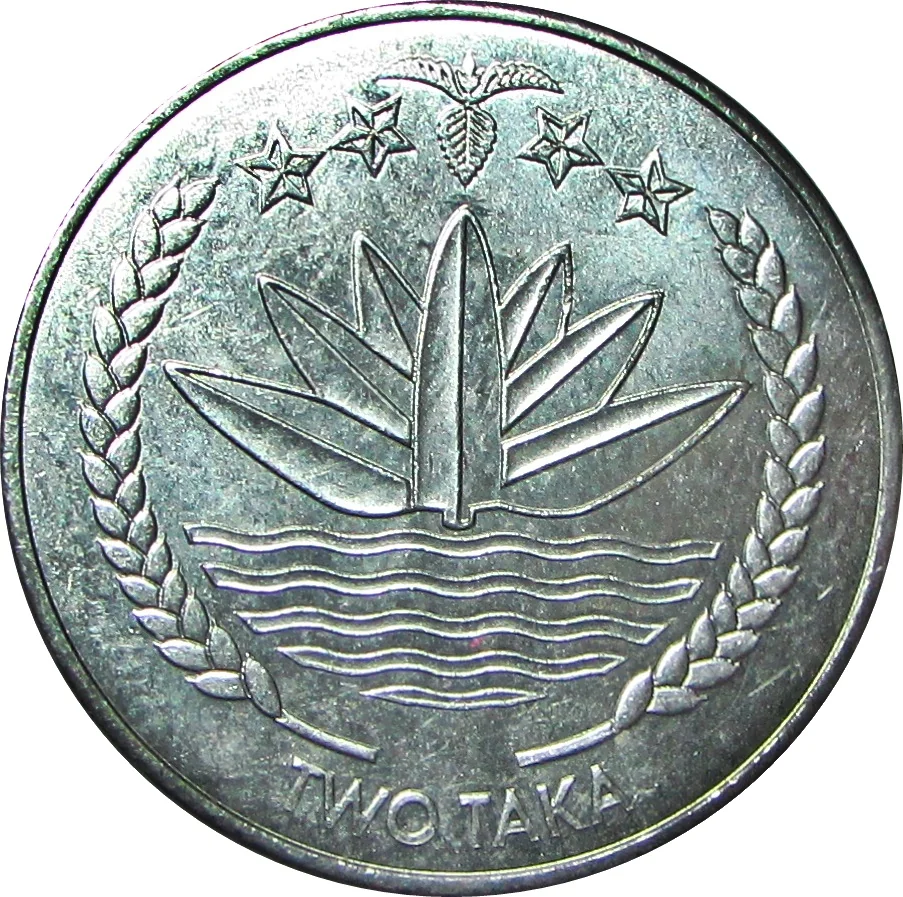
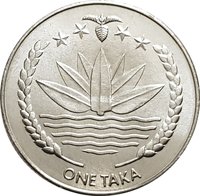
Below the emblem, a water lily flanked by rice sheaves. Above, a tea leaf clover and four stars for the 1972 principles: nationalism, secularism, socialism, and democracy.
Inscription:
TWO TAKA
Reverse
Description:
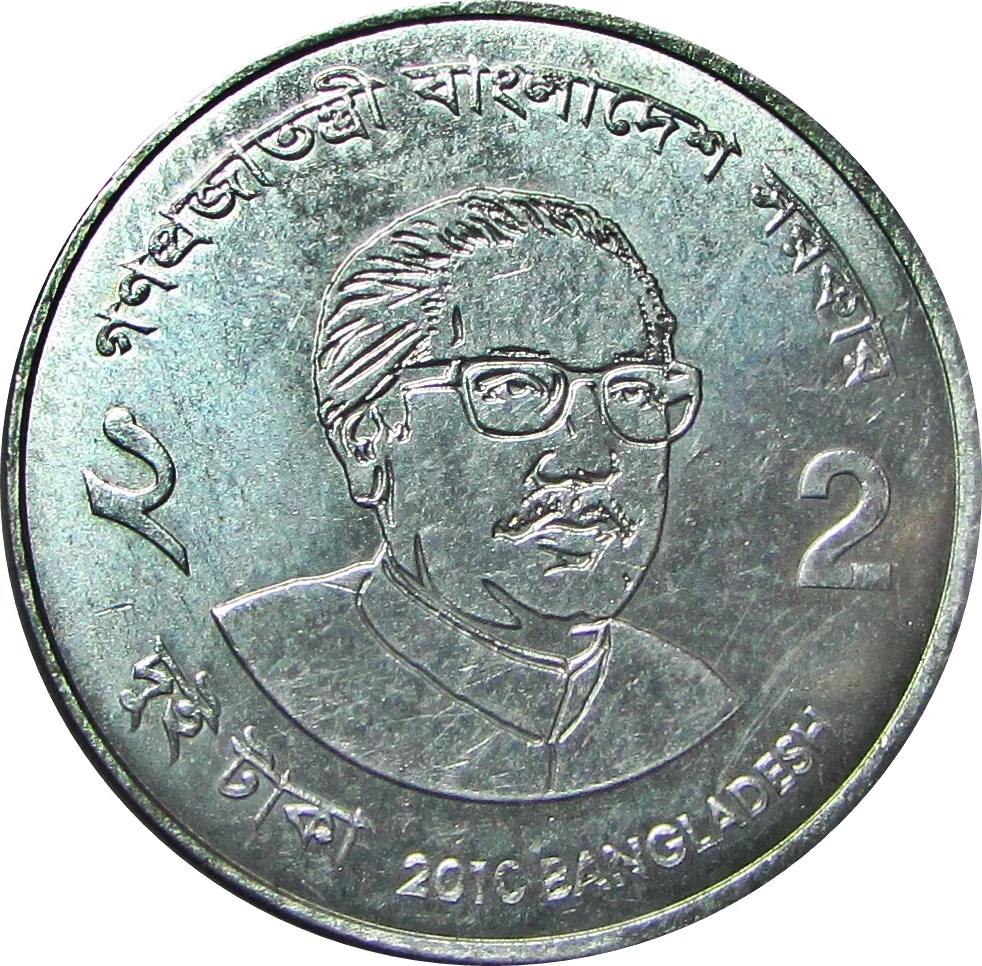
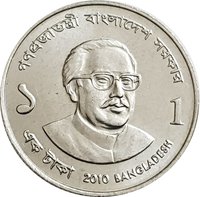
Top: Issuing authority in Bangla. Center: Portrait of Sheikh Mujibur Rahman. Sides: Numerical value in Bangla and English. Bottom: Value in words, issue year, and country name.
Inscription:
গণপ্রজাতন্ত্রী বাংলাদেশ সরকার
২ 2
দুই টাকা 2010 BANGLADESH
২ 2
দুই টাকা 2010 BANGLADESH
Translation:
Government of the People's Republic of Bangladesh
2
Two Taka 2010 BANGLADESH
2
Two Taka 2010 BANGLADESH
Edge
Plain
Categories
| Person> Politician |
| Plants> Flower |
| Symbols> Coat of Arms |
Mintings
| Year | Mint Mark | Mintage | Quality | Collection |
|---|---|---|---|---|
| 2010 | — | — |
Historical background
In 2010, Bangladesh's currency, the Taka (BDT), faced significant pressure from persistent inflationary trends and a widening trade deficit. Inflation, driven by rising global commodity prices for food and fuel, averaged around 8-9% for much of the year, eroding purchasing power and putting downward pressure on the currency's value. Simultaneously, a surge in import payments, particularly for fuel, machinery, and food grains, outpaced the steady growth in exports (led by the ready-made garment sector) and remittance inflows. This imbalance contributed to a growing current account deficit, increasing demand for foreign currency and straining foreign exchange reserves.
The Bangladesh Bank (BB), the country's central bank, responded with a managed floating exchange rate regime, intervening strategically to curb excessive volatility. Throughout the year, it allowed a gradual depreciation of the Taka against the US Dollar to improve export competitiveness and discourage imports, while also selling dollars from reserves to smooth the decline. This cautious depreciation was a key monetary tool to address the external imbalance. However, these interventions, combined with inflationary financing of government deficits, contributed to a contraction in the growth of private sector credit as the bank aimed to stabilize the macroeconomic environment.
Overall, the currency situation in 2010 was one of controlled adjustment amid external and internal pressures. The Taka depreciated by approximately 4-5% against the US Dollar over the course of the year. While the economy maintained robust GDP growth, the primary challenges for monetary authorities were balancing the competing goals of controlling inflation, managing the exchange rate to protect reserves, and supporting continued economic expansion, a complex trilemma that defined the year's currency policy.
The Bangladesh Bank (BB), the country's central bank, responded with a managed floating exchange rate regime, intervening strategically to curb excessive volatility. Throughout the year, it allowed a gradual depreciation of the Taka against the US Dollar to improve export competitiveness and discourage imports, while also selling dollars from reserves to smooth the decline. This cautious depreciation was a key monetary tool to address the external imbalance. However, these interventions, combined with inflationary financing of government deficits, contributed to a contraction in the growth of private sector credit as the bank aimed to stabilize the macroeconomic environment.
Overall, the currency situation in 2010 was one of controlled adjustment amid external and internal pressures. The Taka depreciated by approximately 4-5% against the US Dollar over the course of the year. While the economy maintained robust GDP growth, the primary challenges for monetary authorities were balancing the competing goals of controlling inflation, managing the exchange rate to protect reserves, and supporting continued economic expansion, a complex trilemma that defined the year's currency policy.
🌱 Very Common