

1 dollar – Barbados
Add to wishlist
Barbados
Context
Material
Diameter: 39 mm
Weight: 31.1 g
Silver Weight:: 31.07 g
Shape: Round
Composition: 99.9% Silver
Standard: Silver ounce
Magnetic: No
Technique: Milled
Alignment: Coin alignment
flip
References
KM: #
Numista: #224522
Value
Exchange value: 1 BBD
Bullion value: $77.85
Obverse
Description:
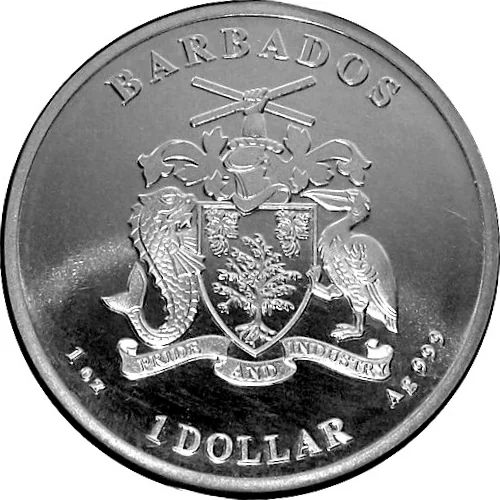
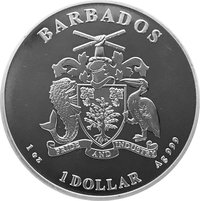
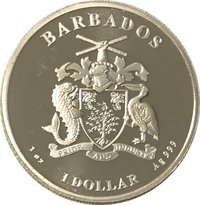
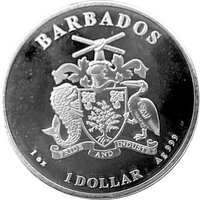
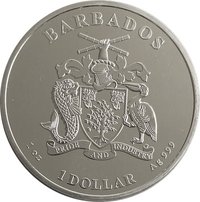
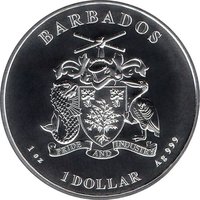
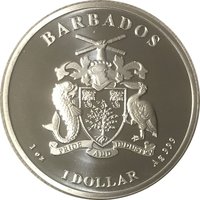
The obverse displays Barbados' coat of arms, flanked by national flowers and a fig tree. A dolphin and pelican support the shield, above which a Bajan hand holds crossed sugar cane. The motto is "Pride and Industry."
Inscription:
BARBADOS
PRIDE AND INDUSTRY
1 OZ Ag 999
1 DOLLAR
PRIDE AND INDUSTRY
1 OZ Ag 999
1 DOLLAR
Translation:
BARBADOS
PRIDE AND INDUSTRY
1 OZ Ag 999
1 DOLLAR
PRIDE AND INDUSTRY
1 OZ Ag 999
1 DOLLAR
Script: Latin
Language: English
Reverse
Description:
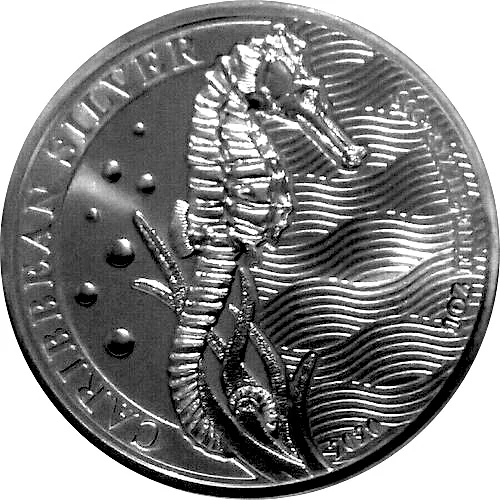
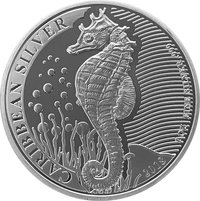
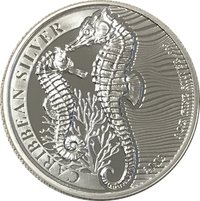
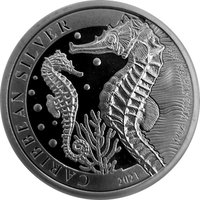
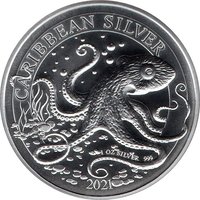
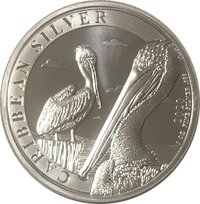
The reverse depicts a seahorse facing right, its tail curled around an ocean plant. Background waves and bubbles accompany minted text for the coin's name, year, and purity along the rim.
Inscription:
CARIBBEAN SILVER
2020
1 OZ FINE SILVER .999
2020
1 OZ FINE SILVER .999
Script: Latin
Edge
Plain
Categories
| Animal> Fish |
| Symbols> Coat of Arms |
Mints
| Name | Mark |
|---|---|
| Scottsdale Mint | — |
Mintings
| Year | Mint Mark | Mintage | Quality | Collection |
|---|---|---|---|---|
| 2020 | — | 10,000 | BU |
Historical background
In 2020, Barbados continued to operate under a fixed exchange rate regime, with its currency, the Barbadian dollar (BBD), pegged at a rate of 2:1 to the United States dollar. This long-standing peg, established in 1975, was a cornerstone of the country's monetary policy and a key source of economic stability and confidence for both domestic and international investors. However, this stability was maintained under significant strain due to the profound economic shock of the COVID-19 pandemic, which decimated the nation's vital tourism sector—its primary source of foreign exchange earnings.
The pandemic-induced collapse in tourism revenue in 2020 exacerbated pre-existing economic vulnerabilities. Barbados was still in the early stages of a comprehensive debt restructuring and economic reform program agreed with the International Monetary Fund (IMF) in 2018, known as the Barbados Economic Recovery and Transformation (BERT) plan. While the BERT plan had successfully restored fiscal discipline and rebuilt international reserves prior to the pandemic, the crisis of 2020 threatened these gains. The dramatic fall in foreign currency inflows tested the resilience of the central bank's reserves, which were essential for defending the currency peg.
Despite the severe economic contraction, the Mia Mottley administration remained unequivocally committed to maintaining the fixed exchange rate. This commitment was a critical component of its overall economic strategy, viewed as non-negotiable for preserving financial stability. The government navigated the crisis by securing emergency financing from the IMF and other multilateral institutions, which provided a crucial buffer for the reserves. Consequently, while the economy faced its deepest recession on record in 2020, the currency peg itself remained intact, avoiding a devaluation scenario that had unfolded in other regional economies during previous crises.
The pandemic-induced collapse in tourism revenue in 2020 exacerbated pre-existing economic vulnerabilities. Barbados was still in the early stages of a comprehensive debt restructuring and economic reform program agreed with the International Monetary Fund (IMF) in 2018, known as the Barbados Economic Recovery and Transformation (BERT) plan. While the BERT plan had successfully restored fiscal discipline and rebuilt international reserves prior to the pandemic, the crisis of 2020 threatened these gains. The dramatic fall in foreign currency inflows tested the resilience of the central bank's reserves, which were essential for defending the currency peg.
Despite the severe economic contraction, the Mia Mottley administration remained unequivocally committed to maintaining the fixed exchange rate. This commitment was a critical component of its overall economic strategy, viewed as non-negotiable for preserving financial stability. The government navigated the crisis by securing emergency financing from the IMF and other multilateral institutions, which provided a crucial buffer for the reserves. Consequently, while the economy faced its deepest recession on record in 2020, the currency peg itself remained intact, avoiding a devaluation scenario that had unfolded in other regional economies during previous crises.
Series: Caribbean Silver

💎 Very Rare