

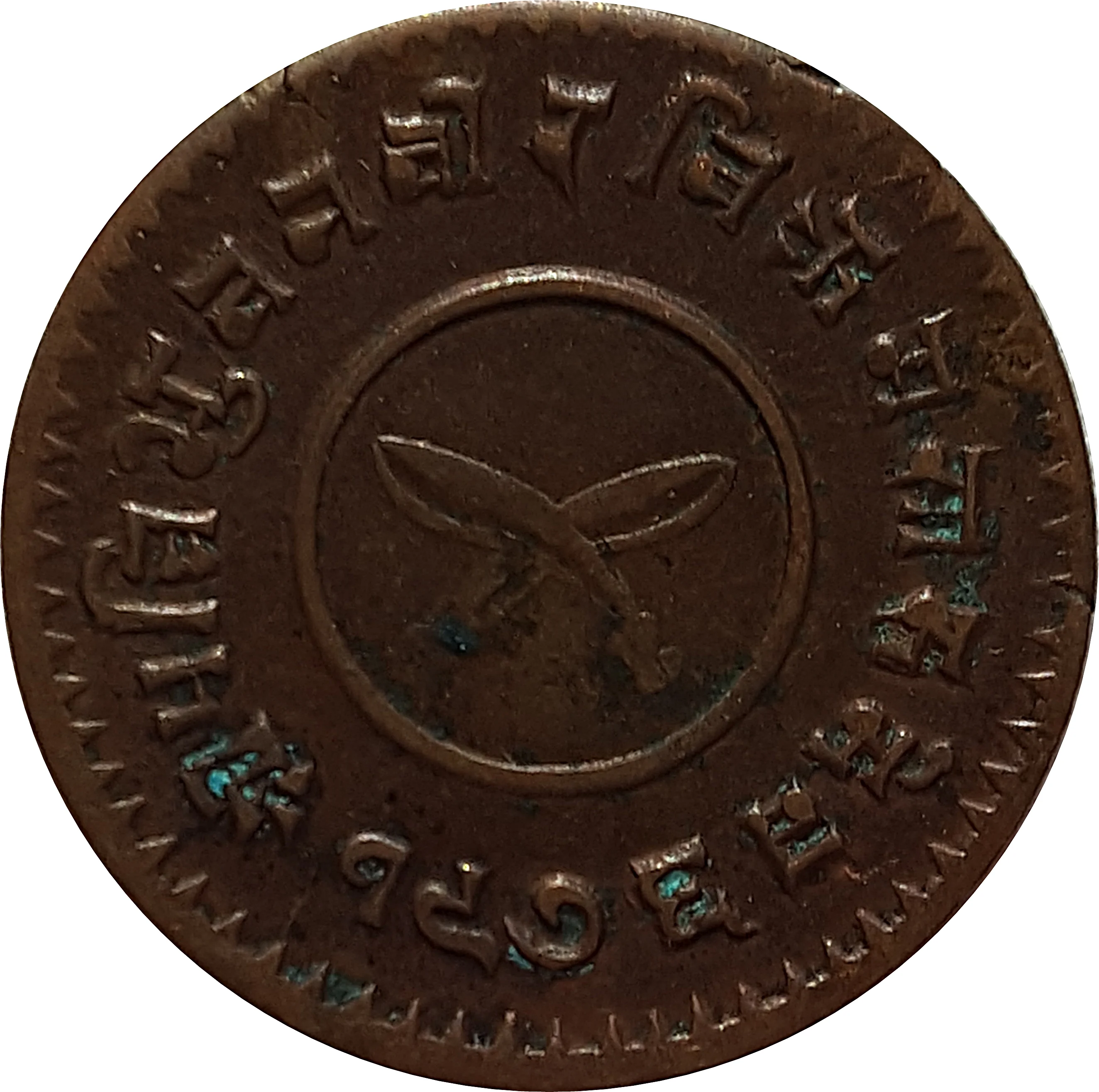
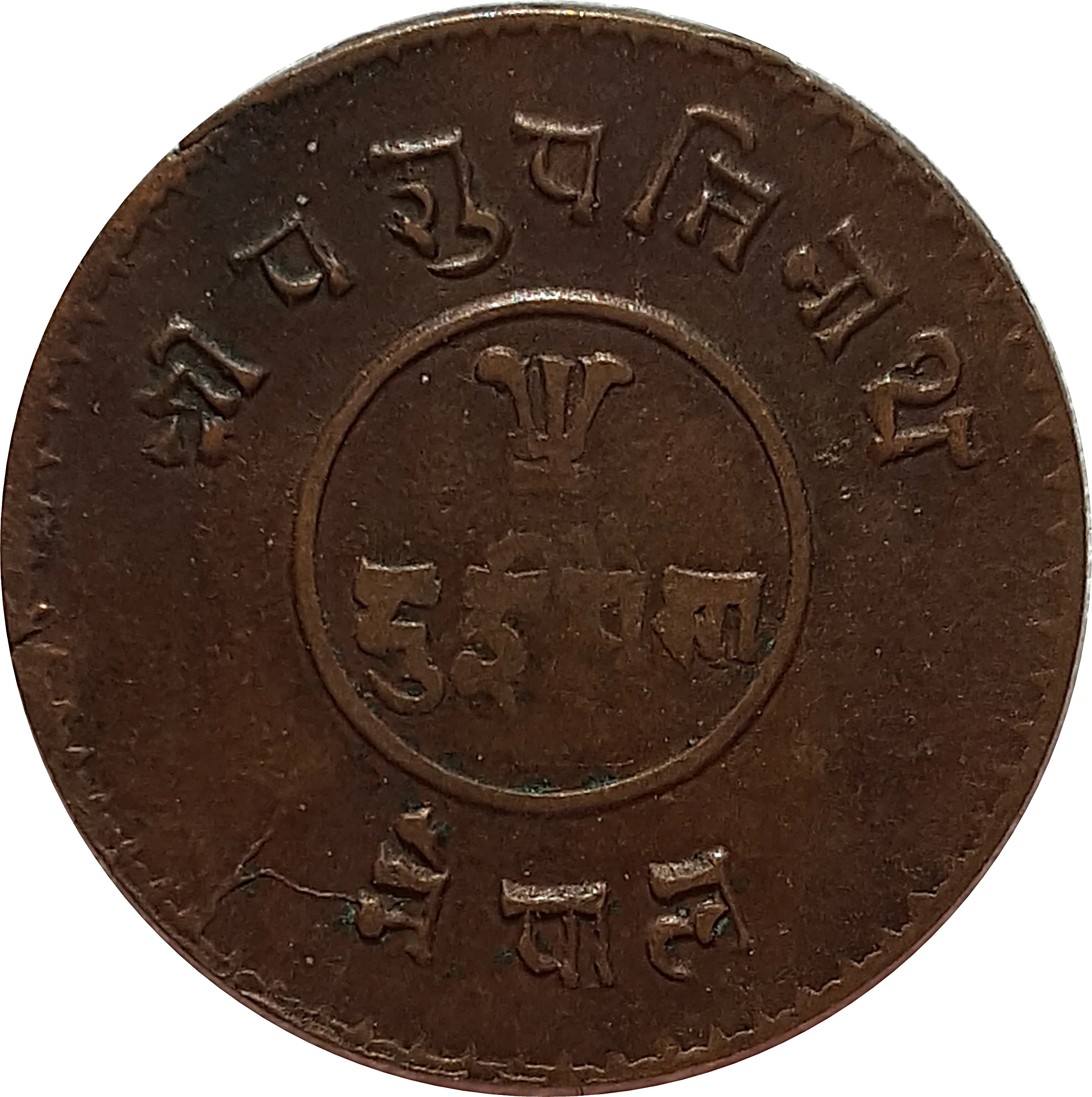
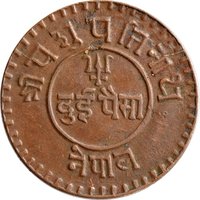
2 Paisa – Nepal
Nepal
Context
Year: 1919
Vikram Samvat Year: 1976
Issuer: Nepal 
Ruler: Tribhuvan Bir Bikram Shah
Currency:
(1546—1932)
Demonetized: Yes
Material
References
KM: #Click to copy to clipboard689.4
Numista: #223956
Obverse
Description:
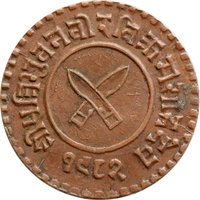
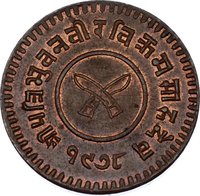
Crossed khukris in fine style.
Reverse
Edge
Plain
Mintings
| Year | Mint Mark | Mintage | Quality | Collection |
|---|---|---|---|---|
| 1919 | — | — |
Historical background
In 1919, Nepal’s currency system was a complex and dualistic one, firmly under the control of the autocratic Rana dynasty. The nation was not fully monetized, with barter still common in rural areas, but the official currency was the silver Mohar and its copper subunit, the Dam. Critically, these coins circulated alongside and were heavily influenced by the Indian Rupee, which was itself on a silver standard. This created a dependent, satellite monetary system where Nepal’s currency value was effectively pegged to its Indian counterpart, reflecting the country’s close economic and political ties to British India.
The Rana regime, led by Prime Minister Chandra Shumsher Jang Bahadur Rana, maintained a strict policy of issuing coinage primarily for state expenses and to hoard wealth, rather than to facilitate a modern economy. Coin minting was a sovereign prerogative and a source of seigniorage revenue. However, the system was plagued by recurring shortages of small-denomination coins for daily transactions, leading to the use of cut coin fragments and fostering public inconvenience. Furthermore, the purity and weight of the silver Mohar were occasionally debased by the state to meet fiscal shortfalls, causing inflation and eroding public trust.
This period predated the establishment of a central bank or paper currency by decades. The monetary situation in 1919 was therefore characterized by metallic circulation, dependency on Indian silver flows, and administrative control aimed at benefiting the Rana treasury. It was a system designed for stability in government finance and elite enrichment, rather than for economic development or the convenience of the broader Nepalese populace, laying the groundwork for future monetary reforms that would only begin after the political changes of the 1950s.
The Rana regime, led by Prime Minister Chandra Shumsher Jang Bahadur Rana, maintained a strict policy of issuing coinage primarily for state expenses and to hoard wealth, rather than to facilitate a modern economy. Coin minting was a sovereign prerogative and a source of seigniorage revenue. However, the system was plagued by recurring shortages of small-denomination coins for daily transactions, leading to the use of cut coin fragments and fostering public inconvenience. Furthermore, the purity and weight of the silver Mohar were occasionally debased by the state to meet fiscal shortfalls, causing inflation and eroding public trust.
This period predated the establishment of a central bank or paper currency by decades. The monetary situation in 1919 was therefore characterized by metallic circulation, dependency on Indian silver flows, and administrative control aimed at benefiting the Rana treasury. It was a system designed for stability in government finance and elite enrichment, rather than for economic development or the convenience of the broader Nepalese populace, laying the groundwork for future monetary reforms that would only begin after the political changes of the 1950s.
💎 Extremely Rare