

1 millieme – Egypt
Add to wishlist
Standard circulation coins
Series: Sphinx
Egypt
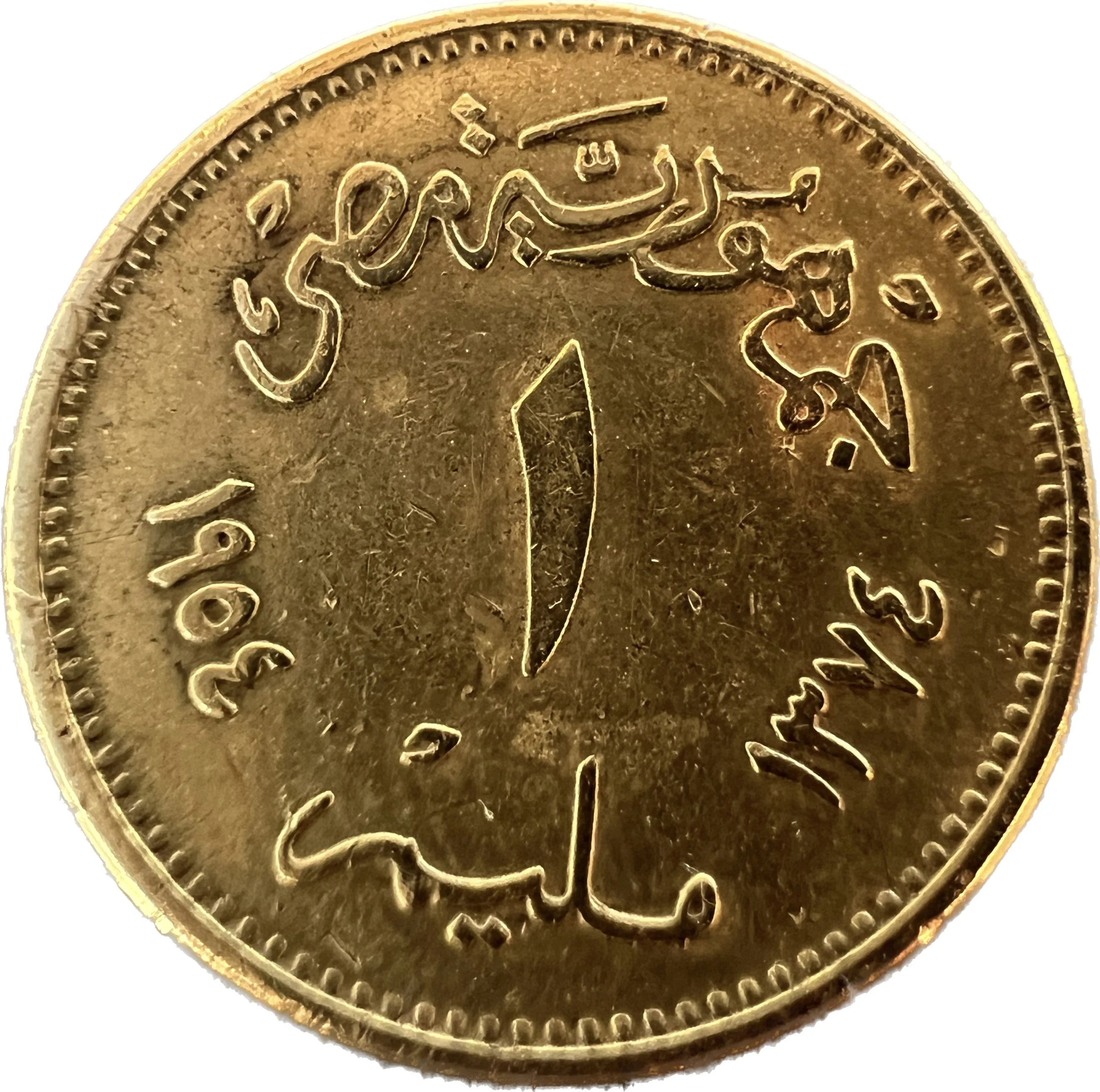
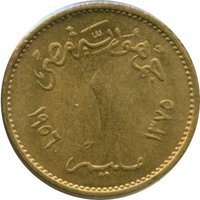
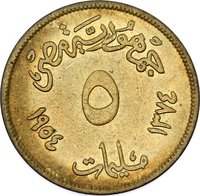
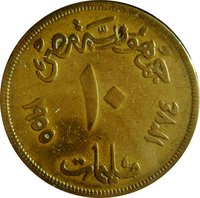
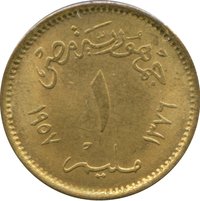
Obverse
Description:
Denomination by date range
Inscription:
جمهورية مصر
١
١٣٧٤ مليم ١٩٥٥
١
١٣٧٤ مليم ١٩٥٥
Translation:
Arab Republic of Egypt
1
1374 Millim 1955
1
1374 Millim 1955
Script: Arabic
Language: Arabic
Designer: Muhammad ElShaer
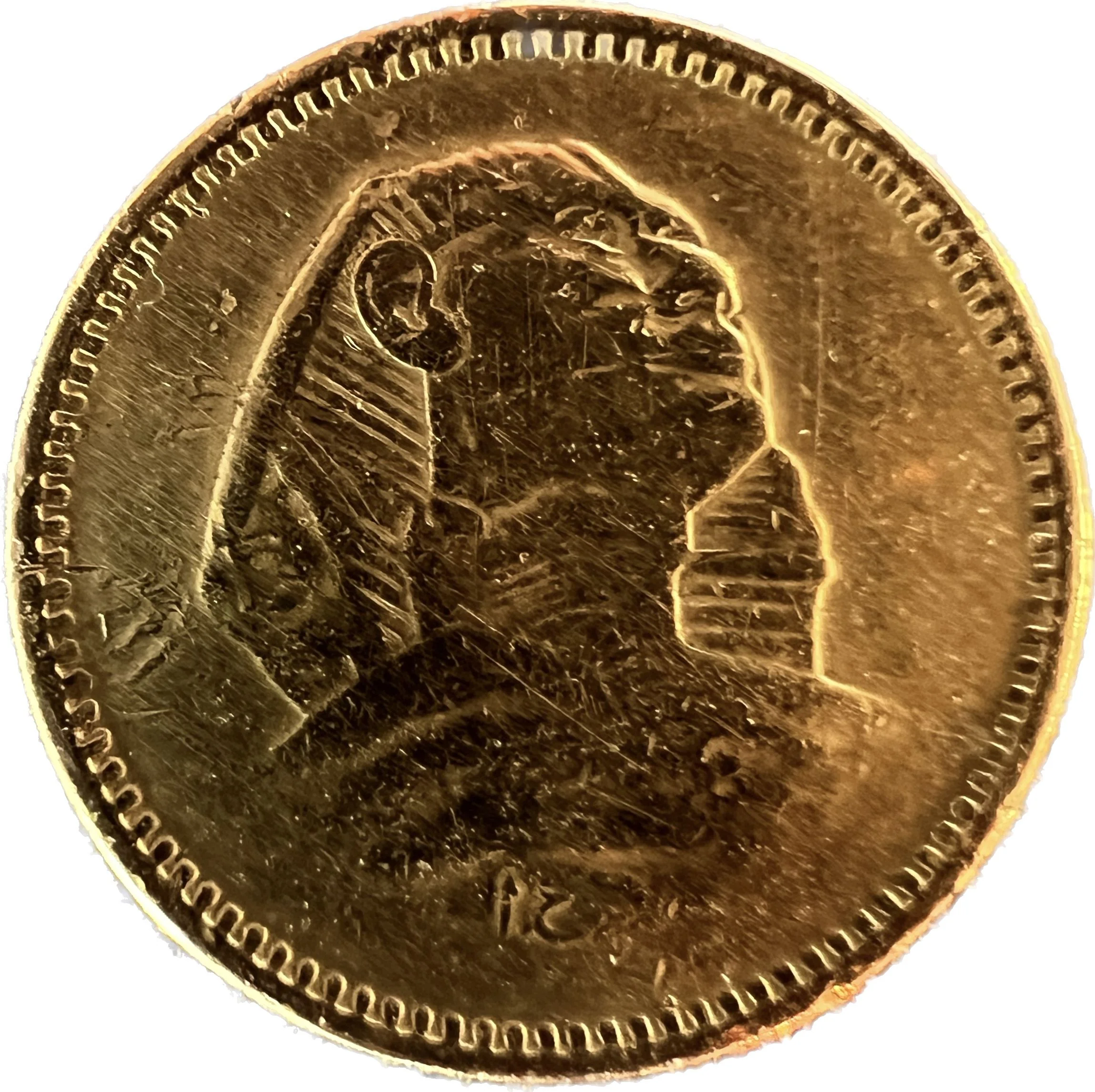
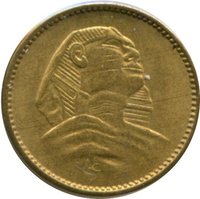
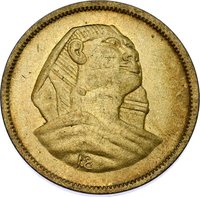
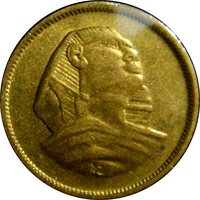
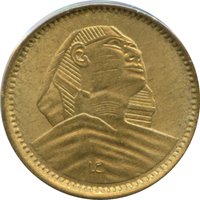
Reverse
Description:
Sphinx without base outline
Designer: Abbas El-Sheikh
Edge
Plain
Categories
| Mythology> Fantastic animal |
Mints
| Name | Mark |
|---|---|
| Egyptian Mint Authority | — |
Mintings
| Year | Mint Mark | Mintage | Quality | Collection |
|---|---|---|---|---|
| 1954 | — | — | ||
| 1954 | — | — | ||
| 1955 | — | — | ||
| 1956 | — | — | ||
| 1957 | — | — |
Historical background
Following the 1952 Free Officers' Revolution, Egypt's currency situation in 1954 was one of cautious transition and controlled instability. The new republican government, led by President Gamal Abdel Nasser, inherited a complex monetary system. The Egyptian pound was still formally pegged to sterling and backed by gold, a legacy of the British colonial influence that was now rapidly receding. However, the economy faced significant pressures: a growing trade deficit, dwindling foreign reserves from the war years, and the immense costs associated with ambitious domestic development projects and military modernization.
Politically, 1954 was a pivotal year of consolidation for the revolution, culminating in Nasser's emergence as sole leader. This domestic focus meant that radical currency reform was temporarily secondary to political maneuvering and land reform. Consequently, the government maintained the existing peg but operated within a framework of strict exchange controls and import licensing to conserve foreign currency. These controls aimed to steer scarce hard currency—primarily still sterling and U.S. dollars—toward essential imports for industrialization and away from luxury goods, effectively creating a managed, multi-tiered system.
Thus, the currency regime in 1954 was characterized by a tense duality. On the surface, the formal parity and gold backing provided a veneer of stability, but beneath it, a controlled economy was taking shape. The situation was stable but fragile, heavily dependent on administrative controls rather than market confidence. This period set the stage for the more dramatic economic policies that would follow later in the decade, including the nationalization of the Suez Canal and the shift toward a fully state-directed economy, which would eventually lead to the devaluation of the pound and the severing of its formal link to sterling.
Politically, 1954 was a pivotal year of consolidation for the revolution, culminating in Nasser's emergence as sole leader. This domestic focus meant that radical currency reform was temporarily secondary to political maneuvering and land reform. Consequently, the government maintained the existing peg but operated within a framework of strict exchange controls and import licensing to conserve foreign currency. These controls aimed to steer scarce hard currency—primarily still sterling and U.S. dollars—toward essential imports for industrialization and away from luxury goods, effectively creating a managed, multi-tiered system.
Thus, the currency regime in 1954 was characterized by a tense duality. On the surface, the formal parity and gold backing provided a veneer of stability, but beneath it, a controlled economy was taking shape. The situation was stable but fragile, heavily dependent on administrative controls rather than market confidence. This period set the stage for the more dramatic economic policies that would follow later in the decade, including the nationalization of the Suez Canal and the shift toward a fully state-directed economy, which would eventually lead to the devaluation of the pound and the severing of its formal link to sterling.
Series: Sphinx
🌱 Fairly Common