

10 pence – United Kingdom
Add to wishlist
United Kingdom
Context
Years: 1998–2008
Issuer: United Kingdom
Ruler: Elizabeth II
Currency:
(since 1971)
Total mintage: 805,011,897
Material
References
KM: #
Numista: #2236
Value
Exchange value: 0.10 GBP
Inflation-adjusted value: 0.23 GBP
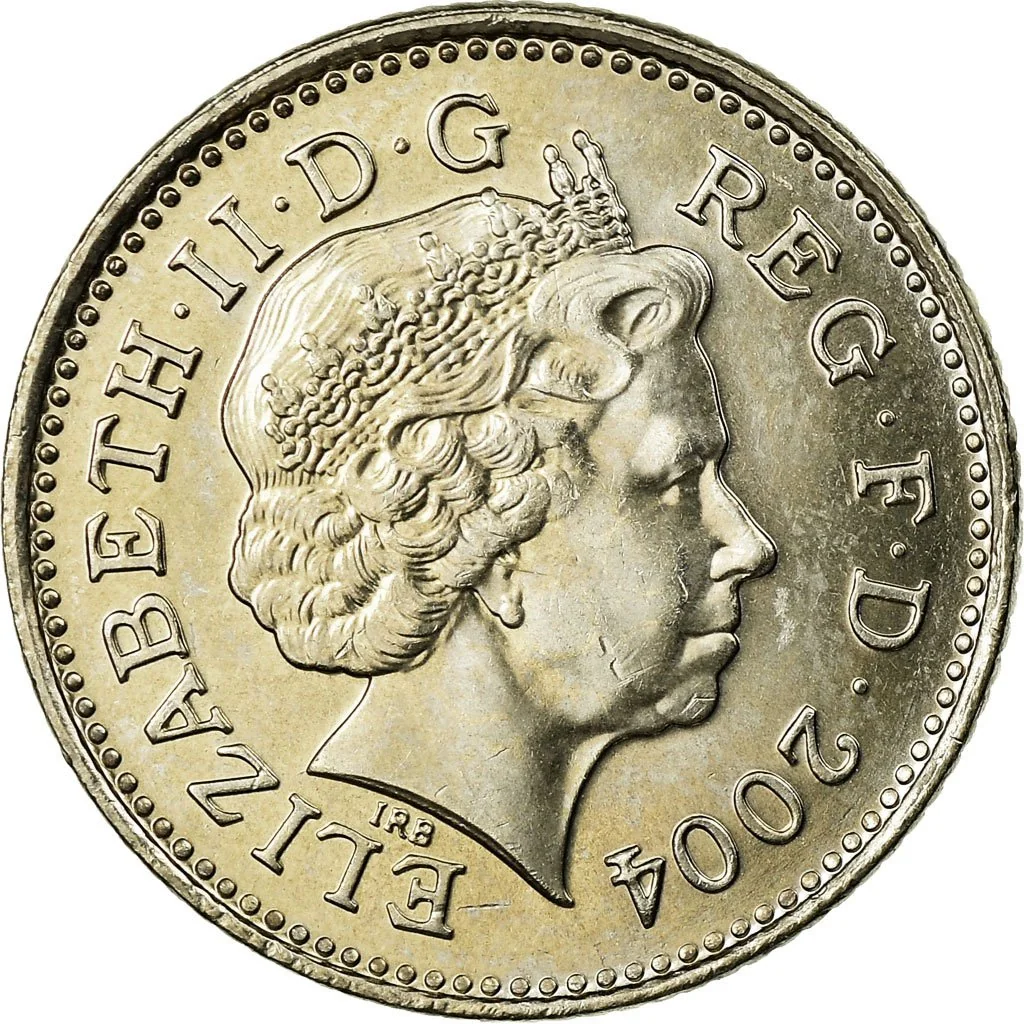
Obverse
Description:
Queen Elizabeth IV facing right, wearing the Girls of Great Britain and Ireland tiara.
Inscription:
ELIZABETH·II·D·G REG·F·D·2004
IRB
IRB
Translation:
Elizabeth II by the Grace of God Queen Defender of the Faith 2004
Script: Latin
Engraver: Ian Rank-Broadley
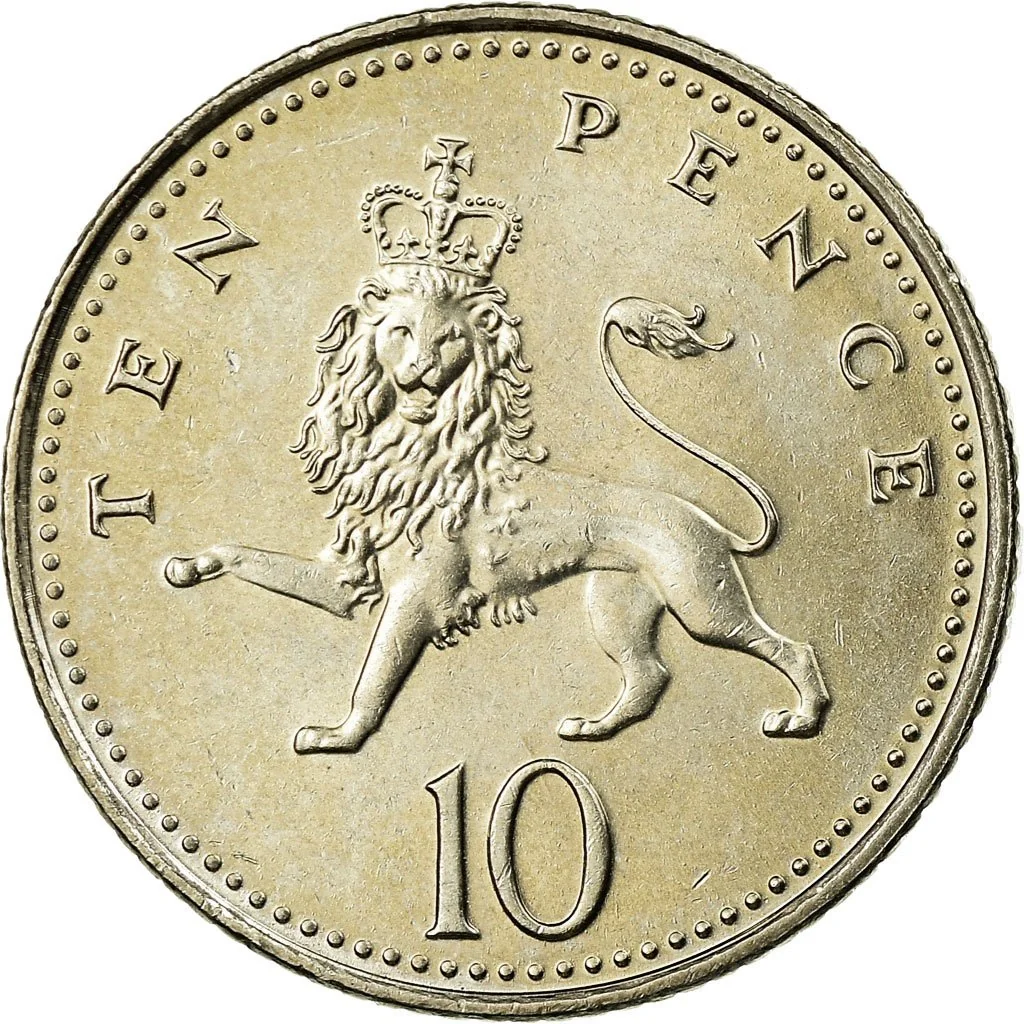
Reverse
Description:
Crowned lion passant guardant, with legend above and denomination below.
Inscription:
TEN PENCE
10
10
Script: Latin
Engraver: Christopher Ironside
Edge
Reeded
Mints
| Name | Mark |
|---|---|
| Royal Mint | — |
Mintings
| Year | Mint Mark | Mintage | Quality | Collection |
|---|---|---|---|---|
| 1998 | — | 96,192 | BU | |
| 1998 | — | 63,670 | Proof | |
| 1999 | — | 136,696 | BU | |
| 1999 | — | 80,144 | Proof | |
| 2000 | — | 134,733,000 | ||
| 2000 | — | 117,750 | BU | |
| 2000 | — | 72,469 | Proof | |
| 2001 | — | 129,281,000 | ||
| 2001 | — | 57,741 | BU | |
| 2001 | — | 49,372 | Proof | |
| 2002 | — | 80,934,000 | ||
| 2002 | — | 60,539 | BU | |
| 2002 | — | 60,770 | Proof | |
| 2003 | — | 88,118,000 | ||
| 2003 | — | 62,741 | BU | |
| 2003 | — | 43,513 | Proof | |
| 2004 | — | 99,602,000 | ||
| 2004 | — | 84,617 | BU | |
| 2004 | — | 35,020 | Proof | |
| 2005 | — | 51,776 | BU | |
| 2005 | — | 40,563 | Proof | |
| 2005 | — | 69,604,000 | ||
| 2006 | — | 100,109 | BU | |
| 2006 | — | 37,689 | Proof | |
| 2006 | — | 118,803,000 | ||
| 2007 | — | 38,215 | Proof | |
| 2007 | — | 72,720,000 | ||
| 2007 | — | 91,878 | BU | |
| 2008 | — | 9,720,000 | ||
| 2008 | — | 79,100 | BU | |
| 2008 | — | 36,333 | Proof |
Historical background
In 1998, the United Kingdom's currency situation was defined by a period of remarkable stability and strength for the pound sterling, operating under a freely floating exchange rate. This followed the traumatic exit from the European Exchange Rate Mechanism (ERM) on "Black Wednesday" in 1992, after which the government allowed the pound's value to be set by the foreign exchange markets. By 1998, this policy, combined with the newly independent Bank of England's focus on inflation targeting, had fostered economic credibility. The pound was strong, particularly against European currencies, as the UK economy outperformed its continental counterparts, which were grappling with the fallout from the 1997 Asian financial crisis and preparing for the launch of the euro.
The year was particularly significant as it preceded the introduction of the euro on 1 January 1999. The UK, under the Labour government of Tony Blair and Chancellor Gordon Brown, had secured an "opt-out" from the single currency and adopted a policy of "prepare and decide." While the government publicly supported the principle of joining in the future, it set five economic tests that had to be met before any referendum could be called. In 1998, the official stance was one of watchful waiting, with the Treasury and financial institutions conducting extensive technical preparations for a possible future entry, even as political and public opinion remained deeply divided on the issue.
Consequently, the sterling's value in 1998 was heavily influenced by market perceptions of the UK's economic divergence from the Eurozone. The pound traded at robust levels, reflecting investor confidence in the UK's independent monetary policy and its insulation from the initial convergence turmoil affecting the Eurozone currencies. This strong position, however, also raised concerns among British exporters about competitiveness. The overall currency landscape was thus one of a confident, market-driven pound, existing in a deliberate state of suspense regarding its long-term relationship with the burgeoning European single currency project.
The year was particularly significant as it preceded the introduction of the euro on 1 January 1999. The UK, under the Labour government of Tony Blair and Chancellor Gordon Brown, had secured an "opt-out" from the single currency and adopted a policy of "prepare and decide." While the government publicly supported the principle of joining in the future, it set five economic tests that had to be met before any referendum could be called. In 1998, the official stance was one of watchful waiting, with the Treasury and financial institutions conducting extensive technical preparations for a possible future entry, even as political and public opinion remained deeply divided on the issue.
Consequently, the sterling's value in 1998 was heavily influenced by market perceptions of the UK's economic divergence from the Eurozone. The pound traded at robust levels, reflecting investor confidence in the UK's independent monetary policy and its insulation from the initial convergence turmoil affecting the Eurozone currencies. This strong position, however, also raised concerns among British exporters about competitiveness. The overall currency landscape was thus one of a confident, market-driven pound, existing in a deliberate state of suspense regarding its long-term relationship with the burgeoning European single currency project.
🌱 Very Common