

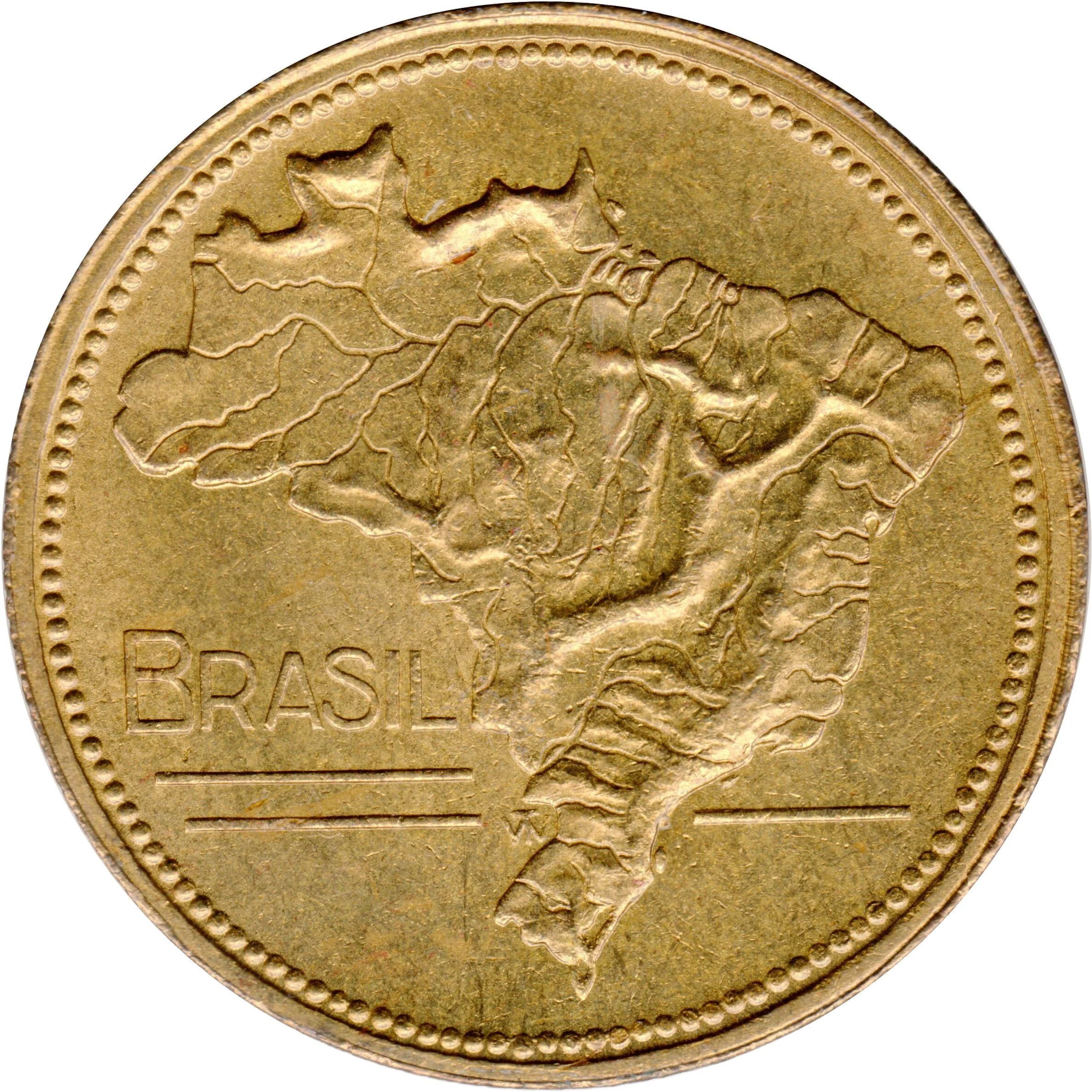
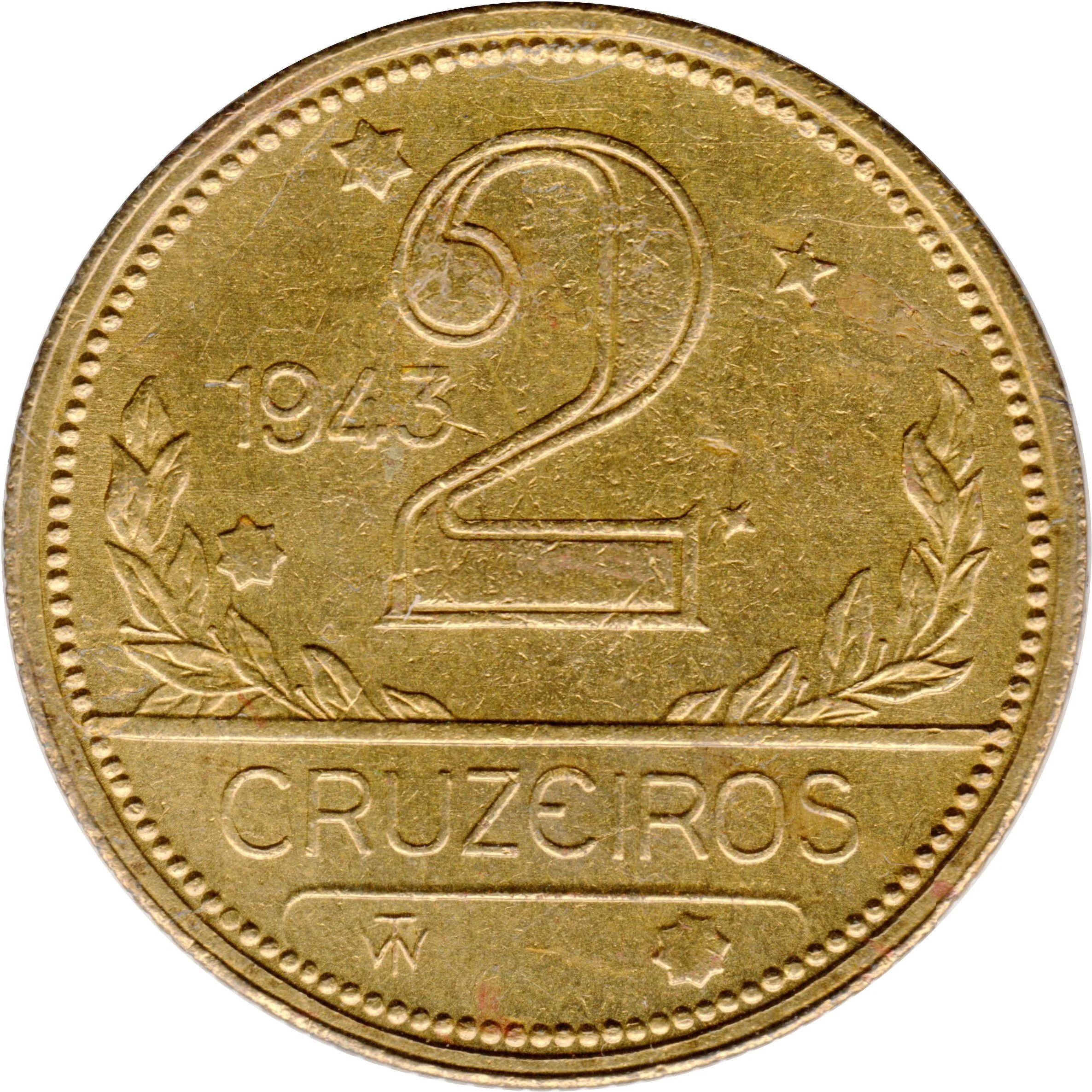
2 Cruzeiros – Brazil
Brazil
Obverse
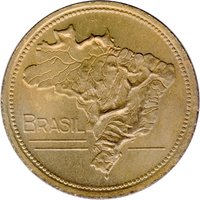
Description:
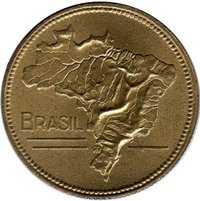
Brazil topographical map with country name at left.
Inscription:
BRASIL
Translation:
BRASIL
Script: Latin
Language: Portuguese
Engraver: Walter Rodrigues Toledo
Reverse
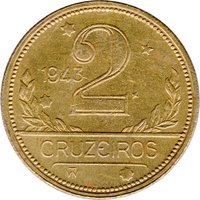
Description:
Denomination, date left, Southern Cross behind.
Inscription:
1949 2
CRUZEIROS
CRUZEIROS
Script: Latin
Engraver: Walter Rodrigues Toledo
Edge
Reeded
Categories
| Map |
Mints
| Name | Mark |
|---|---|
| Casa da Moeda do Brasil | — |
Mintings
| Year | Mint Mark | Mintage | Quality | Collection |
|---|---|---|---|---|
| 1942 | — | 276,000 | ||
| 1943 | — | 1,929,000 | ||
| 1944 | — | 2,330,000 | ||
| 1945 | — | 20,394,000 | ||
| 1946 | — | 33,650,000 | ||
| 1947 | — | 9,908,000 | ||
| 1949 | — | 11,252,000 | ||
| 1950 | — | 7,754,000 | ||
| 1951 | — | 390,000 | ||
| 1952 | — | 1,456,000 | ||
| 1953 | — | 3,582,000 | ||
| 1954 | — | 1,196,000 | ||
| 1955 | — | 1,838,000 | ||
| 1956 | — | 253,000 |
Historical background
In 1942, Brazil's currency situation was defined by the Estado Novo dictatorship's efforts to modernize the economy and assert national sovereignty, culminating in the creation of a new national currency. The previous currency, the mil-réis, was cumbersome due to hyperinflation in the preceding decades, requiring calculations in the thousands and millions. To simplify the monetary system and symbolize a new economic era, President Getúlio Vargas introduced the cruzeiro (Cr$) through Decree-Law 4,791 in October 1942, with one cruzeiro equaling one thousand mil-réis.
This monetary reform occurred in the critical context of World War II. Brazil had severed relations with the Axis powers in January 1942 and, following attacks on its shipping, declared war in August. This alignment with the Allies, particularly the United States, brought immediate financial impacts. The U.S. provided substantial Lend-Lease aid and financed the construction of strategic infrastructure like the Volta Redonda steel plant, injecting dollars into the economy. Consequently, the new cruzeiro operated within a framework of growing foreign exchange reserves and close economic cooperation with the U.S., which helped stabilize its initial value.
Administratively, the reform centralized monetary authority under the Banco do Brasil, which acted as the nation's central bank until the creation of the Superintendency of Money and Credit (SUMOC) in 1945. The changeover was part of a broader state-led drive for industrialization and economic planning. While the war created inflationary pressures globally, the cruzeiro's introduction in 1942 provided a more manageable unit of account, setting the stage for Brazil's post-war industrial expansion, albeit within a system that would later grapple with persistent inflation in the decades to come.
This monetary reform occurred in the critical context of World War II. Brazil had severed relations with the Axis powers in January 1942 and, following attacks on its shipping, declared war in August. This alignment with the Allies, particularly the United States, brought immediate financial impacts. The U.S. provided substantial Lend-Lease aid and financed the construction of strategic infrastructure like the Volta Redonda steel plant, injecting dollars into the economy. Consequently, the new cruzeiro operated within a framework of growing foreign exchange reserves and close economic cooperation with the U.S., which helped stabilize its initial value.
Administratively, the reform centralized monetary authority under the Banco do Brasil, which acted as the nation's central bank until the creation of the Superintendency of Money and Credit (SUMOC) in 1945. The changeover was part of a broader state-led drive for industrialization and economic planning. While the war created inflationary pressures globally, the cruzeiro's introduction in 1942 provided a more manageable unit of account, setting the stage for Brazil's post-war industrial expansion, albeit within a system that would later grapple with persistent inflation in the decades to come.
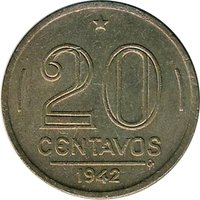
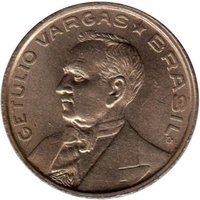
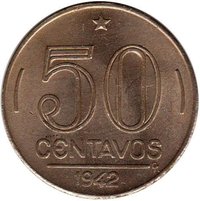
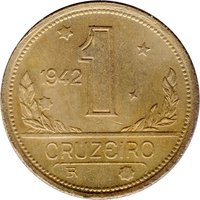
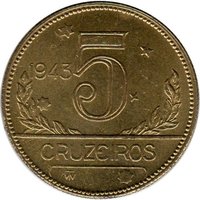
Series: 1942 Brazil circulation coins
🌱 Very Common