

1000 escudos (Atlantic Sailing) – Portugal
Add to wishlist
Circulating commemorative coins
Commemoration: 1000th Anniversary of Atlantic Sailing
Series: System 1981-2001
Portugal
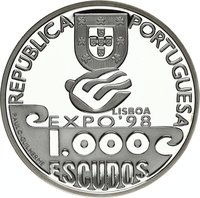
Obverse
Description:
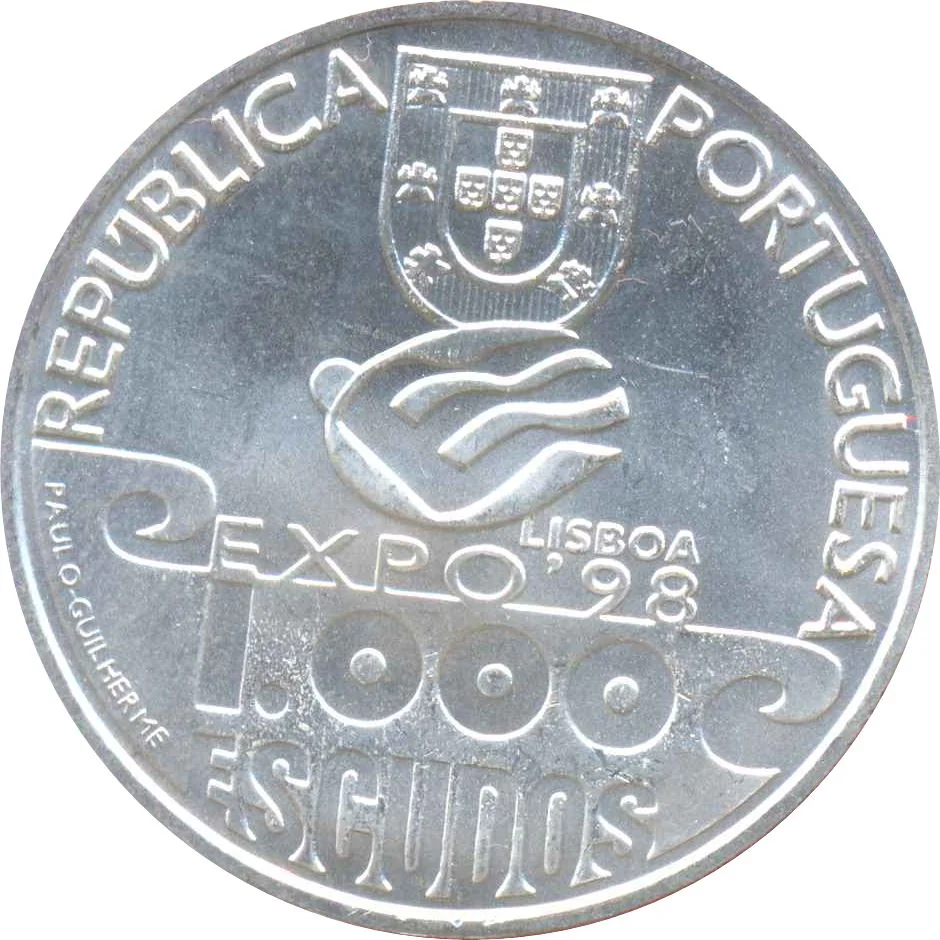
Shield over Logo
Inscription:
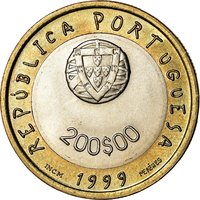
REPÚBLICA PORTUGUESA
LISBOA
EXPO '98
1.000
ESCUDOS
PAULO-GUILHERME
LISBOA
EXPO '98
1.000
ESCUDOS
PAULO-GUILHERME
Translation:
PORTUGUESE REPUBLIC
LISBON
EXPO '98
1,000
ESCUDOS
PAULO-GUILHERME
LISBON
EXPO '98
1,000
ESCUDOS
PAULO-GUILHERME
Script: Latin
Language: Portuguese
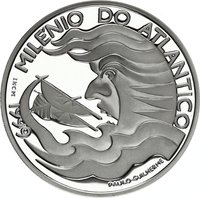
Reverse
Description:
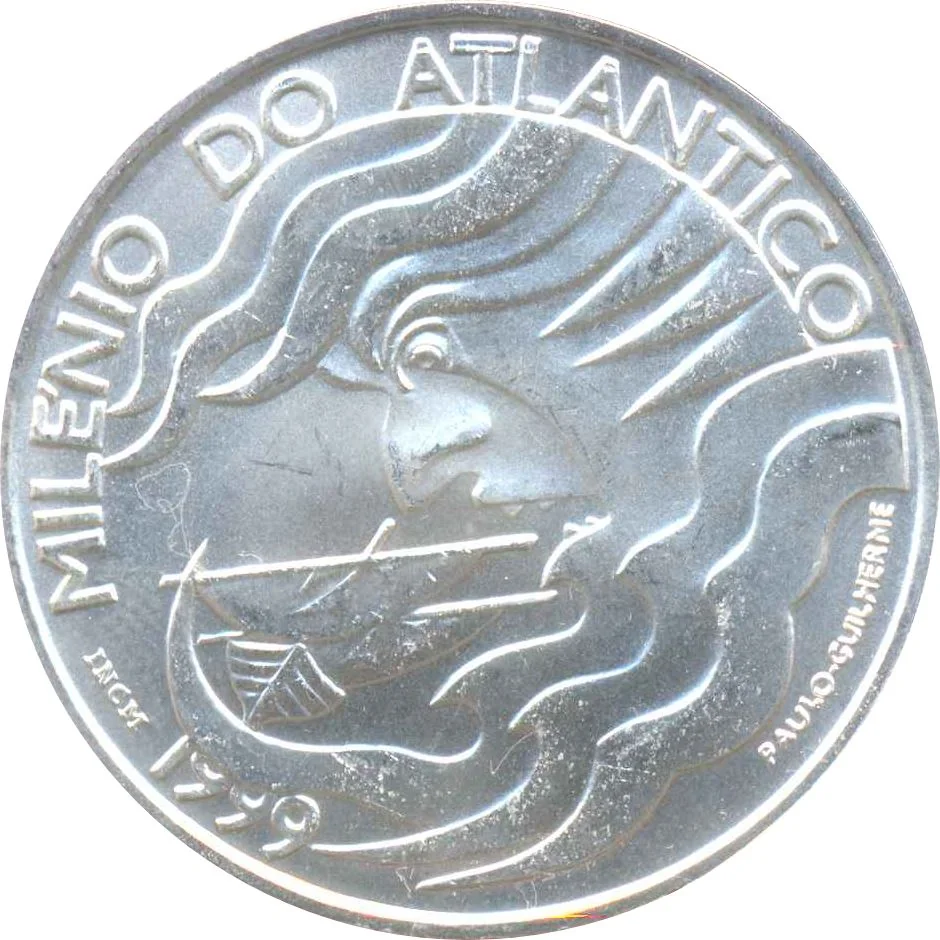
Stylized face gazing down at a ship.
Inscription:
MILENIO DO ATLANTICO
INCM 1999
PAULO-GUILHERME
INCM 1999
PAULO-GUILHERME
Script: Latin
Edge
Reeded
Mints
| Name | Mark |
|---|---|
| Imprensa Nacional - Casa da Moeda | INCM |
Mintings
| Year | Mint Mark | Mintage | Quality | Collection |
|---|---|---|---|---|
| 1999 | INCM | 500,000 |
Historical background
In 1999, Portugal was in the final, decisive year of a multi-year convergence process aimed at qualifying for the launch of the European single currency. The country had been a member of the European Union since 1986 and had committed to adopting the euro, seeing it as a cornerstone for deeper economic integration and a symbol of modern European identity. The primary focus for the government of Prime Minister António Guterres was to strictly maintain the Maastricht Treaty criteria—particularly low inflation, sound public finances, stable exchange rates, and converging interest rates—to ensure Portugal would be among the first wave of nations to abandon their national currency.
The year was characterized by a dual-currency reality, as the Portuguese escudo (PTE) and the future euro coexisted in a "legal fiction" in preparation for the physical changeover. From January 1, 1999, the euro was introduced as a virtual currency for electronic payments and financial markets, with the escudo irrevocably fixed at a conversion rate of 200.482 PTE to 1 euro. While bank accounts could be denominated in euros, everyday transactions continued exclusively in escudos, with prices often displayed in both units to familiarize the public. This period required significant technical and logistical preparation from banks, businesses, and public administrations for the forthcoming cash changeover.
The overall mood was one of cautious optimism, tempered by concerns over lost monetary sovereignty and potential inflationary effects from rounding prices up during the conversion. Economically, joining the euro was expected to lower transaction costs, eliminate exchange rate risk, and foster greater investment by anchoring Portugal to a core European project. Politically and socially, the adoption was viewed as a historic step, firmly aligning Portugal with the core of Europe and marking a definitive break from the economic instability and isolation of its pre-EU past. The stage was thus set for the physical introduction of euro banknotes and coins, which would successfully occur on January 1, 2002.
The year was characterized by a dual-currency reality, as the Portuguese escudo (PTE) and the future euro coexisted in a "legal fiction" in preparation for the physical changeover. From January 1, 1999, the euro was introduced as a virtual currency for electronic payments and financial markets, with the escudo irrevocably fixed at a conversion rate of 200.482 PTE to 1 euro. While bank accounts could be denominated in euros, everyday transactions continued exclusively in escudos, with prices often displayed in both units to familiarize the public. This period required significant technical and logistical preparation from banks, businesses, and public administrations for the forthcoming cash changeover.
The overall mood was one of cautious optimism, tempered by concerns over lost monetary sovereignty and potential inflationary effects from rounding prices up during the conversion. Economically, joining the euro was expected to lower transaction costs, eliminate exchange rate risk, and foster greater investment by anchoring Portugal to a core European project. Politically and socially, the adoption was viewed as a historic step, firmly aligning Portugal with the core of Europe and marking a definitive break from the economic instability and isolation of its pre-EU past. The stage was thus set for the physical introduction of euro banknotes and coins, which would successfully occur on January 1, 2002.
Series: System 1981-2001
🌱 Common