

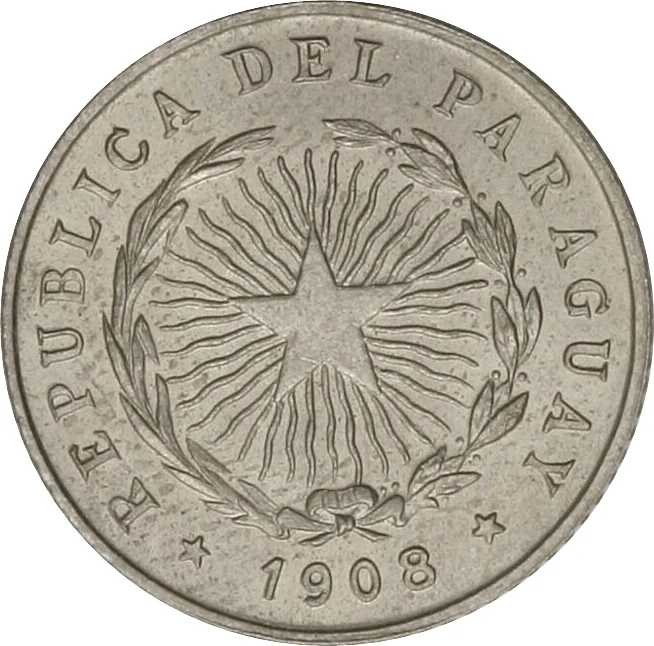
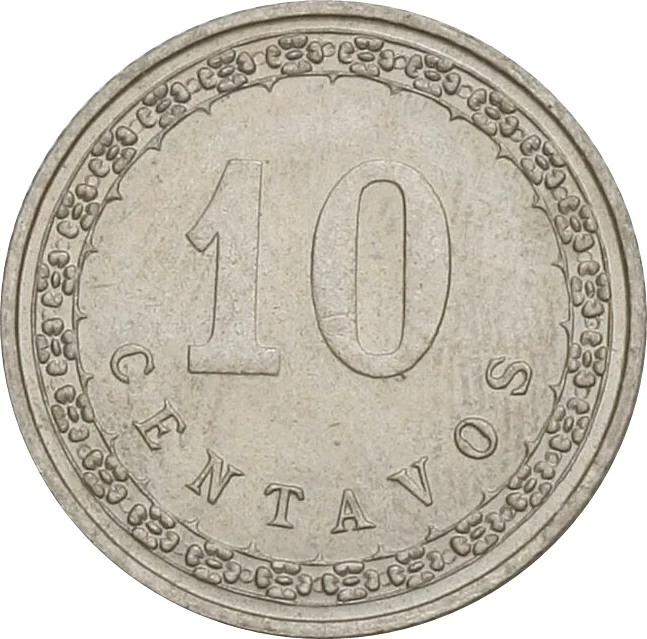
10 centavos – Paraguay
Add to wishlist
Paraguay
Context
Material
Diameter: 19.35 mm
Weight: 3 g
Thickness: 1.3 mm
Shape: Round
Composition: Copper-nickel
Technique: Milled
Alignment: Coin alignment
flip
References
KM: #
Numista: #22283
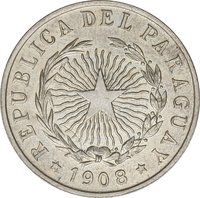
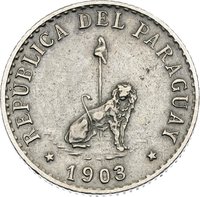
Obverse
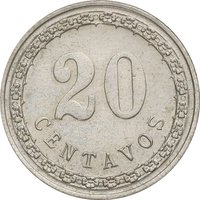
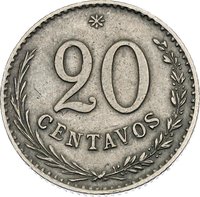
Reverse
Edge
Reeded
Categories
| Symbols> Coat of Arms |
Mints
| Name | Mark |
|---|---|
| Buenos Aires | — |
Mintings
| Year | Mint Mark | Mintage | Quality | Collection |
|---|---|---|---|---|
| 1908 | — | 792,000 |
Historical background
In 1908, Paraguay's currency situation was characterized by instability and a complex duality, a legacy of economic devastation from the Triple Alliance War (1864-1870). The nation operated with a bimetallic system in law, but in practice, it suffered from a severe shortage of metallic currency. The primary circulating medium was the paper peso, which had been introduced in the 1870s and had significantly depreciated. Alongside this, there was a limited circulation of gold pesos and silver coins, but foreign currencies—particularly Argentine pesos, Brazilian réis, and British sovereigns—were widely used for major transactions and foreign trade, undermining national monetary sovereignty.
This monetary confusion hindered economic development and state finances. The government of President Benigno Ferreira (1906-1908) recognized the pressing need for reform to stabilize the economy, facilitate commerce, and strengthen central authority. The goal was to move away from the unreliable paper peso and establish a modern, unified, and stable currency backed by gold reserves, aligning Paraguay with the international gold standard prevalent among major economies at the time.
Consequently, 1908 was a pivotal year of transition. The Ley Monetaria de Oro (Gold Monetary Law) was enacted on October 5, 1908, establishing the gold peso (peso oro) as the new national unit of account. While the law was passed in 1908, the practical introduction of the new coins and notes would take several years to implement. Thus, the year represents the decisive legislative moment when Paraguay committed to abandoning its chaotic monetary past, setting the stage for the introduction of the peso oro in the following years, which would remain Paraguay's currency until 1943.
This monetary confusion hindered economic development and state finances. The government of President Benigno Ferreira (1906-1908) recognized the pressing need for reform to stabilize the economy, facilitate commerce, and strengthen central authority. The goal was to move away from the unreliable paper peso and establish a modern, unified, and stable currency backed by gold reserves, aligning Paraguay with the international gold standard prevalent among major economies at the time.
Consequently, 1908 was a pivotal year of transition. The Ley Monetaria de Oro (Gold Monetary Law) was enacted on October 5, 1908, establishing the gold peso (peso oro) as the new national unit of account. While the law was passed in 1908, the practical introduction of the new coins and notes would take several years to implement. Thus, the year represents the decisive legislative moment when Paraguay committed to abandoning its chaotic monetary past, setting the stage for the introduction of the peso oro in the following years, which would remain Paraguay's currency until 1943.
🌟 Limited