

20 francs – Monaco
Add to wishlist
Monaco
Context
Material
Diameter: 30 mm
Weight: 10 g
Thickness: 1.9 mm
Shape: Round
Composition: Copper-nickel
Technique: Milled
Alignment: Coin alignment
flip
References
KM: #
Numista: #2225
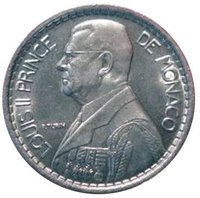
Obverse
Description:
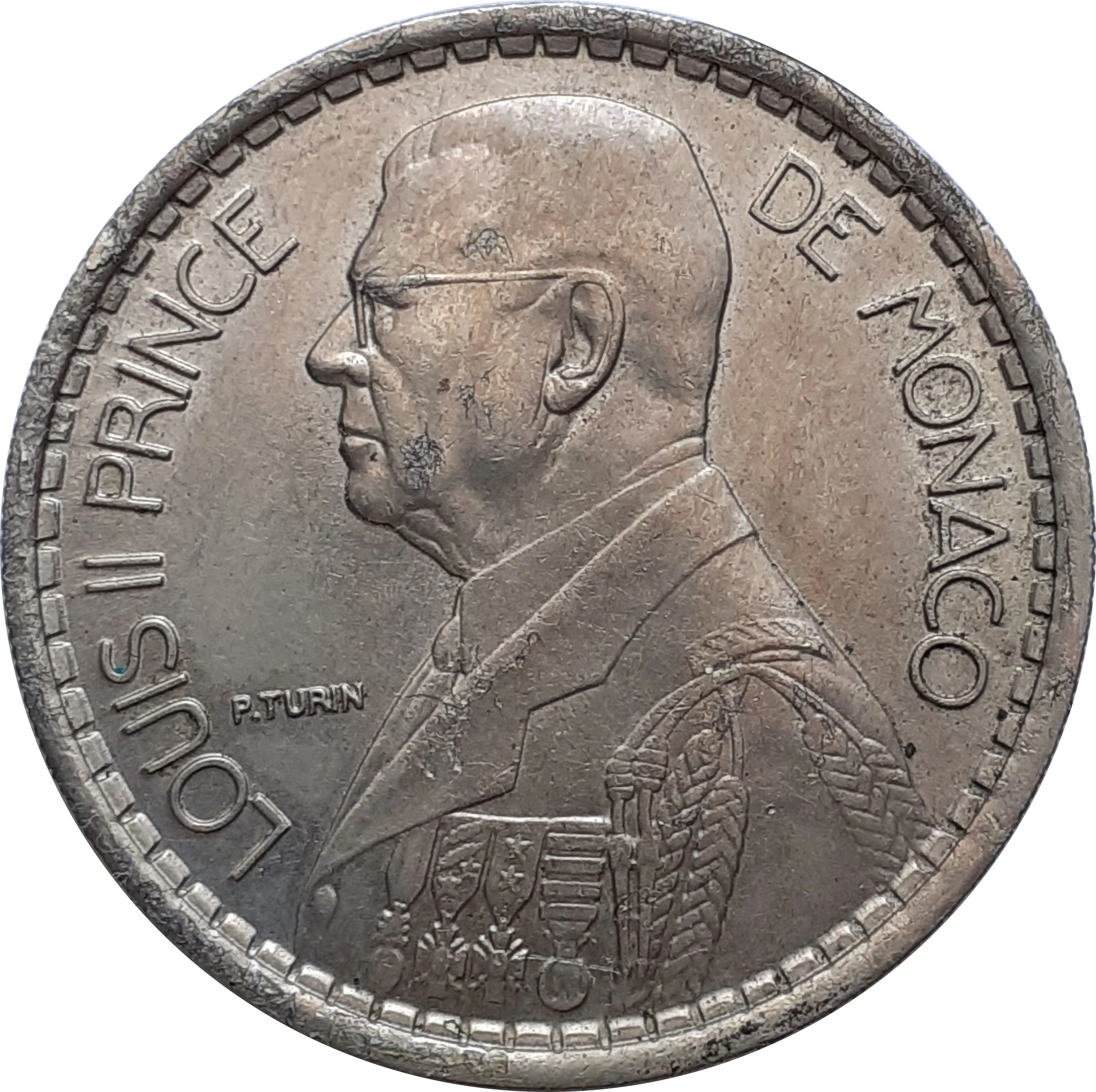
Louis II facing left, decorated.
Inscription:
LOUIS II PRINCE DE MONACO
P. TURIN
P. TURIN
Translation:
Louis II Prince of Monaco
P. Turin
P. Turin
Script: Latin
Language: French
Engraver: Pierre Turin
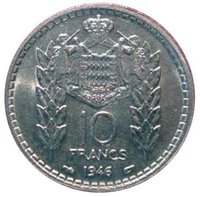
Reverse
Description:
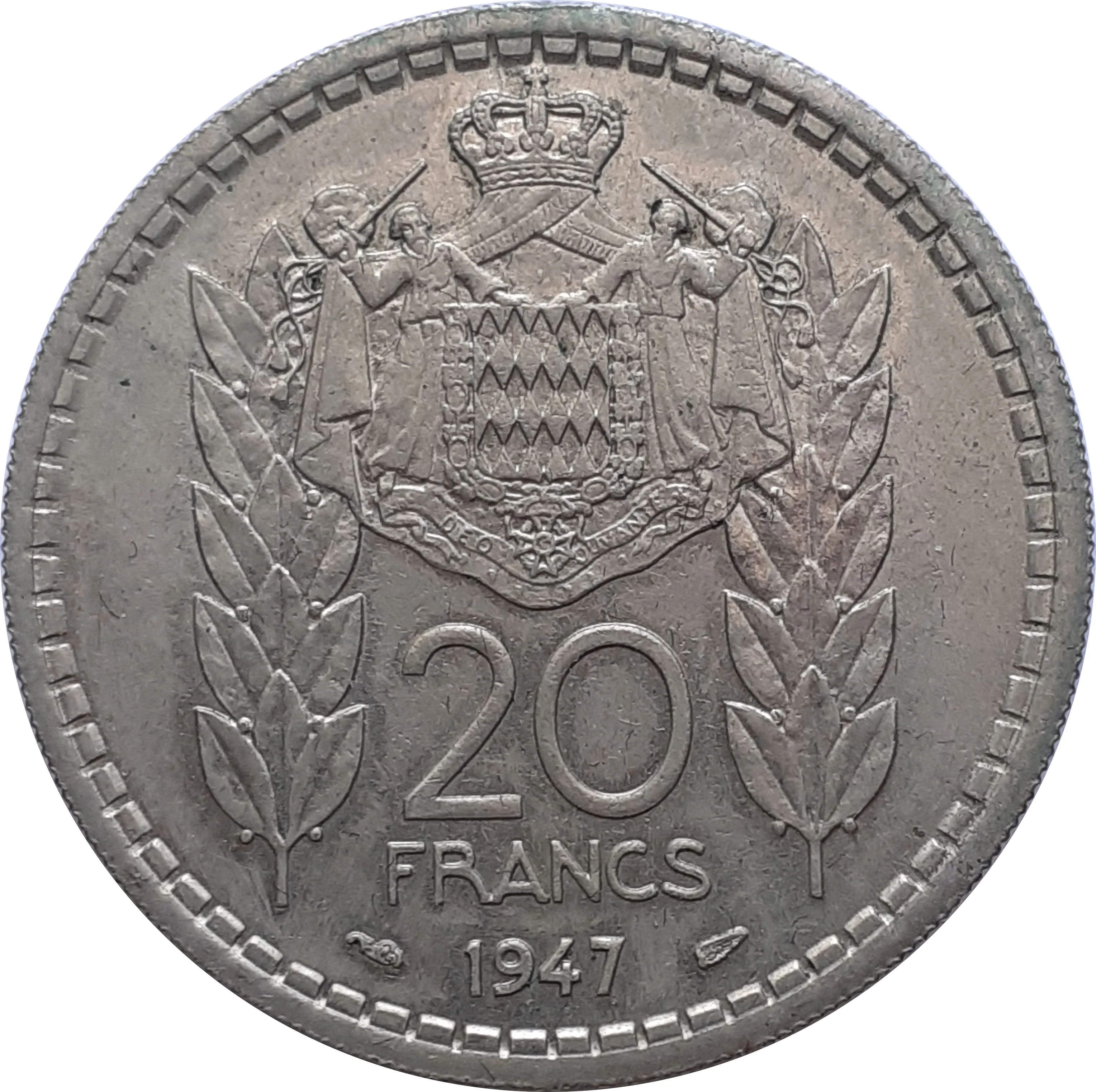
Monaco arms above value between sprigs.
Inscription:
20
FRANCS
1947
FRANCS
1947
Translation:
20 Francs
1947
1947
Script: Latin
Language: French
Engraver: Pierre Turin
Edge
Reeded
Categories
| Symbols> Coat of Arms |
Mints
| Name | Mark |
|---|---|
| Monnaie de Paris | — |
Mintings
| Year | Mint Mark | Mintage | Quality | Collection |
|---|---|---|---|---|
| 1947 | — | 1,000,000 |
Historical background
In 1947, Monaco's currency situation was intrinsically tied to that of France, operating under the provisions of the 1865 Latin Monetary Union and subsequent bilateral agreements. The principality lacked its own independent currency and instead used the French franc as legal tender. This arrangement was formalized through a series of conventions, the most recent at the time being from 1945, which placed Monaco within the French franc zone, meaning its monetary policy, exchange controls, and issuance of banknotes were entirely governed by the French state.
The post-World War II period presented significant challenges. France itself was grappling with severe inflation and a debased currency, leading to the introduction of a new "French Franc" in January 1946 at a rate of 1 new franc = 100 old francs. Monaco followed this transition automatically. Furthermore, strict exchange controls were in place across the franc zone to conserve foreign reserves, heavily restricting the convertibility of Monégasque transactions. The economy, reliant on tourism and luxury, was stifled by these controls and the general scarcity of the early post-war years.
Despite these constraints, 1947 was a year of quiet reassertion of Monégasque monetary identity. The principality began issuing its own series of franc coins (1, 2, 5, 10, and 20 francs) bearing the effigy of Prince Louis II, which circulated alongside French notes and coins. This coinage, though legally equivalent to French currency, symbolized Monaco's sovereignty within the strict confines of the French monetary system. The situation remained one of dependent stability, with Monaco shielded from hyperinflation but wholly subject to the economic recovery plans and monetary reforms emanating from Paris.
The post-World War II period presented significant challenges. France itself was grappling with severe inflation and a debased currency, leading to the introduction of a new "French Franc" in January 1946 at a rate of 1 new franc = 100 old francs. Monaco followed this transition automatically. Furthermore, strict exchange controls were in place across the franc zone to conserve foreign reserves, heavily restricting the convertibility of Monégasque transactions. The economy, reliant on tourism and luxury, was stifled by these controls and the general scarcity of the early post-war years.
Despite these constraints, 1947 was a year of quiet reassertion of Monégasque monetary identity. The principality began issuing its own series of franc coins (1, 2, 5, 10, and 20 francs) bearing the effigy of Prince Louis II, which circulated alongside French notes and coins. This coinage, though legally equivalent to French currency, symbolized Monaco's sovereignty within the strict confines of the French monetary system. The situation remained one of dependent stability, with Monaco shielded from hyperinflation but wholly subject to the economic recovery plans and monetary reforms emanating from Paris.
🌱 Very Common