

1 speciedaler – Denmark
Add to wishlist
Denmark
Context
Material
References
KM: #
Numista: #22190
Value
Bullion value: $64.09
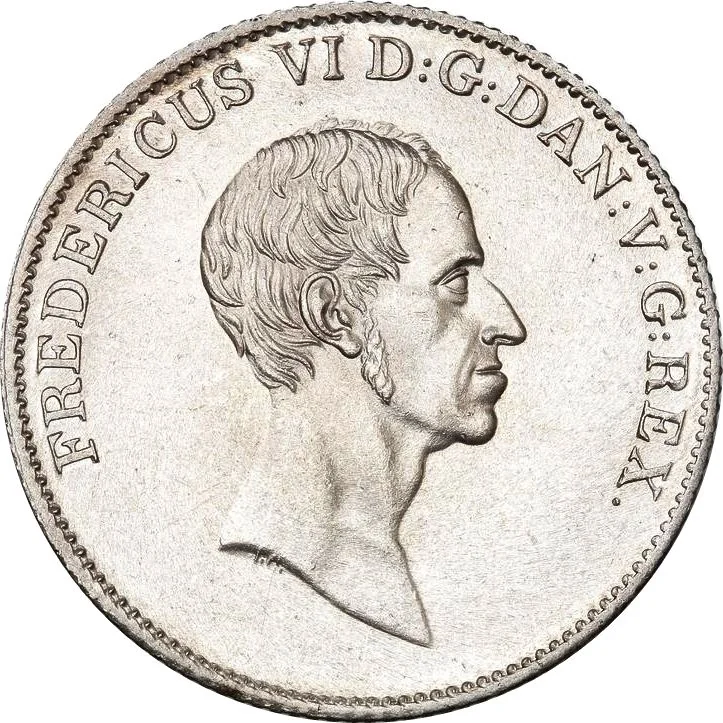
Obverse
Description:
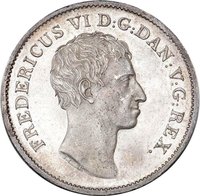
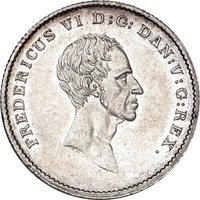
Bare head of Frederik VI facing right. Legend above. Engraver's initials on neck.
Inscription:
FREDERICUS VI D:G : DAN : V : G : REX.
I.C.
I.C.
Translation:
Frederick VI, by the Grace of God, King of Denmark, the Vandals, and the Goths.
I.C.
I.C.
Script: Latin
Language: Latin
Engraver: Johannes Conradsen
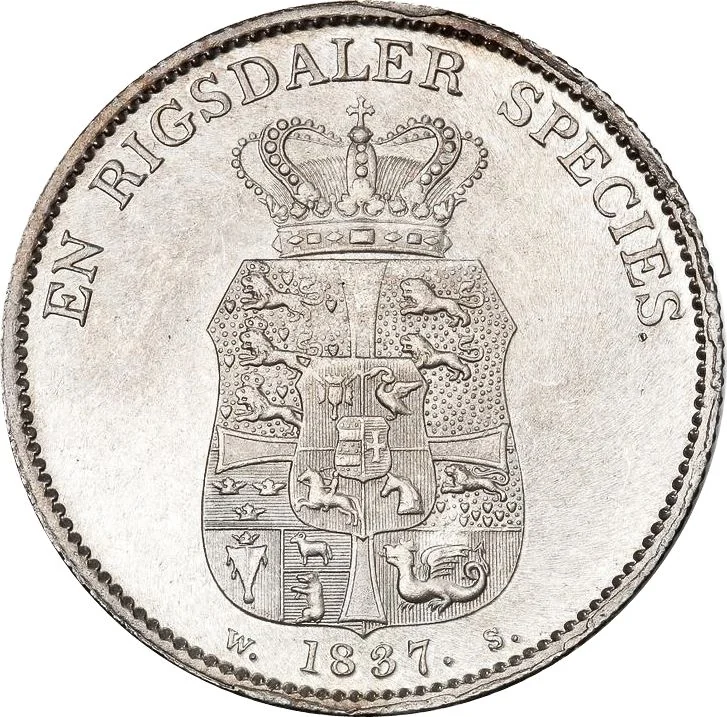
Reverse
Description:
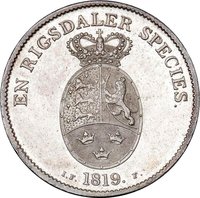
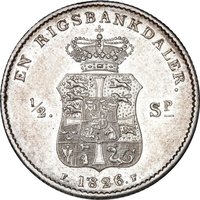
Shield with Danish arms. Value above, date and mintmaster initials below.
Inscription:
EN RIGSDALER SPECIES.
W. 1837. S.
W. 1837. S.
Script: Latin
Edge
Reeded
Mints
| Name | Mark |
|---|---|
| Altona, Schleswig-Holstein | — |
| Royal Danish Mint | — |
Mintings
| Year | Mint Mark | Mintage | Quality | Collection |
|---|---|---|---|---|
| 1820 | — | — | ||
| 1822 | — | — | ||
| 1824 | — | — | ||
| 1825 | — | — | ||
| 1826 | — | — | ||
| 1827 | — | — | ||
| 1828 | — | — | ||
| 1829 | — | — | ||
| 1833 | — | — | ||
| 1833 | IC/KM | — | ||
| 1834 | — | — | ||
| 1834 | IC/KM | — | ||
| 1835 | — | — | ||
| 1837 | — | — | ||
| 1838 | — | — | ||
| 1838 | SW | — | ||
| 1839 | — | — |
Historical background
In 1820, Denmark found itself in a precarious monetary situation, characterized by a complex and unstable dual-currency system. The state finances were deeply strained following the Napoleonic Wars, which had culminated in the national bankruptcy of 1813. In response, the government had introduced the Rigsbankdaler, a new paper currency intended to replace the depreciated earlier notes. However, public trust was low, and the older Kurantdaler notes, though officially disfavored, remained in widespread circulation, creating confusion and facilitating speculation.
The core problem was a severe shortage of stable, tangible money. Both the Rigsbankdaler and the Kurantdaler were fiat currencies, not backed by silver, and their values fluctuated wildly against each other and against real silver Rigsdaler Specie. This instability hampered trade, complicated accounting, and eroded economic confidence. The government struggled to manage the money supply and curb inflation, while merchants and the public had to navigate daily exchange rates between the different units of account.
This chaotic backdrop set the stage for the pivotal Monetary Reform of 1830s. The situation in 1820 was essentially a holding pattern of dysfunction, demonstrating the clear failure of the 1813 measures. The persistent monetary confusion acted as a significant drag on economic recovery and underscored the urgent need for a return to a silver standard to restore stability, a goal that would be achieved with the establishment of the Rigsdaler as Denmark's unified silver-based currency in the years to come.
The core problem was a severe shortage of stable, tangible money. Both the Rigsbankdaler and the Kurantdaler were fiat currencies, not backed by silver, and their values fluctuated wildly against each other and against real silver Rigsdaler Specie. This instability hampered trade, complicated accounting, and eroded economic confidence. The government struggled to manage the money supply and curb inflation, while merchants and the public had to navigate daily exchange rates between the different units of account.
This chaotic backdrop set the stage for the pivotal Monetary Reform of 1830s. The situation in 1820 was essentially a holding pattern of dysfunction, demonstrating the clear failure of the 1813 measures. The persistent monetary confusion acted as a significant drag on economic recovery and underscored the urgent need for a return to a silver standard to restore stability, a goal that would be achieved with the establishment of the Rigsdaler as Denmark's unified silver-based currency in the years to come.
⭐ Rare