

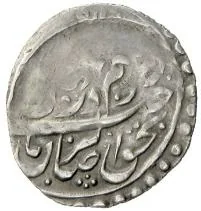
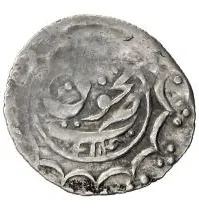
1 Abassi – Sheki Khanate
Context
Material
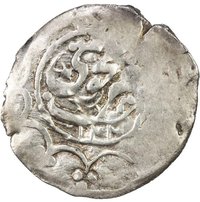
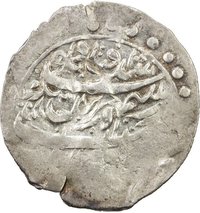
Weight: 2.27 g
Silver weight: 2.27 g
Shape: Irregular round
Composition: Silver
Magnetic: No
Technique: Hammered
Alignment: Medal alignment
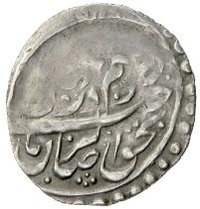
flip
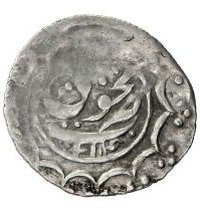
References
Numista: #220538
Value
Bullion value: $6.45
Mints
| Name | Mark |
|---|---|
| Nukha | — |
Mintings
| Year | Mint Mark | Mintage | Quality | Collection |
|---|---|---|---|---|
| 1800 | — | — | ||
| 1802 | — | — |
Historical background
By 1800, the currency situation in the Sheki Khanate, a semi-autonomous principality in the South Caucasus under nominal Persian suzerainty, was complex and indicative of its precarious geopolitical position. The khanate did not mint its own distinct coins but operated within a multi-currency system dominated by external powers. The primary circulating silver coin was the Russian ruble, a consequence of the Treaty of Georgievsk (1783) and growing Russian economic and political influence in the region following the death of the powerful Persian ruler Agha Mohammad Khan Qajar in 1797. Alongside this, older Persian silver abbasis and Turkish akçes remained in use, reflecting the khanate’s historical ties to the Persian and Ottoman empires.
This monetary plurality created practical challenges for trade and administration. Exchange rates between the Russian, Persian, and residual currencies were unstable, often fluctuating with political tides and the quality of clipped or worn coins. The simultaneous circulation of these currencies meant that merchants and tax collectors had to be skilled in assaying silver content, leading to inefficiencies and potential for dispute. Furthermore, the increasing prevalence of the Russian ruble was a clear barometer of shifting power, facilitating St. Petersburg's economic penetration as a prelude to formal annexation, which would occur just five years later in 1805.
Ultimately, the monetary landscape of Sheki in 1800 was one of transition and dependency. The lack of a sovereign coinage underscored the khanate's limited autonomy, while the competing currencies in its markets mirrored the broader imperial struggle between Russia and Persia for control of the Caucasus. This unstable system would soon be resolved not by Sheki's own policy, but by the force of external conquest, leading to the full integration of its economy into the Russian imperial monetary zone.
This monetary plurality created practical challenges for trade and administration. Exchange rates between the Russian, Persian, and residual currencies were unstable, often fluctuating with political tides and the quality of clipped or worn coins. The simultaneous circulation of these currencies meant that merchants and tax collectors had to be skilled in assaying silver content, leading to inefficiencies and potential for dispute. Furthermore, the increasing prevalence of the Russian ruble was a clear barometer of shifting power, facilitating St. Petersburg's economic penetration as a prelude to formal annexation, which would occur just five years later in 1805.
Ultimately, the monetary landscape of Sheki in 1800 was one of transition and dependency. The lack of a sovereign coinage underscored the khanate's limited autonomy, while the competing currencies in its markets mirrored the broader imperial struggle between Russia and Persia for control of the Caucasus. This unstable system would soon be resolved not by Sheki's own policy, but by the force of external conquest, leading to the full integration of its economy into the Russian imperial monetary zone.
✨ Legendary