

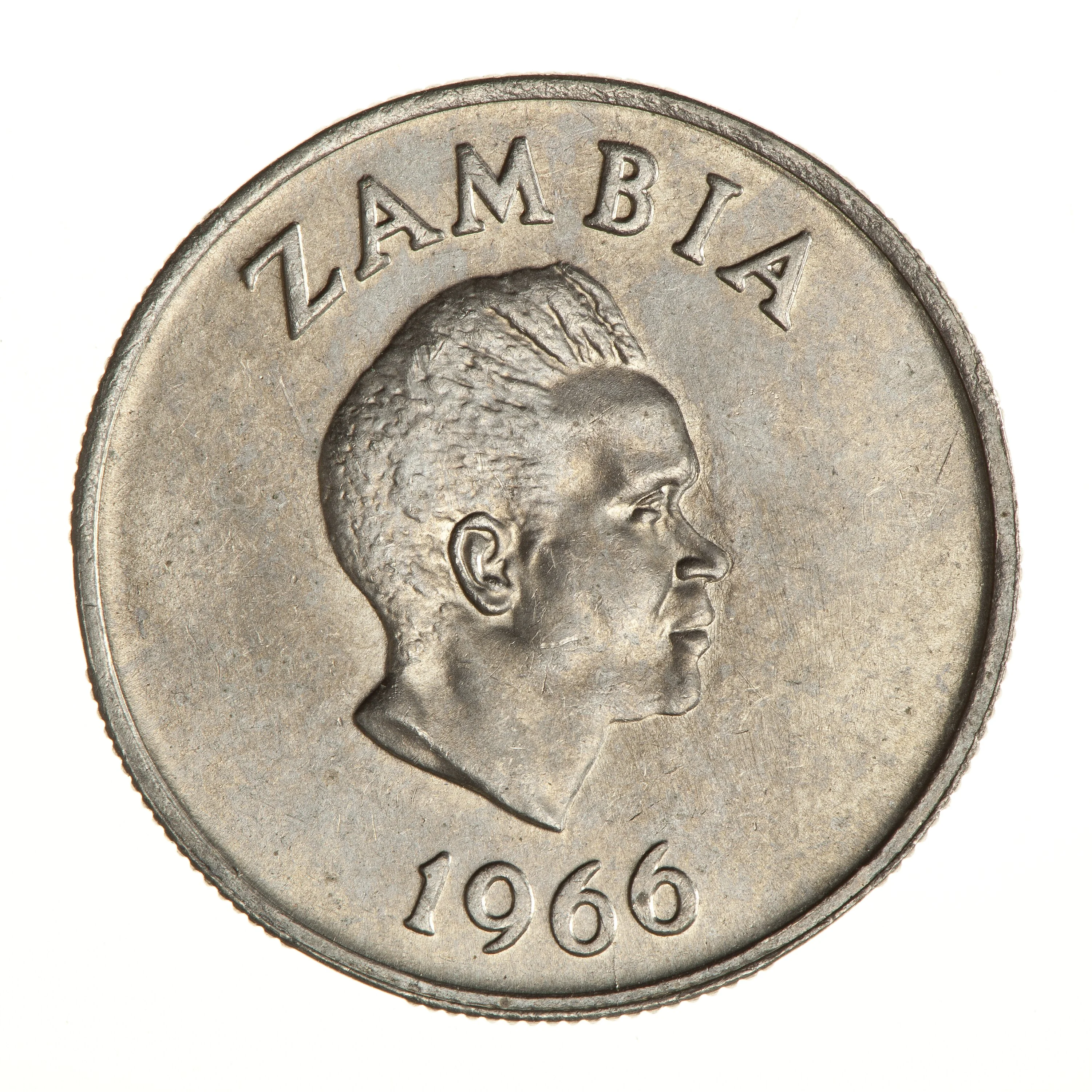
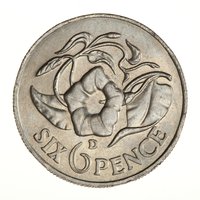
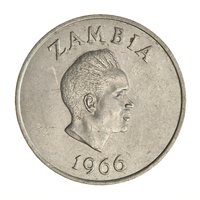
Obverse
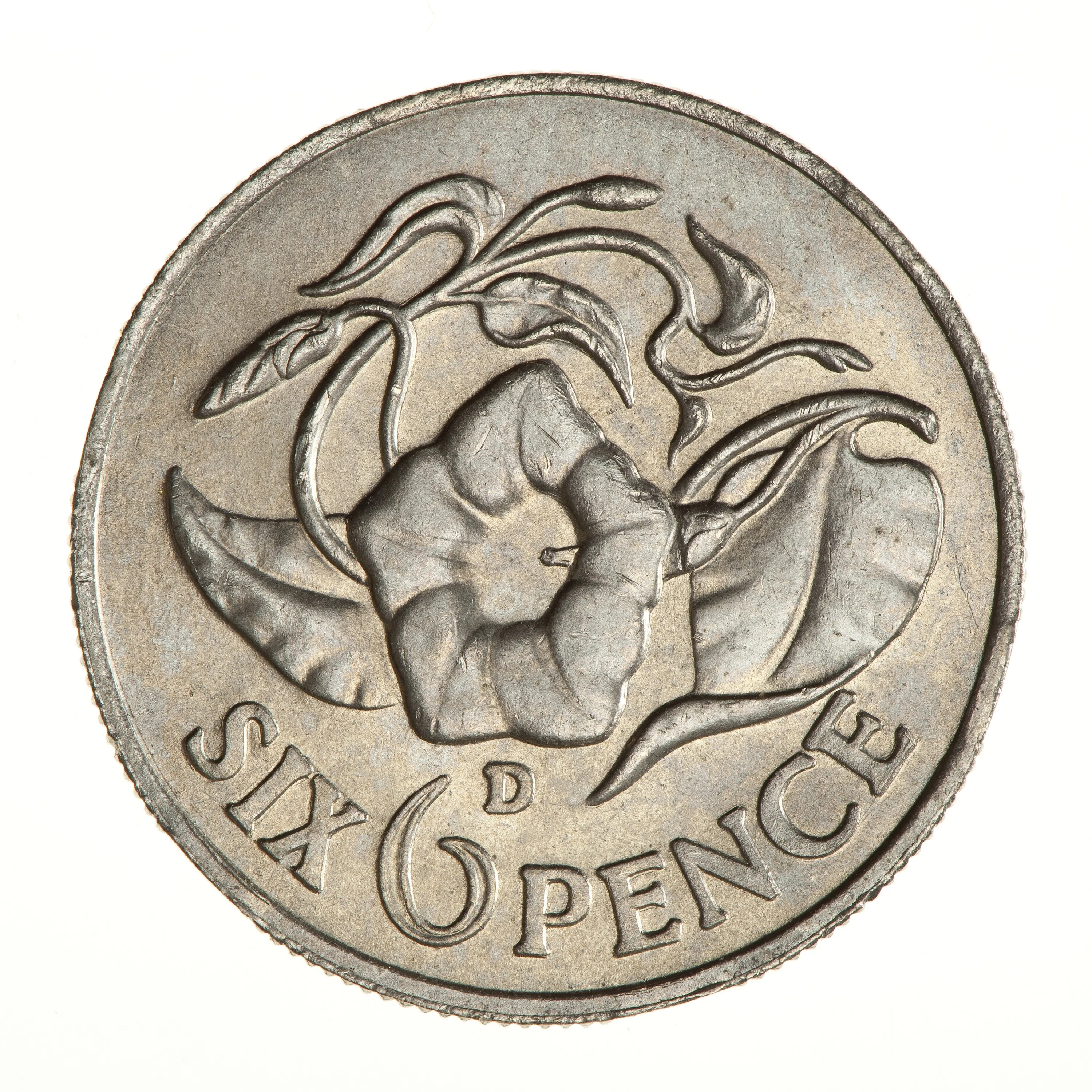
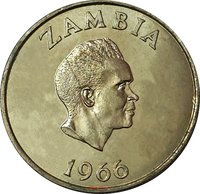
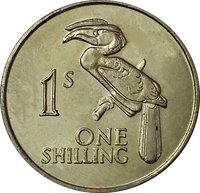
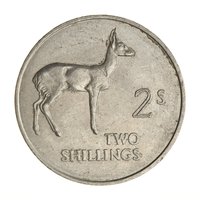
Reverse
Edge
Alternatively smooth and grooved
Categories
| Plants> Flower |
| Person> Politician |
Mints
| Name | Mark |
|---|---|
| Royal Mint (Tower Hill) | — |
Mintings
| Year | Mint Mark | Mintage | Quality | Collection |
|---|---|---|---|---|
| 1966 | — | 2,000,000 | ||
| 1966 | — | 60 | Proof |
Historical background
In 1966, Zambia's currency situation was defined by its recent political independence and the immediate challenges of establishing monetary sovereignty. Upon gaining independence from Britain in 1964, the country initially used the Zambian pound, which remained pegged to and interchangeable with the British pound sterling. This arrangement, managed by the Bank of Zambia established in 1964, provided initial stability but was seen as a transitional system, symbolically and economically linking the new nation to its former colonial power.
The pivotal change occurred in January 1967, when the government, led by President Kenneth Kaunda, introduced a new decimal currency, the Zambian kwacha. While the official transition happened in 1967, the entire year of 1966 was spent in meticulous preparation for this major monetary reform. The decision to move away from the pound system was driven by a desire for a distinct national identity and greater control over domestic monetary policy to fund development projects. The name "kwacha" (meaning "dawn" in Nyanja) and its subunit, the ngwee ("bright"), were deliberately chosen to reflect the optimism of the new nation's dawn.
The background context for this shift was Zambia's unique economic position. As the world's third-largest copper producer, the country's economy and potential currency strength were heavily dependent on the volatile global price of copper, which was experiencing a boom in the mid-1960s. This copper revenue provided a crucial reserve base for the new currency but also created a long-term vulnerability. Therefore, the currency preparations of 1966 were undertaken with cautious optimism, aiming to harness mineral wealth for national development while navigating the risks of a single-resource economy.
The pivotal change occurred in January 1967, when the government, led by President Kenneth Kaunda, introduced a new decimal currency, the Zambian kwacha. While the official transition happened in 1967, the entire year of 1966 was spent in meticulous preparation for this major monetary reform. The decision to move away from the pound system was driven by a desire for a distinct national identity and greater control over domestic monetary policy to fund development projects. The name "kwacha" (meaning "dawn" in Nyanja) and its subunit, the ngwee ("bright"), were deliberately chosen to reflect the optimism of the new nation's dawn.
The background context for this shift was Zambia's unique economic position. As the world's third-largest copper producer, the country's economy and potential currency strength were heavily dependent on the volatile global price of copper, which was experiencing a boom in the mid-1960s. This copper revenue provided a crucial reserve base for the new currency but also created a long-term vulnerability. Therefore, the currency preparations of 1966 were undertaken with cautious optimism, aiming to harness mineral wealth for national development while navigating the risks of a single-resource economy.
🌟 Uncommon