

50 Pence – United Kingdom
United Kingdom
Context

Material
Diameter: 27.3 mm
Weight: 8 g
Shape: Equilateral curve heptagon
Composition: Copper-nickel
Technique: Milled
Alignment: Medal alignment
flip
References
KM: #Click to copy to clipboard1704
Numista: #220172
Value
Exchange value: 0.50 GBP = $0.68
Inflation-adjusted value: 0.65 GBP
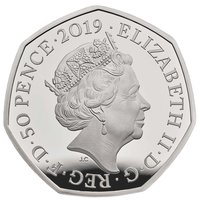
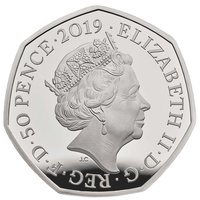
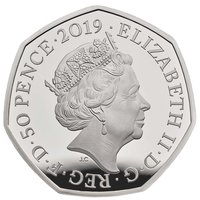
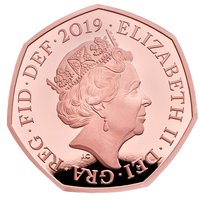
Obverse
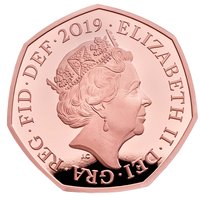
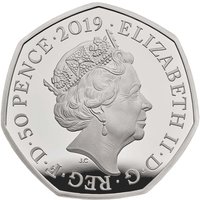
Description:
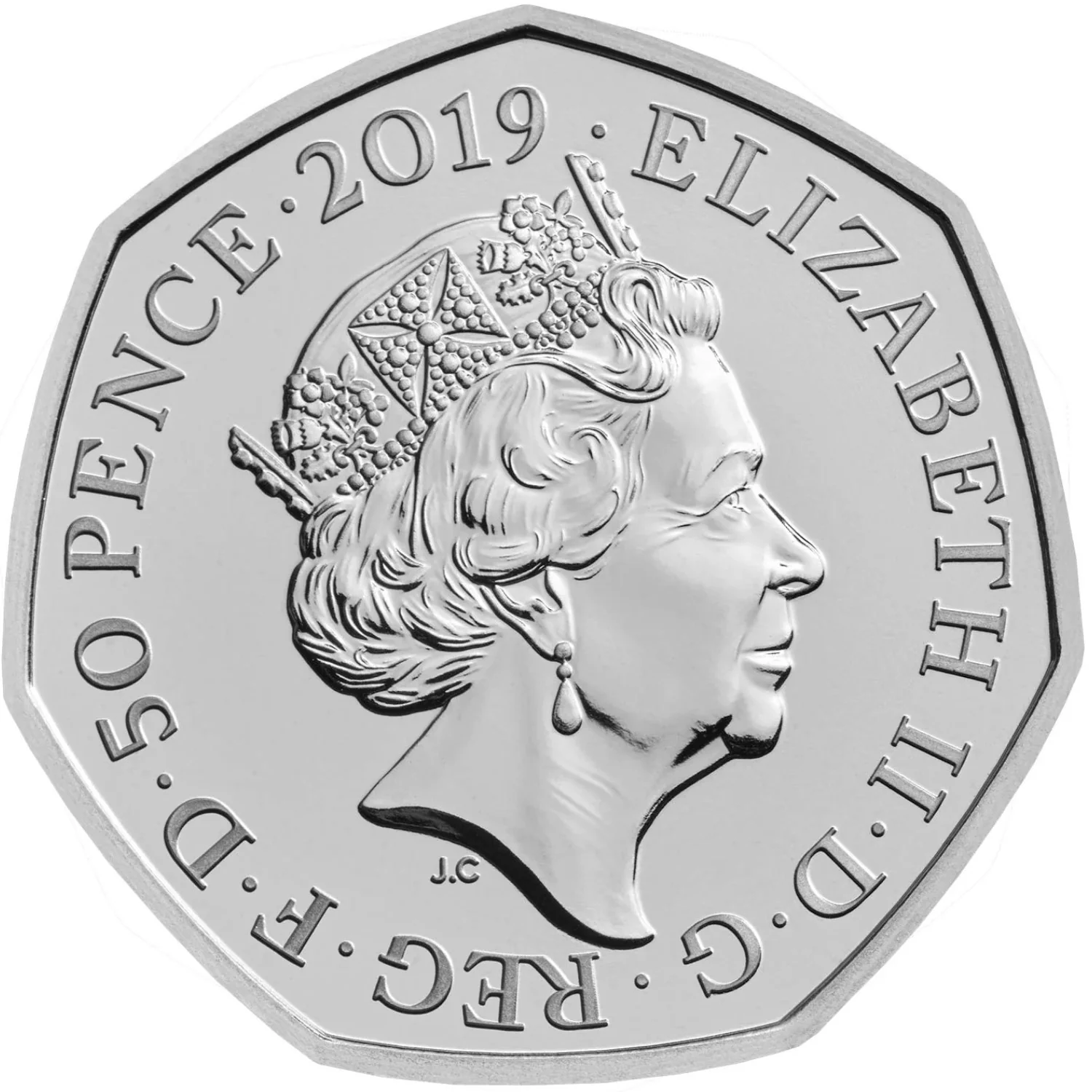
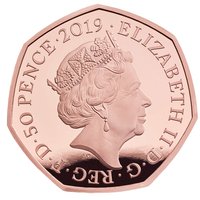
Queen Elizabeth V crowned right, wearing George IV State Diadem.
Inscription:
ELIZABETH II·D·G·REG·F·D·50 PENCE·2019
J.C
J.C
Translation:
Elizabeth the Second, by the Grace of God, Queen, Defender of the Faith, 50 Pence, 2019
J.C
J.C
Script: Latin
Engraver: Jody Clark
Reverse
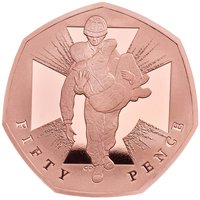
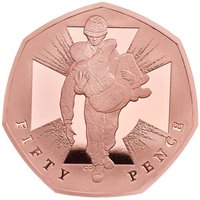
Description:
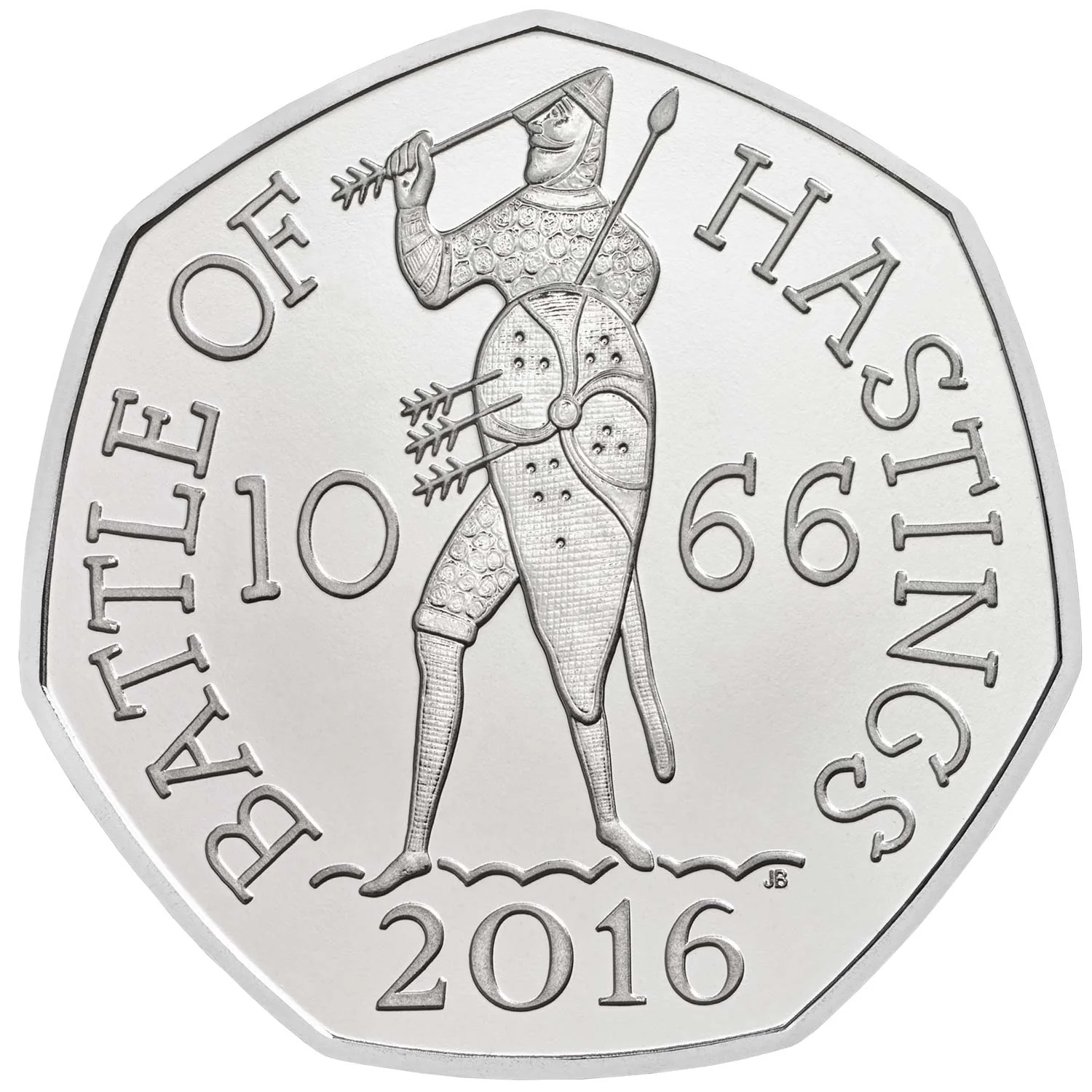
King Harold with arrow in eye, three in shield, divides date; legend around, date below.
Inscription:
BATTLE OF HASTINGS
10 66
JB
2016
10 66
JB
2016
Script: Latin
Engraver: John Bergdahl
Edge
Plain
Mints
| Name | Mark |
|---|---|
| Royal Mint | — |
Mintings
| Year | Mint Mark | Mintage | Quality | Collection |
|---|---|---|---|---|
| 2019 | — | 32,402 | BU | |
| 2019 | — | 3,144 | Proof |
Historical background
In 2019, the United Kingdom's currency situation was dominated by profound political uncertainty surrounding Brexit. The British pound sterling (GBP) remained highly sensitive to the ebb and flow of parliamentary votes and negotiations with the European Union. Having never recovered to its pre-2016 referendum levels, sterling traded in a volatile range, often swinging sharply on news of deal approvals, parliamentary defeats for the government, and the looming threat of a "no-deal" exit. This volatility reflected deep market concerns about the future UK-EU trading relationship and its potential impact on the British economy, investment, and the City of London's financial services sector.
Economically, the persistent uncertainty acted as a drag on growth and business investment, which in turn limited any fundamental strengthening of the currency. While the Bank of England maintained a cautious stance, its Monetary Policy Committee was essentially in a holding pattern, keeping interest rates at 0.75% after a single hike in 2018. Policymakers were constrained, needing to balance subdued inflation against the risk of a sharp economic slowdown. The pound's relative weakness provided some modest support for export-oriented companies but also contributed to higher import costs, squeezing real incomes.
The year culminated in a decisive political shift that brought relative calm to currency markets. Following the Conservative Party's decisive victory in the December general election, which provided a clear mandate to "get Brexit done," the pound rallied significantly. This surge reflected a market view that the immediate risk of a disorderly no-deal Brexit had receded, replaced by the expectation of an orderly withdrawal and the commencement of trade negotiations. Thus, 2019 closed with sterling on a stronger note, though still below historical averages, as the focus shifted from withdrawal turmoil to the complexities of defining the UK's future long-term economic relationship with its largest trading partner.
Economically, the persistent uncertainty acted as a drag on growth and business investment, which in turn limited any fundamental strengthening of the currency. While the Bank of England maintained a cautious stance, its Monetary Policy Committee was essentially in a holding pattern, keeping interest rates at 0.75% after a single hike in 2018. Policymakers were constrained, needing to balance subdued inflation against the risk of a sharp economic slowdown. The pound's relative weakness provided some modest support for export-oriented companies but also contributed to higher import costs, squeezing real incomes.
The year culminated in a decisive political shift that brought relative calm to currency markets. Following the Conservative Party's decisive victory in the December general election, which provided a clear mandate to "get Brexit done," the pound rallied significantly. This surge reflected a market view that the immediate risk of a disorderly no-deal Brexit had receded, replaced by the expectation of an orderly withdrawal and the commencement of trade negotiations. Thus, 2019 closed with sterling on a stronger note, though still below historical averages, as the focus shifted from withdrawal turmoil to the complexities of defining the UK's future long-term economic relationship with its largest trading partner.
Series: Celebrating 50 years of the 50p




🌟 Uncommon