

20 Centimes – Haiti
Haiti
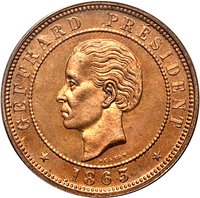
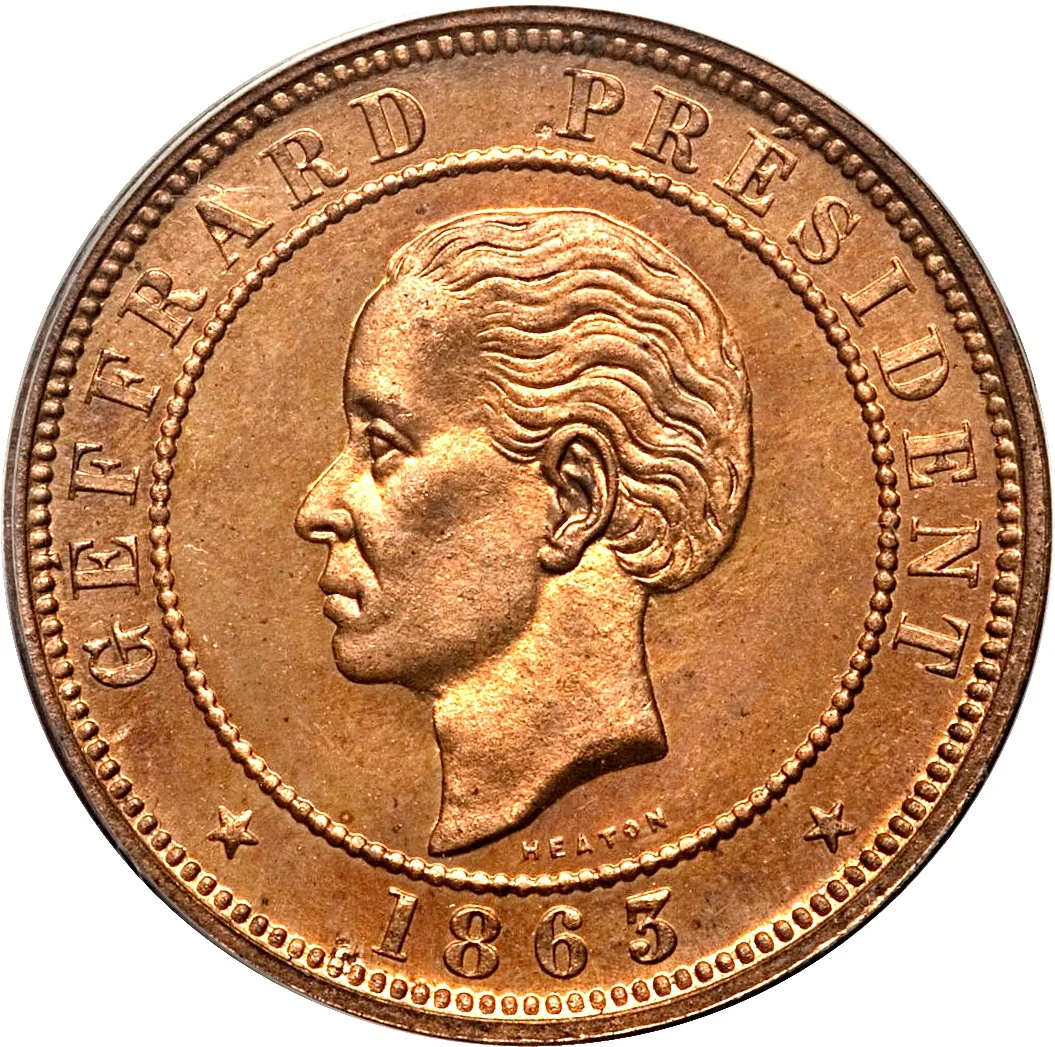
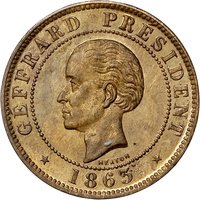
Obverse
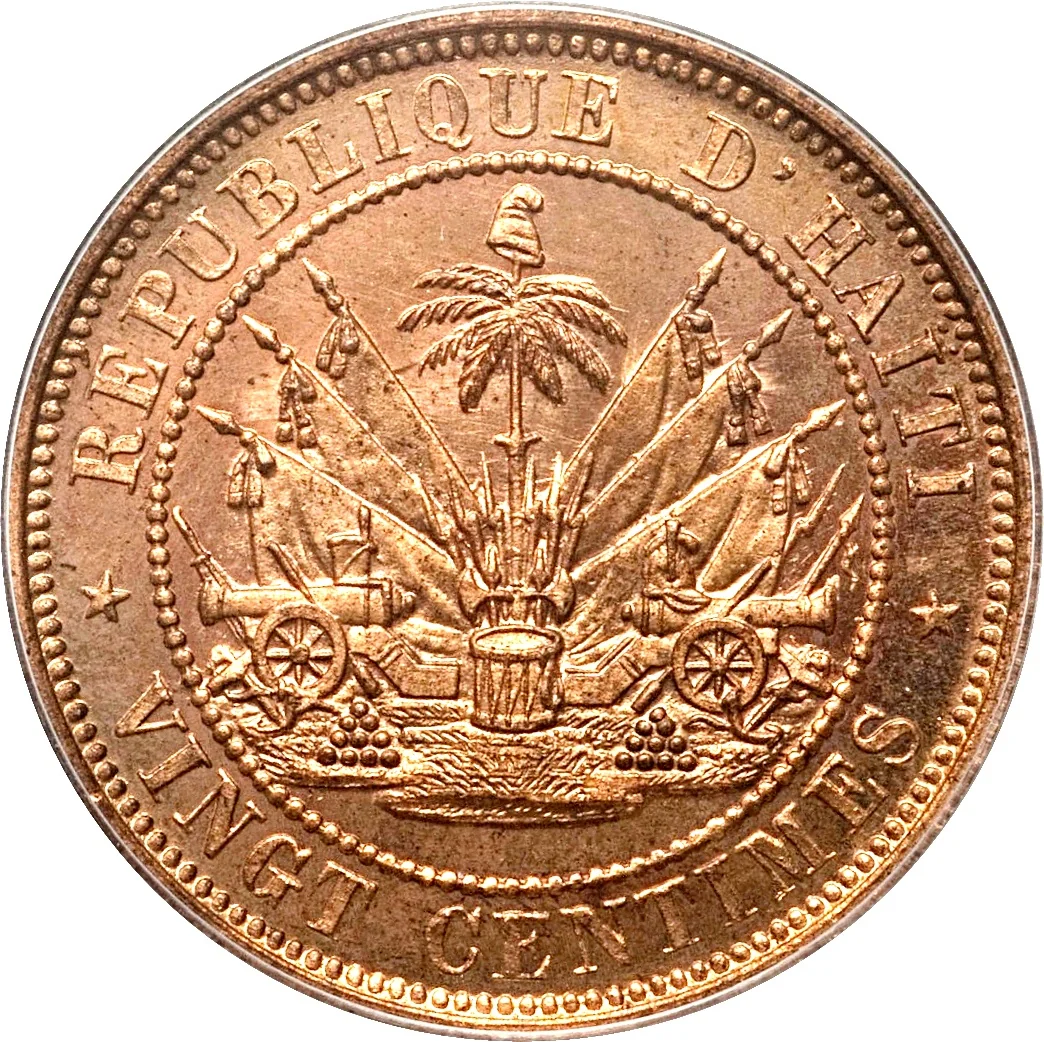
Reverse
Edge
Plain
Mints
| Name | Mark |
|---|---|
| Heaton and Sons / The Mint Birmingham | HEATON |
Historical background
In 1863, Haiti's currency situation was a complex legacy of its independence and international isolation. The nation, having won its freedom from France in 1804, was still burdened by the crippling "independence debt" of 150 million francs imposed by France in 1825 to secure diplomatic recognition. This debt, later reduced to 90 million francs in 1838, drained the national treasury and directly constrained the government's ability to establish a stable, sovereign monetary system. Consequently, a multitude of foreign coins circulated as the primary media of exchange, including French francs, British pounds, Spanish pesos, and particularly the U.S. dollar and various Latin American silver coins, leading to a fragmented and inefficient economy.
The Haitian government unit of account was the gourde, fixed by law to a theoretical value of five French francs. However, this official "gourde" was largely a bookkeeping fiction for government finance and international debt repayment. In everyday commerce, the physical currency in use was overwhelmingly foreign silver coinage. The most common of these was the Haitian "gourde in coins" (gourde en piastres), which was not a distinct Haitian mint but rather a unit representing five French francs' worth of whatever foreign silver coins were accepted. This created a dual-system where prices and debts were quoted in gourdes, but settled with an unstable assortment of foreign specie, subject to fluctuating values and frequent counterfeiting.
This monetary disorder significantly hampered internal trade and economic development. The scarcity of small denomination coinage made everyday transactions difficult, while the government, lacking its own mint and sufficient bullion reserves, had little control over the money supply. The situation was a direct reflection of Haiti's geopolitical and economic stranglehold; the enormous external debt payments, made in hard currency, perpetually exported the nation's silver, leaving the domestic economy with a perpetually inadequate and unreliable circulation of foreign coins. Thus, in 1863, Haiti's currency was not a tool of national sovereignty but a symptom of its financial subjugation and underdevelopment.
The Haitian government unit of account was the gourde, fixed by law to a theoretical value of five French francs. However, this official "gourde" was largely a bookkeeping fiction for government finance and international debt repayment. In everyday commerce, the physical currency in use was overwhelmingly foreign silver coinage. The most common of these was the Haitian "gourde in coins" (gourde en piastres), which was not a distinct Haitian mint but rather a unit representing five French francs' worth of whatever foreign silver coins were accepted. This created a dual-system where prices and debts were quoted in gourdes, but settled with an unstable assortment of foreign specie, subject to fluctuating values and frequent counterfeiting.
This monetary disorder significantly hampered internal trade and economic development. The scarcity of small denomination coinage made everyday transactions difficult, while the government, lacking its own mint and sufficient bullion reserves, had little control over the money supply. The situation was a direct reflection of Haiti's geopolitical and economic stranglehold; the enormous external debt payments, made in hard currency, perpetually exported the nation's silver, leaving the domestic economy with a perpetually inadequate and unreliable circulation of foreign coins. Thus, in 1863, Haiti's currency was not a tool of national sovereignty but a symptom of its financial subjugation and underdevelopment.
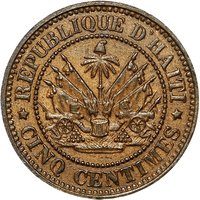
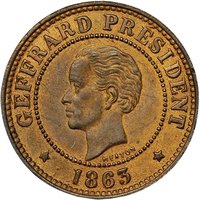
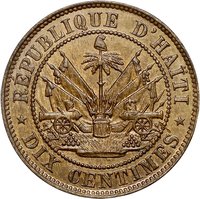
🌱 Fairly Common