

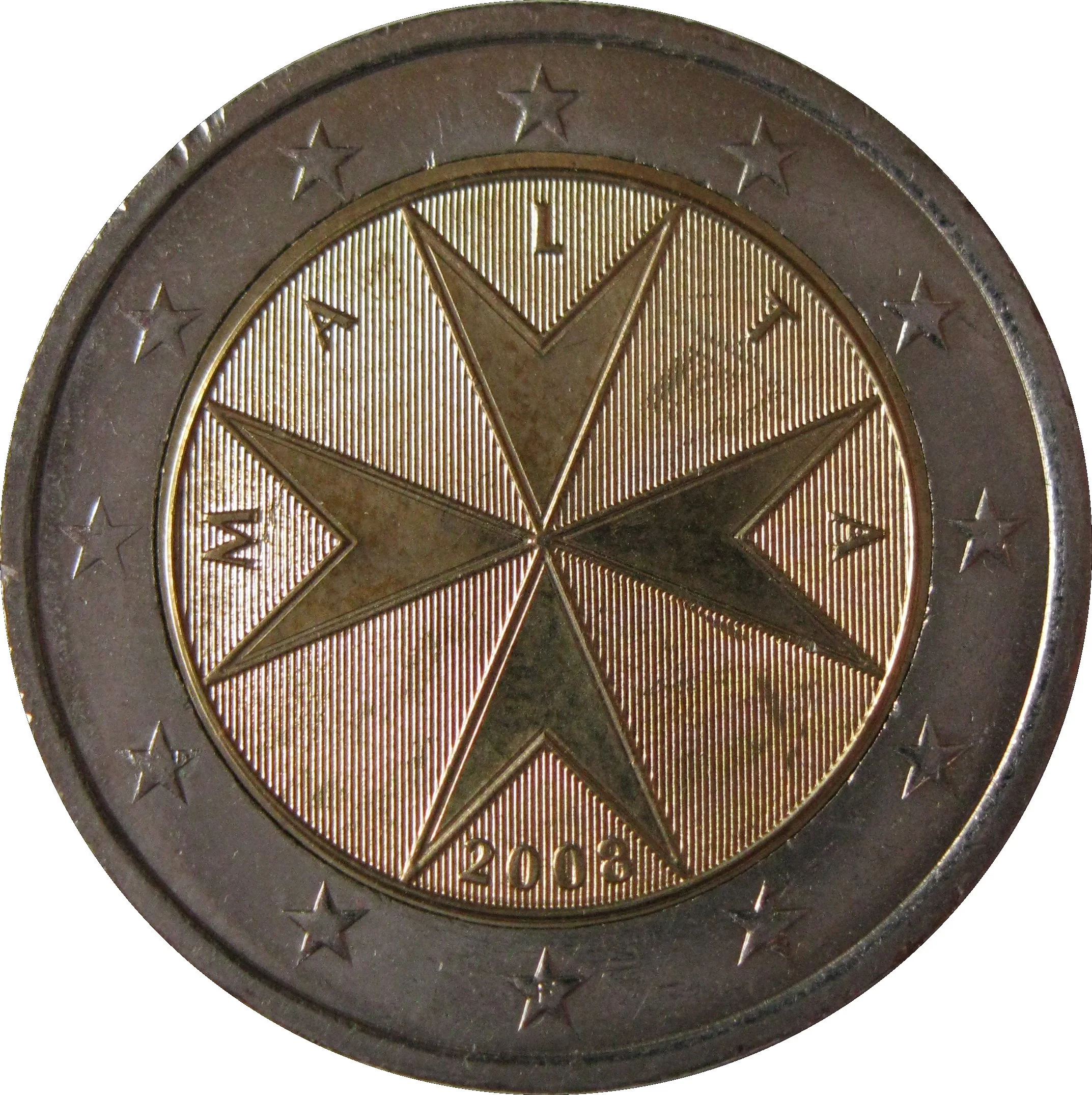
Obverse
Description:
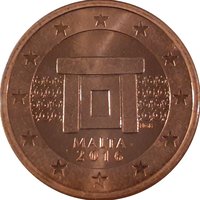
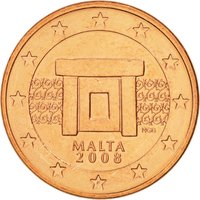
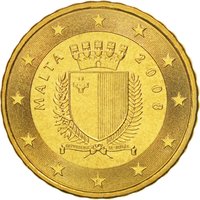
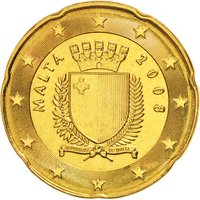
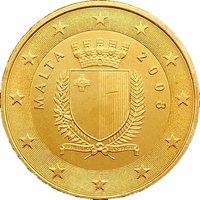
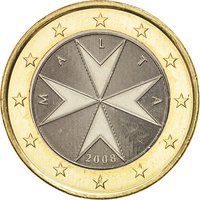
Maltese cross dividing each country letters and date below.
Inscription:
MALTA
2008
F
2008
F
Script: Latin
Engraver: Noel Galea Bason
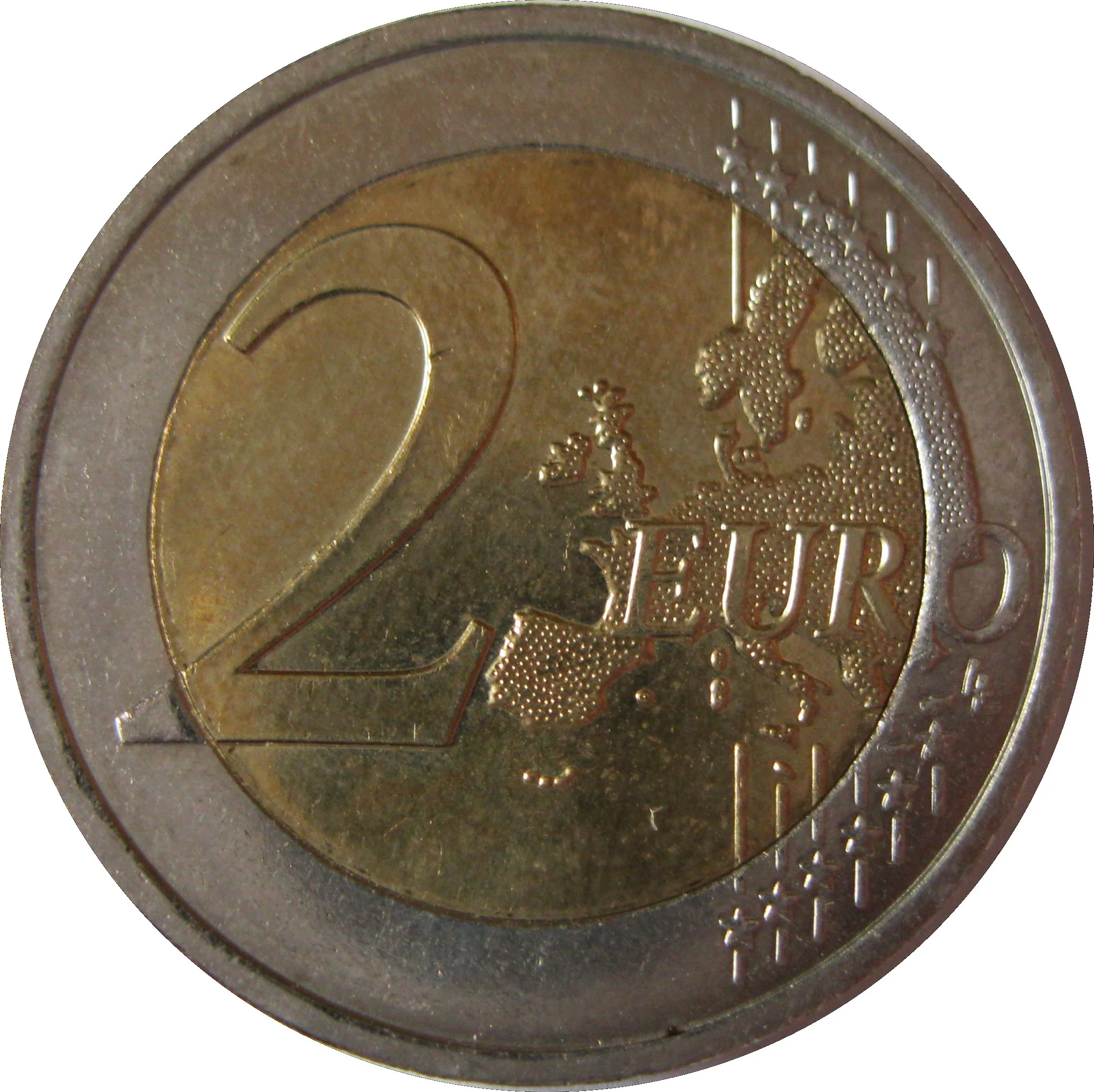
Reverse
Edge
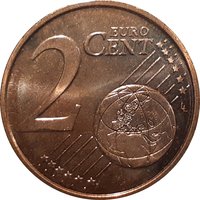
Reeded with inscription: six times a "2" and two Maltese crosses, alternately upright and inverted
Legend:
2 ✠✠ 2 ✠✠ 2 ✠✠ 2 ✠✠ 2 ✠✠ 2 ✠✠
Mints
| Name | Mark |
|---|---|
| Royal Dutch Mint | — |
| Monnaie de Paris | F |
Mintings
Historical background
In 2008, Malta was navigating its first full year as a member of the Eurozone, having adopted the euro on 1 January 2008. This transition from the Maltese lira was a landmark event, symbolizing deeper integration with the European Union and its core economic structures. The changeover was executed smoothly, with the fixed conversion rate (€1 = Lm 0.4293) providing immediate stability and eliminating exchange rate risk with Malta's main trading partners. The primary focus for authorities was managing the psychological and practical shift for businesses and the public, ensuring price transparency and combating any unjustified price inflation during the changeover period.
The global financial crisis, which intensified in the latter half of 2008, presented a severe external shock. However, Malta's banking sector, characterized by a traditional retail model with high levels of domestic deposits and limited exposure to the toxic assets that brought down larger international banks, remained relatively insulated from the initial meltdown. This stability was a crucial buffer. Nonetheless, Malta's small, open economy could not escape the wider European and global downturn entirely, as the crisis began to impact real economic activity through reduced demand for exports and tourism, key pillars of the Maltese economy.
Consequently, while the currency itself was stable within the Eurozone framework, the broader economic outlook darkened towards the end of 2008. The Central Bank of Malta shifted its concern from managing the euro changeover to monitoring the spillover effects of the international crisis. The government, now using the euro, had to operate within the EU's Stability and Growth Pact constraints while preparing for potential fiscal measures to stimulate the domestic economy, setting the stage for the challenges of 2009. The euro thus provided monetary stability during a turbulent global period, but it did not shield the island from the impending European recession.
The global financial crisis, which intensified in the latter half of 2008, presented a severe external shock. However, Malta's banking sector, characterized by a traditional retail model with high levels of domestic deposits and limited exposure to the toxic assets that brought down larger international banks, remained relatively insulated from the initial meltdown. This stability was a crucial buffer. Nonetheless, Malta's small, open economy could not escape the wider European and global downturn entirely, as the crisis began to impact real economic activity through reduced demand for exports and tourism, key pillars of the Maltese economy.
Consequently, while the currency itself was stable within the Eurozone framework, the broader economic outlook darkened towards the end of 2008. The Central Bank of Malta shifted its concern from managing the euro changeover to monitoring the spillover effects of the international crisis. The government, now using the euro, had to operate within the EU's Stability and Growth Pact constraints while preparing for potential fiscal measures to stimulate the domestic economy, setting the stage for the challenges of 2009. The euro thus provided monetary stability during a turbulent global period, but it did not shield the island from the impending European recession.
Series: 2008 Malta circulation coins
🌱 Very Common