

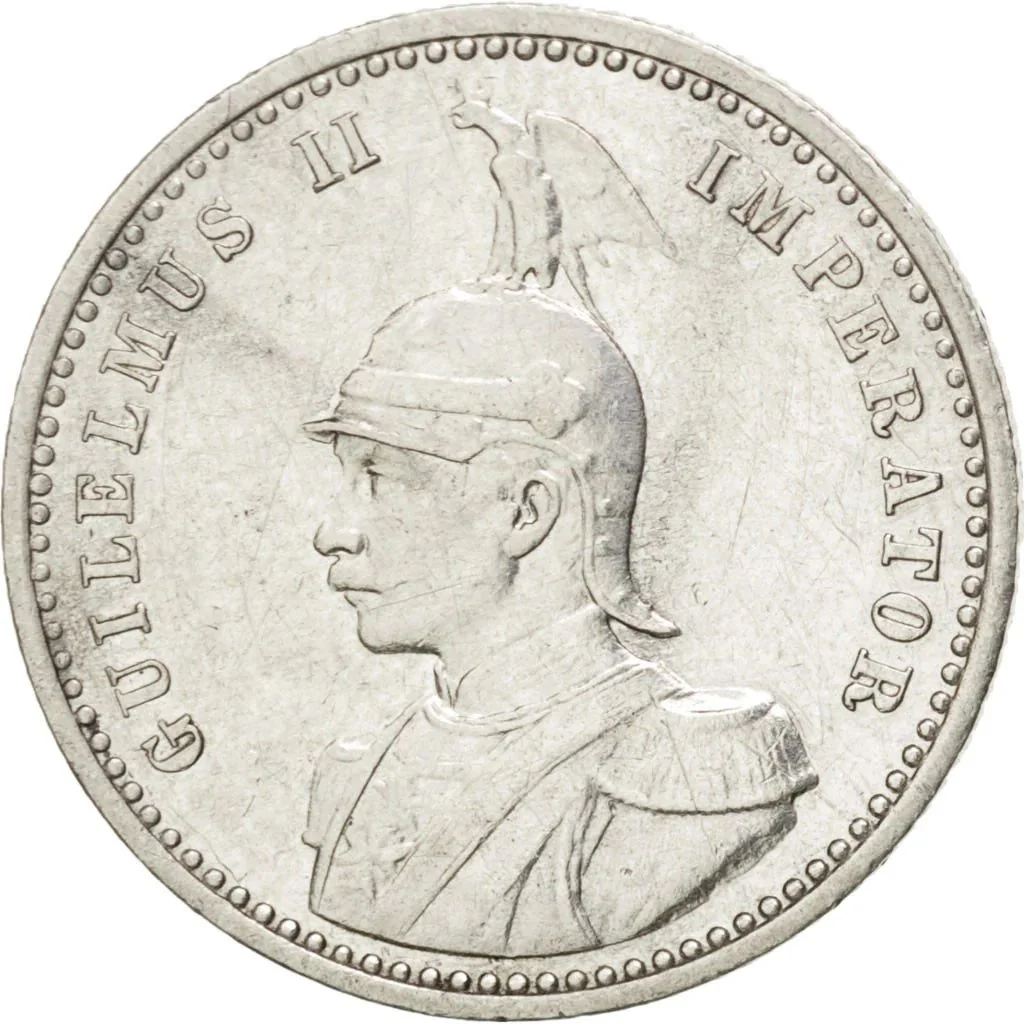
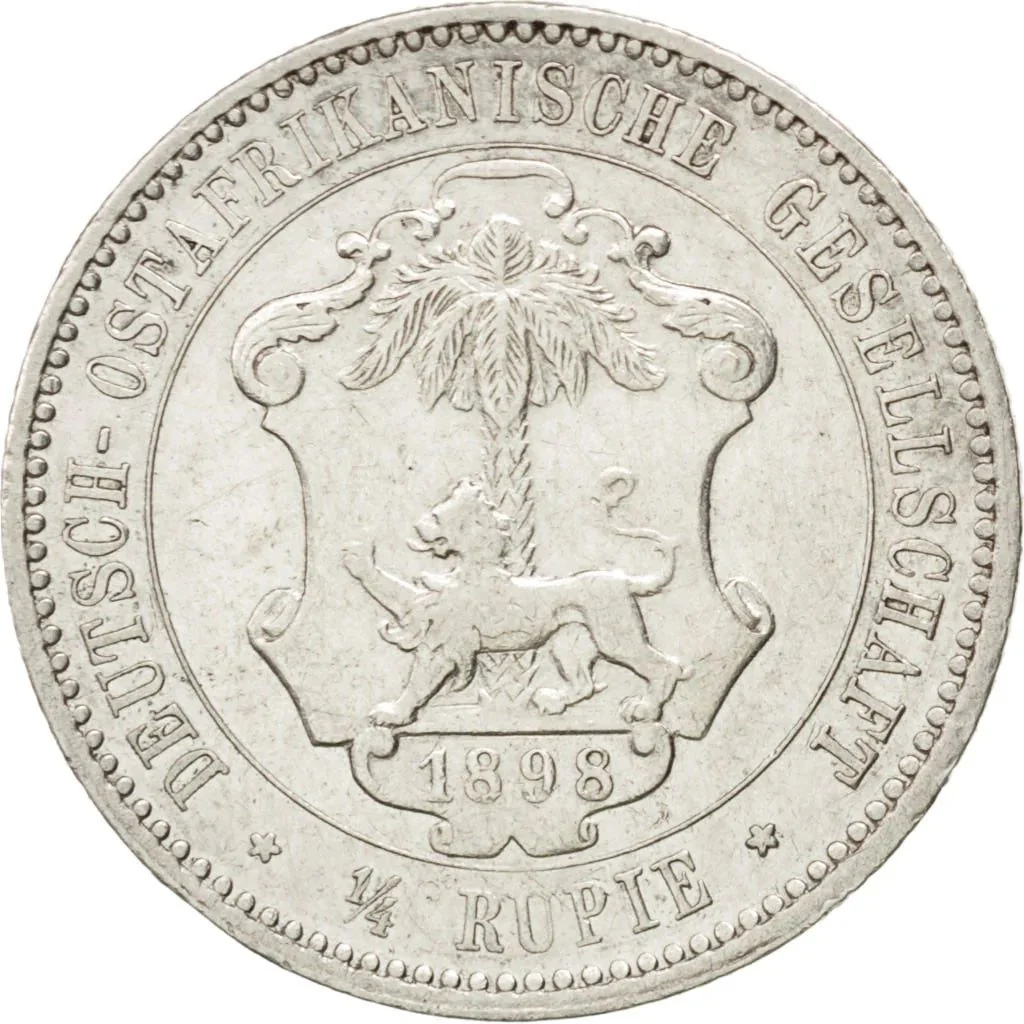
¼ rupee – German East Africa
Add to wishlist
Tanzania
Context
Years: 1891–1901
Country: Tanzania
Issuer: German East Africa
Ruler: William II
Currency:
(1890—1904)
Demonetized: Yes
Total mintage: 526,688
Material
References
KM: #
Numista: #21766
Value
Bullion value: $6.84
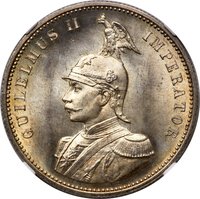
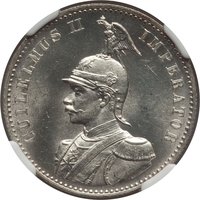
Obverse
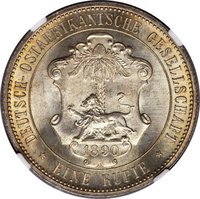
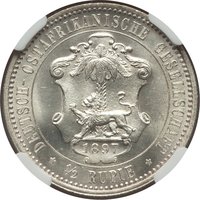
Reverse
Edge
Reeded
Categories
| Mustache/Beard |
Mints
| Name | Mark |
|---|---|
| Berlin | — |
Mintings
| Year | Mint Mark | Mintage | Quality | Collection |
|---|---|---|---|---|
| 1891 | — | — | Proof | |
| 1891 | — | 76,688 | ||
| 1898 | — | 100,000 | ||
| 1901 | — | 350,000 |
Historical background
In 1891, the currency situation in German East Africa was characterized by significant complexity and a lack of standardized monetary control. The primary circulating medium was the Indian silver rupee, a legacy of the region's long-standing trade ties with the Indian Ocean world and the influence of Zanzibari merchants. Alongside rupees, a bewildering variety of other currencies were in use, including Maria Theresa thalers, American gold dollars, British sovereigns, and even commodity monies like cloth and copper wire. This multiplicity created chronic instability for commerce and administration, as exchange rates fluctuated wildly between the coast and the interior.
The German colonial administration, established in 1885, recognized this monetary chaos as a major obstacle to economic exploitation and fiscal governance. Prior to 1890, attempts to introduce a unified currency had failed, but the Deutsch-Ostafrikanische Bank was chartered in that year with the authority to issue banknotes. By 1891, the bank had begun circulating its first paper rupees, which were pegged to and convertible into the Indian silver rupee. This marked a crucial first step toward creating a formal, colonial-controlled financial system, though the bank's notes initially saw limited acceptance beyond major coastal trading centers and government transactions.
Therefore, 1891 represents a transitional moment. While the old, fragmented system of multiple metallic and commodity currencies remained dominant across the vast interior, the institutional framework for a future standardized currency was being put in place on the coast. The administration's goal was clear: to replace the heterogeneous monetary landscape with a single, German-managed currency that would facilitate tax collection, stabilize trade, and firmly integrate the colony into the imperial economic sphere—a process that would take years to fully accomplish.
The German colonial administration, established in 1885, recognized this monetary chaos as a major obstacle to economic exploitation and fiscal governance. Prior to 1890, attempts to introduce a unified currency had failed, but the Deutsch-Ostafrikanische Bank was chartered in that year with the authority to issue banknotes. By 1891, the bank had begun circulating its first paper rupees, which were pegged to and convertible into the Indian silver rupee. This marked a crucial first step toward creating a formal, colonial-controlled financial system, though the bank's notes initially saw limited acceptance beyond major coastal trading centers and government transactions.
Therefore, 1891 represents a transitional moment. While the old, fragmented system of multiple metallic and commodity currencies remained dominant across the vast interior, the institutional framework for a future standardized currency was being put in place on the coast. The administration's goal was clear: to replace the heterogeneous monetary landscape with a single, German-managed currency that would facilitate tax collection, stabilize trade, and firmly integrate the colony into the imperial economic sphere—a process that would take years to fully accomplish.
🌟 Uncommon