

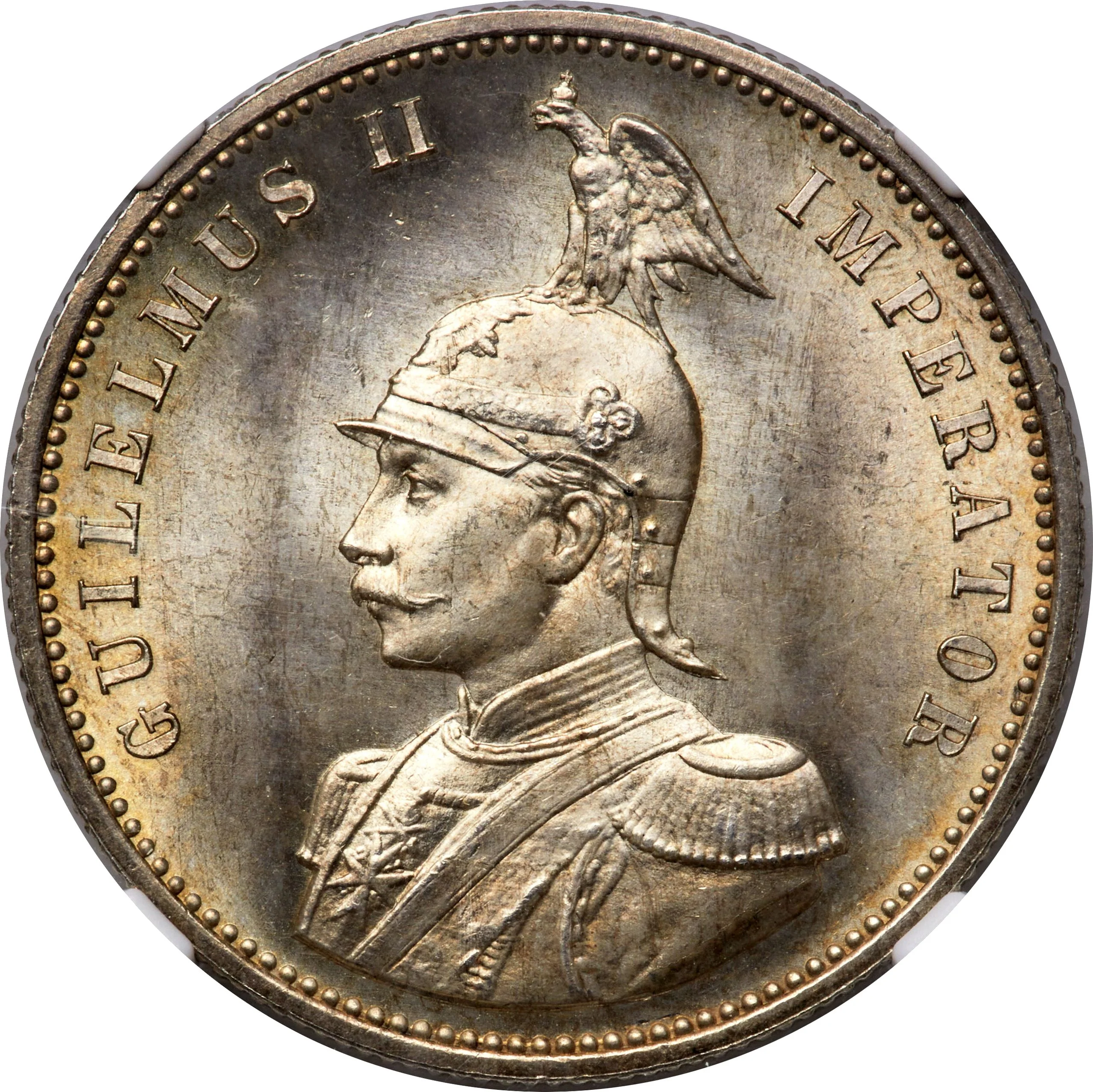
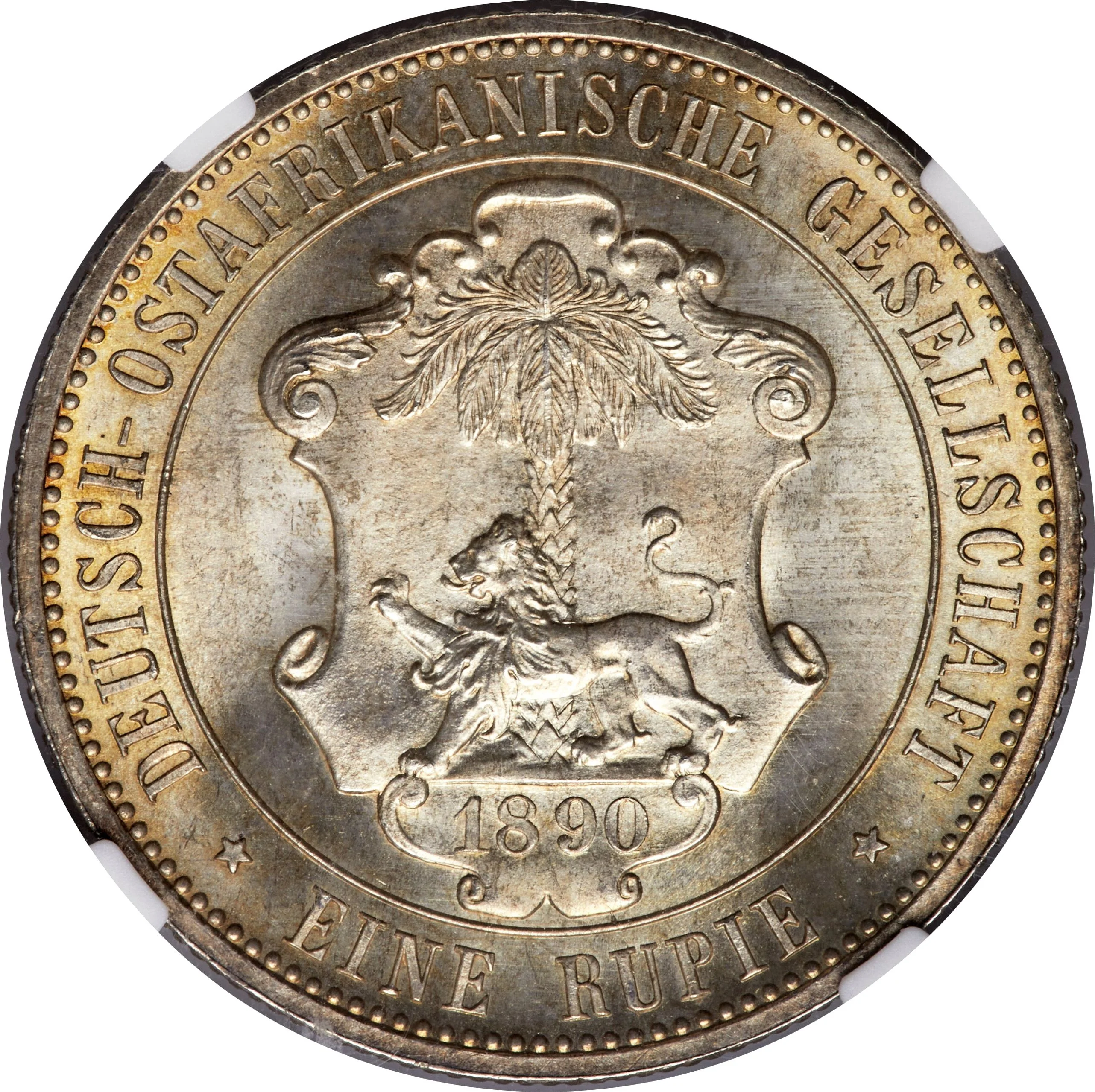
1 rupee – German East Africa
Add to wishlist
Tanzania
Context
Years: 1890–1902
Country: Tanzania
Issuer: German East Africa
Ruler: William II
Currency:
(1890—1904)
Demonetized: Yes
Total mintage: 2,299,056
Material
References
KM: #
Numista: #11913
Value
Bullion value: $27.32
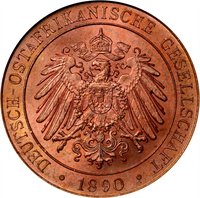
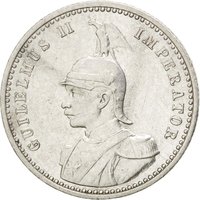
Obverse
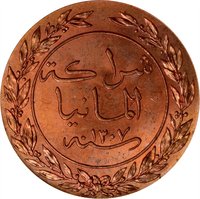
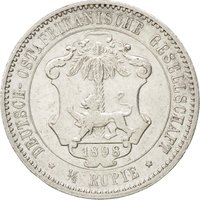
Reverse
Edge
Reeded
Categories
| Animal> Feline |
| Person> Monarch |
| Mustache/Beard |
Mints
| Name | Mark |
|---|---|
| Berlin | — |
Mintings
| Year | Mint Mark | Mintage | Quality | Collection |
|---|---|---|---|---|
| 1890 | — | 154,394 | ||
| 1890 | — | — | Proof | |
| 1891 | — | 126,258 | ||
| 1891 | — | — | Proof | |
| 1892 | — | 359,735 | ||
| 1892 | — | — | Proof | |
| 1893 | — | 142,355 | ||
| 1894 | — | 48,200 | ||
| 1897 | — | 244,030 | ||
| 1898 | — | 318,000 | ||
| 1899 | — | 226,754 | ||
| 1900 | — | 209,289 | ||
| 1901 | — | 319,022 | ||
| 1902 | — | 151,019 |
Historical background
By 1890, the currency situation in German East Africa was a complex and often chaotic mix of indigenous, imported, and official monetary systems, reflecting the colony's early and unstable period of administration. The traditional economy relied heavily on barter, with cloth (particularly merikani from America and kaniki from India), salt, copper wire, and livestock serving as key mediums of exchange. Along the coast and major trade routes, the longstanding Arab-influenced system based on the Maria Theresa thaler (MTT) and the Indian rupee remained dominant, as these silver coins were trusted for their intrinsic value in long-distance trade, especially in ivory and slaves.
The newly established German colonial administration, under the Deutsche Ostafrikanische Gesellschaft (German East Africa Company) until 1891, struggled to impose order and a unified currency. Their primary objective was to replace the MTT and rupee with German currency to facilitate tax collection and trade control. In 1890, they introduced the German East African rupie (tied to the Indian rupee) and its sub-unit, the heller, but these new coins faced immediate resistance and skepticism from the local population. The people distrusted the token coinage, preferring the familiar, high-silver-content MTT, which led to widespread hoarding of the older coins.
Consequently, the monetary landscape was fragmented and inefficient. In the interior, barter prevailed; in coastal ports and caravan towns, thalers and rupees circulated freely; and in administrative centers, the new German currency was used, often under duress for tax payments. This tripartite system created significant challenges for colonial commerce and governance, as exchange rates fluctuated and the lack of a uniform standard hindered economic integration. The situation in 1890 was therefore one of transition and contestation, setting the stage for the imperial government's more forceful—and ultimately disruptive—monetary interventions in the decades to follow.
The newly established German colonial administration, under the Deutsche Ostafrikanische Gesellschaft (German East Africa Company) until 1891, struggled to impose order and a unified currency. Their primary objective was to replace the MTT and rupee with German currency to facilitate tax collection and trade control. In 1890, they introduced the German East African rupie (tied to the Indian rupee) and its sub-unit, the heller, but these new coins faced immediate resistance and skepticism from the local population. The people distrusted the token coinage, preferring the familiar, high-silver-content MTT, which led to widespread hoarding of the older coins.
Consequently, the monetary landscape was fragmented and inefficient. In the interior, barter prevailed; in coastal ports and caravan towns, thalers and rupees circulated freely; and in administrative centers, the new German currency was used, often under duress for tax payments. This tripartite system created significant challenges for colonial commerce and governance, as exchange rates fluctuated and the lack of a uniform standard hindered economic integration. The situation in 1890 was therefore one of transition and contestation, setting the stage for the imperial government's more forceful—and ultimately disruptive—monetary interventions in the decades to follow.
🌱 Fairly Common