

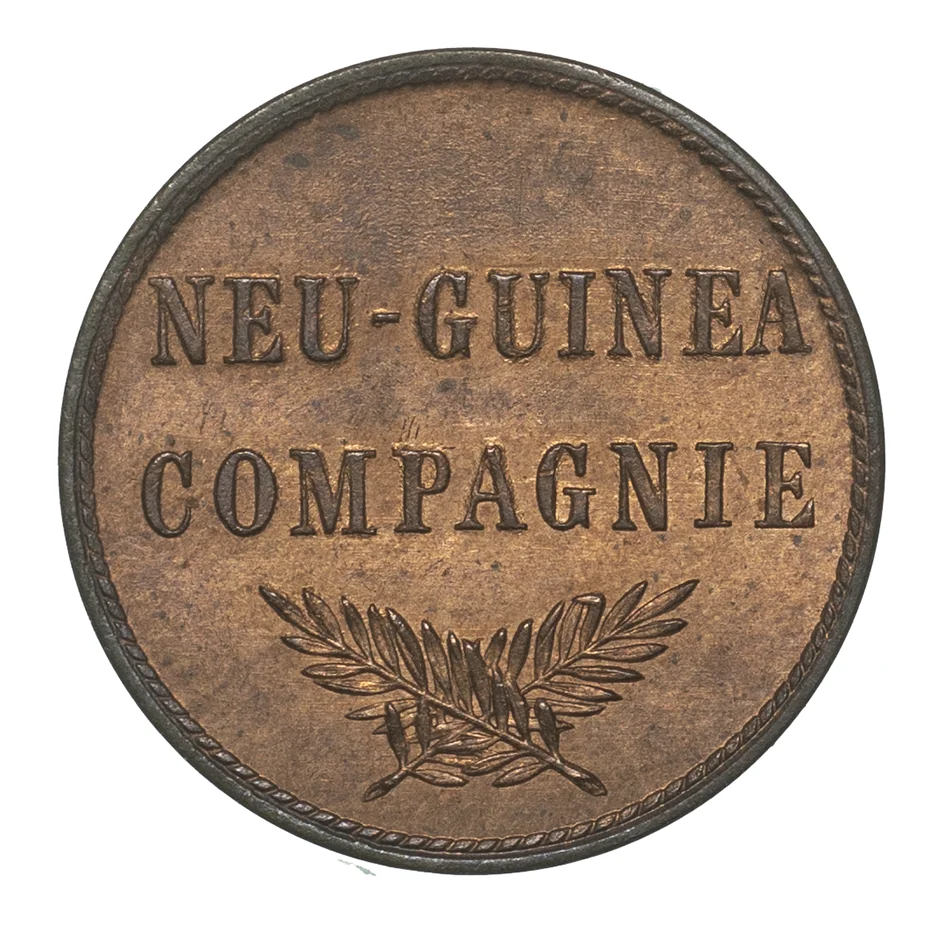
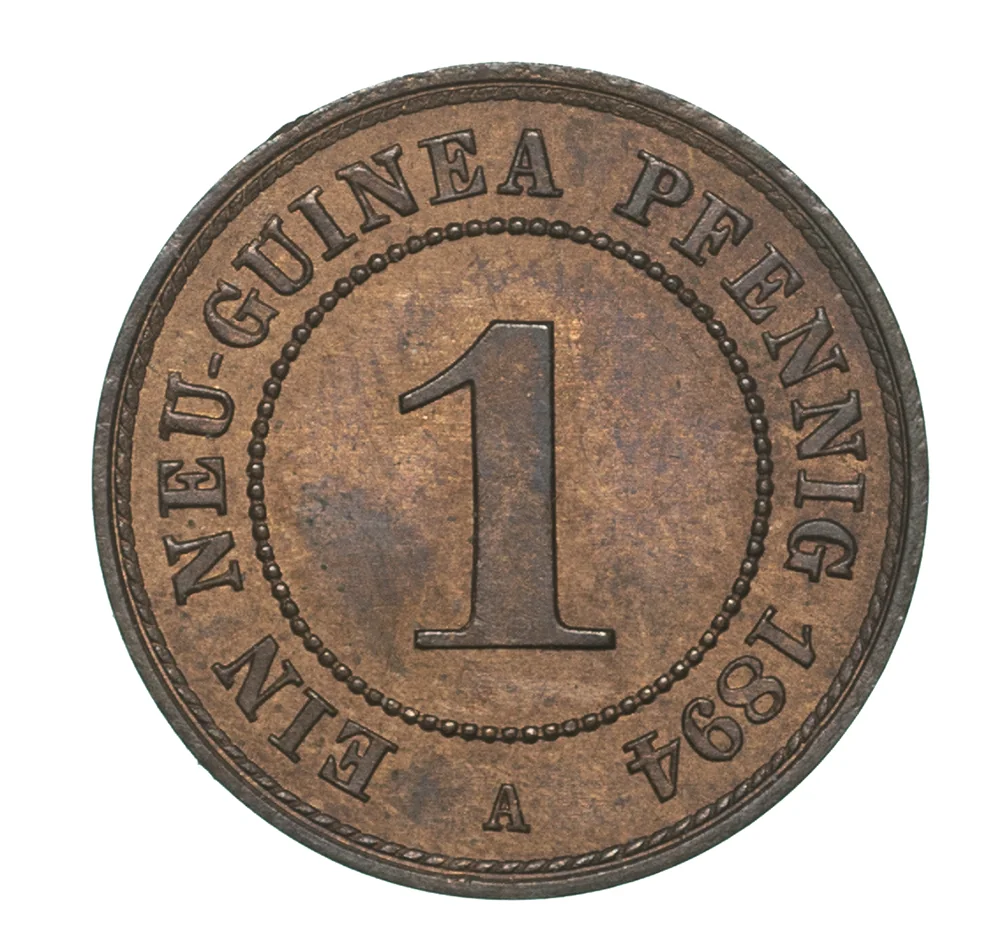
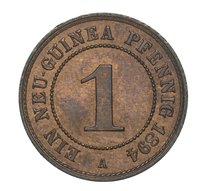
1 Pfennig – German New Guinea
Papua New Guinea
Context
Year: 1894
Country: Papua New Guinea 
Issuer: German New Guinea
Ruler: William II
Currency:
(1894—1895)
Demonetization: 15 April 1911
Total mintage: 500,000
Material
References
KM: #Click to copy to clipboard1
Numista: #21760
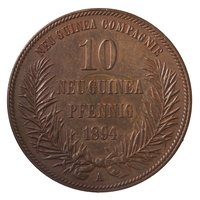
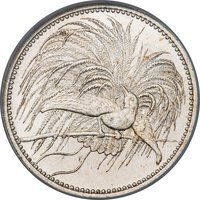
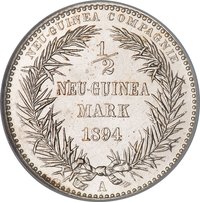
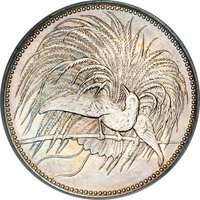
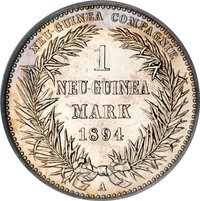
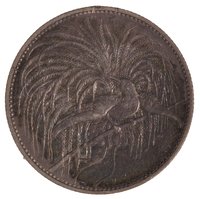
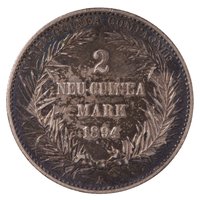
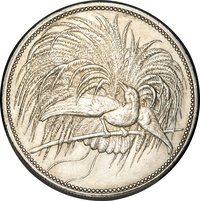
Obverse
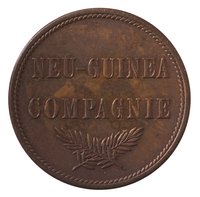
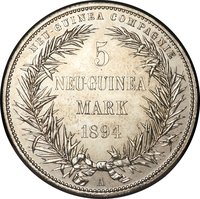
Reverse
Edge
Plain
Mints
| Name | Mark |
|---|---|
| Berlin | A |
Historical background
In 1894, the currency situation in German New Guinea was characterized by a complex and inadequate system, dominated by the Neuguinea-Compagnie (New Guinea Company). As the colonial administrator until 1899, the Company faced severe economic difficulties and a chronic lack of official currency. The primary medium of exchange was not a formal government issue but the Company's own token coins—brass pfennig and silver marks—first introduced in 1891. These tokens, however, circulated only in limited quantities and were not universally accepted, especially outside company-controlled areas and trade posts.
Alongside these tokens, a bewildering variety of other currencies were in practical use, creating a chaotic monetary environment. Traditional shell money, particularly diwarra (shell discs), remained vital for local trade and bride prices, especially in the Bismarck Archipelago. Furthermore, due to the colony's connections with other Pacific traders and Australian interests, British and Australian coins, particularly sovereigns and shillings, were commonly used for larger transactions. German imperial coinage was scarce, and barter for tobacco, metal tools, and copra (dried coconut meat) was still a fundamental part of the economy.
This monetary fragmentation severely hampered the colonial economy and administration. The lack of a unified, trusted currency discouraged investment and complicated tax collection, as the Company struggled to impose its financial authority. The situation in 1894 thus reflected the broader weaknesses of the Neuguinea-Compagnie's rule: limited reach, financial instability, and an inability to fully integrate the protectorate into a cash-based system, a problem that would persist until the German imperial government assumed direct control and reformed the currency after 1899.
Alongside these tokens, a bewildering variety of other currencies were in practical use, creating a chaotic monetary environment. Traditional shell money, particularly diwarra (shell discs), remained vital for local trade and bride prices, especially in the Bismarck Archipelago. Furthermore, due to the colony's connections with other Pacific traders and Australian interests, British and Australian coins, particularly sovereigns and shillings, were commonly used for larger transactions. German imperial coinage was scarce, and barter for tobacco, metal tools, and copra (dried coconut meat) was still a fundamental part of the economy.
This monetary fragmentation severely hampered the colonial economy and administration. The lack of a unified, trusted currency discouraged investment and complicated tax collection, as the Company struggled to impose its financial authority. The situation in 1894 thus reflected the broader weaknesses of the Neuguinea-Compagnie's rule: limited reach, financial instability, and an inability to fully integrate the protectorate into a cash-based system, a problem that would persist until the German imperial government assumed direct control and reformed the currency after 1899.
⭐ Somewhat Rare