

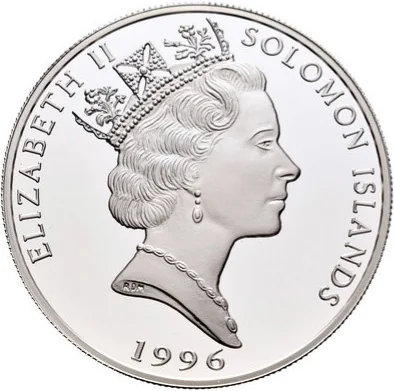

10 Dollars – Solomon Islands
Solomon Islands
Context

Material
Diameter: 38.61 mm
Weight: 31.47 g
Silver weight: 29.11 g
Shape: Round
Composition: 92.5% Silver
Standard: Silver ounce
Magnetic: No
Technique: Milled
Alignment: Medal alignment
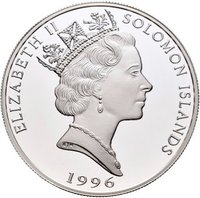
flip

References
Numista: #217533
Value
Exchange value: 10 SBD
Bullion value: $82.75
Obverse
Description:
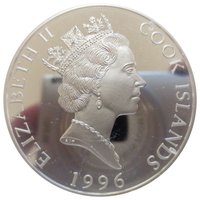
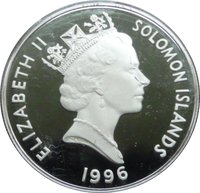
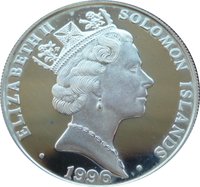
Queen Elizabeth II's effigy
Inscription:
ELIZABETH II SOLOMON ISLANDS
RDM
1996
RDM
1996
Translation:
ELIZABETH II SOLOMON ISLANDS
RDM
1996
RDM
1996
Script: Latin
Engraver: Raphael David Maklouf
Reverse
Edge
Reeded
Mintings
| Year | Mint Mark | Mintage | Quality | Collection |
|---|---|---|---|---|
| 1996 | — | — | Proof |
Historical background
In 1996, the currency situation in Solomon Islands was defined by the circulation of the Solomon Islands dollar (SBD), which had been the nation's official currency since its introduction in 1977, replacing the Australian dollar. The currency was managed by the Central Bank of Solomon Islands (CBSI), which operated a managed float exchange rate regime. During this period, the SBD faced significant and sustained pressure, characterized by gradual depreciation against major trading partner currencies, particularly the Australian dollar. This depreciation was a symptom of underlying economic strains, including a persistent trade deficit, limited foreign exchange reserves, and the lingering economic disruption following the closure of the large-scale Guadalcanal Plains palm oil project in the late 1980s.
The country's economy remained heavily dependent on exports of primary commodities such as timber, fish, and palm oil, making it vulnerable to volatile global prices. By the mid-1990s, the rapid exploitation of natural forests led to a timber boom that provided a temporary influx of foreign exchange. However, this was not a sustainable foundation for currency stability, as it masked structural weaknesses. The government's fiscal position was also challenging, with public debt levels rising, contributing to broader macroeconomic imbalances that further undermined confidence in the national currency.
Consequently, 1996 fell within a period where monetary authorities were grappling with the dual challenge of managing inflation and supporting economic growth while defending the currency's value. The CBSI had to carefully intervene in foreign exchange markets and utilize monetary policy tools to manage liquidity. This pre-dated the severe ethnic tensions and civil conflict that would erupt in late 1998, after which the economic and currency situation deteriorated dramatically. Thus, the 1996 currency landscape was one of managed but palpable strain, setting the stage for the more profound crises that would follow in the coming decade.
The country's economy remained heavily dependent on exports of primary commodities such as timber, fish, and palm oil, making it vulnerable to volatile global prices. By the mid-1990s, the rapid exploitation of natural forests led to a timber boom that provided a temporary influx of foreign exchange. However, this was not a sustainable foundation for currency stability, as it masked structural weaknesses. The government's fiscal position was also challenging, with public debt levels rising, contributing to broader macroeconomic imbalances that further undermined confidence in the national currency.
Consequently, 1996 fell within a period where monetary authorities were grappling with the dual challenge of managing inflation and supporting economic growth while defending the currency's value. The CBSI had to carefully intervene in foreign exchange markets and utilize monetary policy tools to manage liquidity. This pre-dated the severe ethnic tensions and civil conflict that would erupt in late 1998, after which the economic and currency situation deteriorated dramatically. Thus, the 1996 currency landscape was one of managed but palpable strain, setting the stage for the more profound crises that would follow in the coming decade.
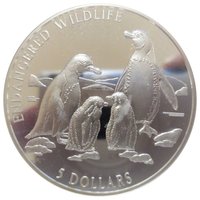
Series: Endangered Wildlife
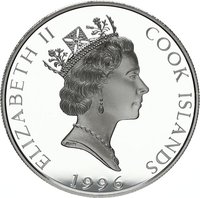
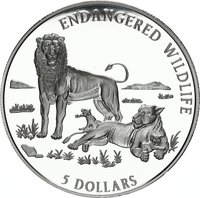



✨ Legendary