

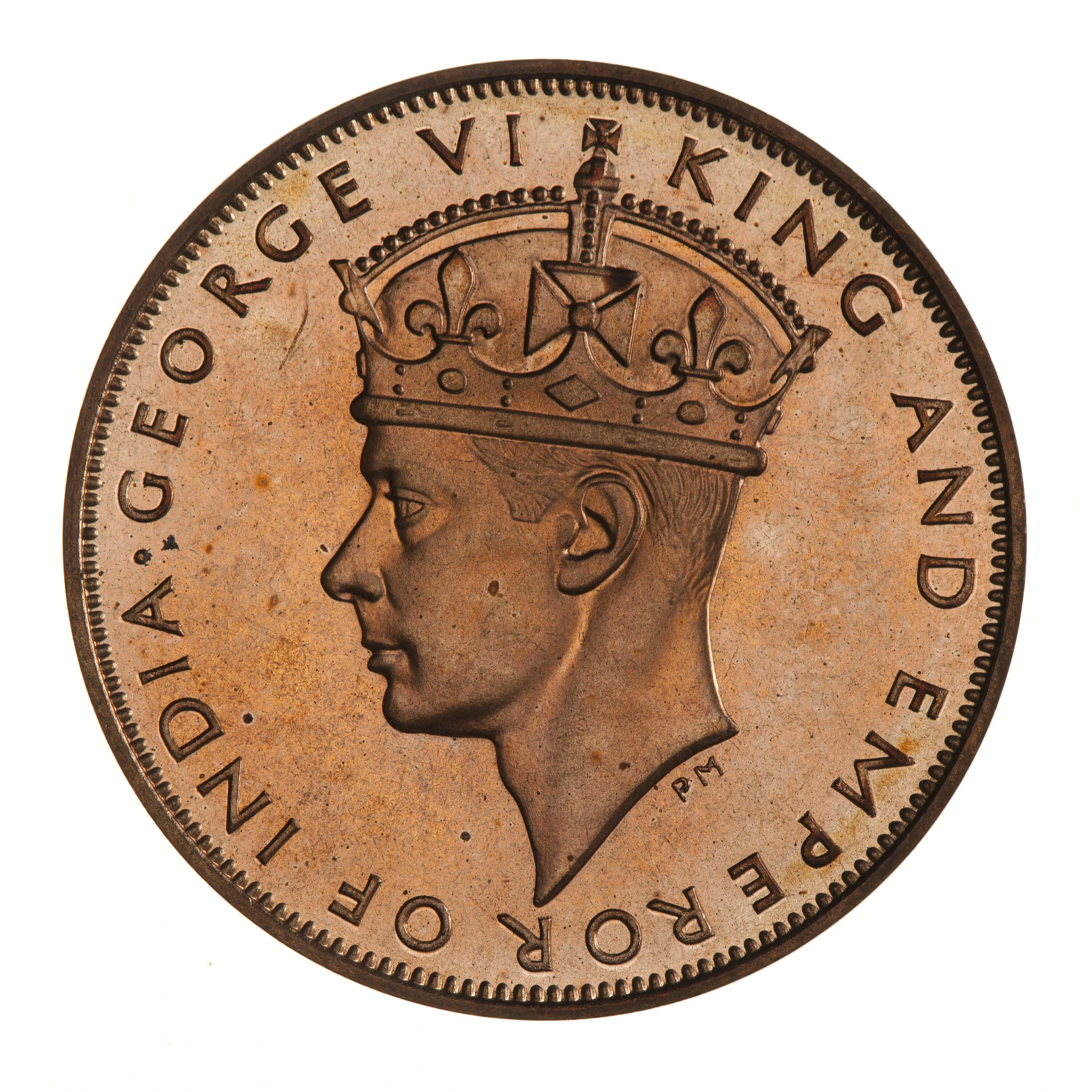
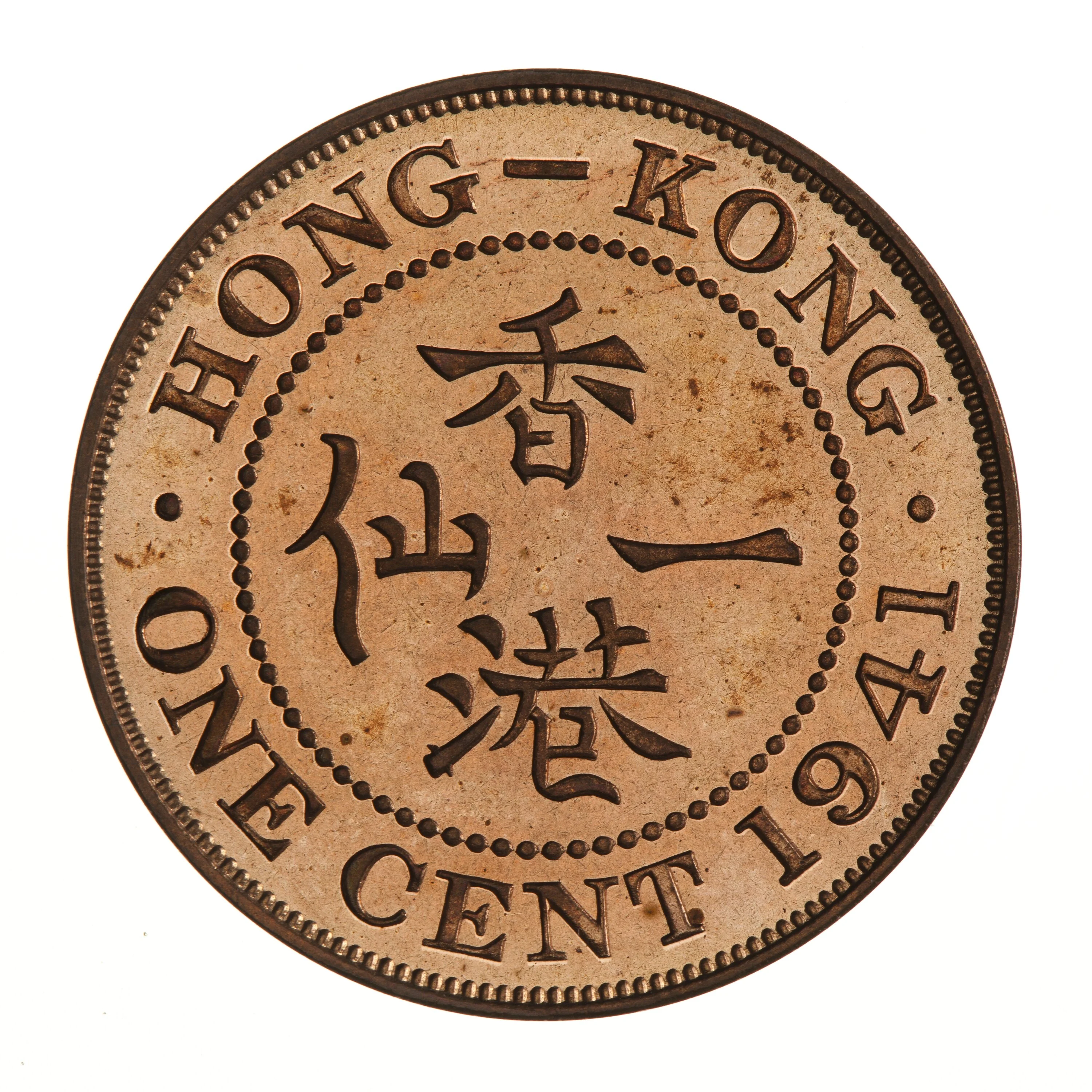
Obverse
Description:
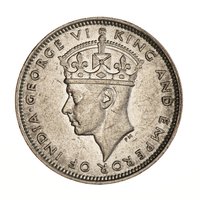
Crowned left-facing bust.
Inscription:
GEORGE VI KING AND EMPEROR OF INDIA.
Translation:
GEORGE VI KING AND EMPEROR OF INDIA.
Script: Latin
Language: English
Engraver: Percy Metcalfe
Reverse
Edge
Plain
Mints
| Name | Mark |
|---|---|
| Royal Mint (Tower Hill) | — |
Mintings
| Year | Mint Mark | Mintage | Quality | Collection |
|---|---|---|---|---|
| 1941 | — | 5,000,000 | ||
| 1941 | — | — | Proof |
Historical background
In 1941, Hong Kong operated under a unique and complex multi-currency system, a legacy of its status as a British colony and a major trading port. The official currency was the Hong Kong dollar (HK$), issued by three commercial banks—the Hongkong and Shanghai Banking Corporation (HSBC), the Chartered Bank of India, Australia and China, and the Mercantile Bank of India—under strict government supervision. This currency was pegged to the British pound sterling at a fixed rate of HK$16 = £1, providing stability and a direct link to the British Empire's financial system.
However, daily commerce was dominated by the silver dollar, specifically the Chinese yuan or "Mexican dollar," due to Hong Kong's deep economic integration with mainland China. This created a dual-currency environment where both the HK$ and silver coins circulated freely, with exchange rates fluctuating based on trade flows and the volatile price of silver. Furthermore, Japanese military yen notes had begun to circulate covertly, foreshadowing the impending conflict, as Japan expanded its influence in the region following its invasion of southern China.
This fragile monetary order existed under the looming shadow of the Pacific War. The colony's economy was strained by the influx of refugees and capital from war-torn China, leading to inflationary pressures. The entire system would be abruptly shattered on December 8, 1941, with the Japanese attack on Hong Kong. Following the colony's surrender on December 25, the Japanese military administration immediately declared their military yen as the sole legal tender, rendering the existing Hong Kong dollar and silver currency obsolete and ushering in a period of harsh occupation and hyperinflation.
However, daily commerce was dominated by the silver dollar, specifically the Chinese yuan or "Mexican dollar," due to Hong Kong's deep economic integration with mainland China. This created a dual-currency environment where both the HK$ and silver coins circulated freely, with exchange rates fluctuating based on trade flows and the volatile price of silver. Furthermore, Japanese military yen notes had begun to circulate covertly, foreshadowing the impending conflict, as Japan expanded its influence in the region following its invasion of southern China.
This fragile monetary order existed under the looming shadow of the Pacific War. The colony's economy was strained by the influx of refugees and capital from war-torn China, leading to inflationary pressures. The entire system would be abruptly shattered on December 8, 1941, with the Japanese attack on Hong Kong. Following the colony's surrender on December 25, the Japanese military administration immediately declared their military yen as the sole legal tender, rendering the existing Hong Kong dollar and silver currency obsolete and ushering in a period of harsh occupation and hyperinflation.
💎 Extremely Rare