

5 cents – Hong Kong
Add to wishlist
China
Context
Material
Diameter: 15.2 mm
Weight: 1.4 g
Thickness: 0.8 mm
Shape: Round
Composition: Copper-nickel
Technique: Milled
Alignment: Medal alignment
flip
References
KM: #
Numista: #21698
Value
Exchange value: 0.05 HKD
Obverse
Description:
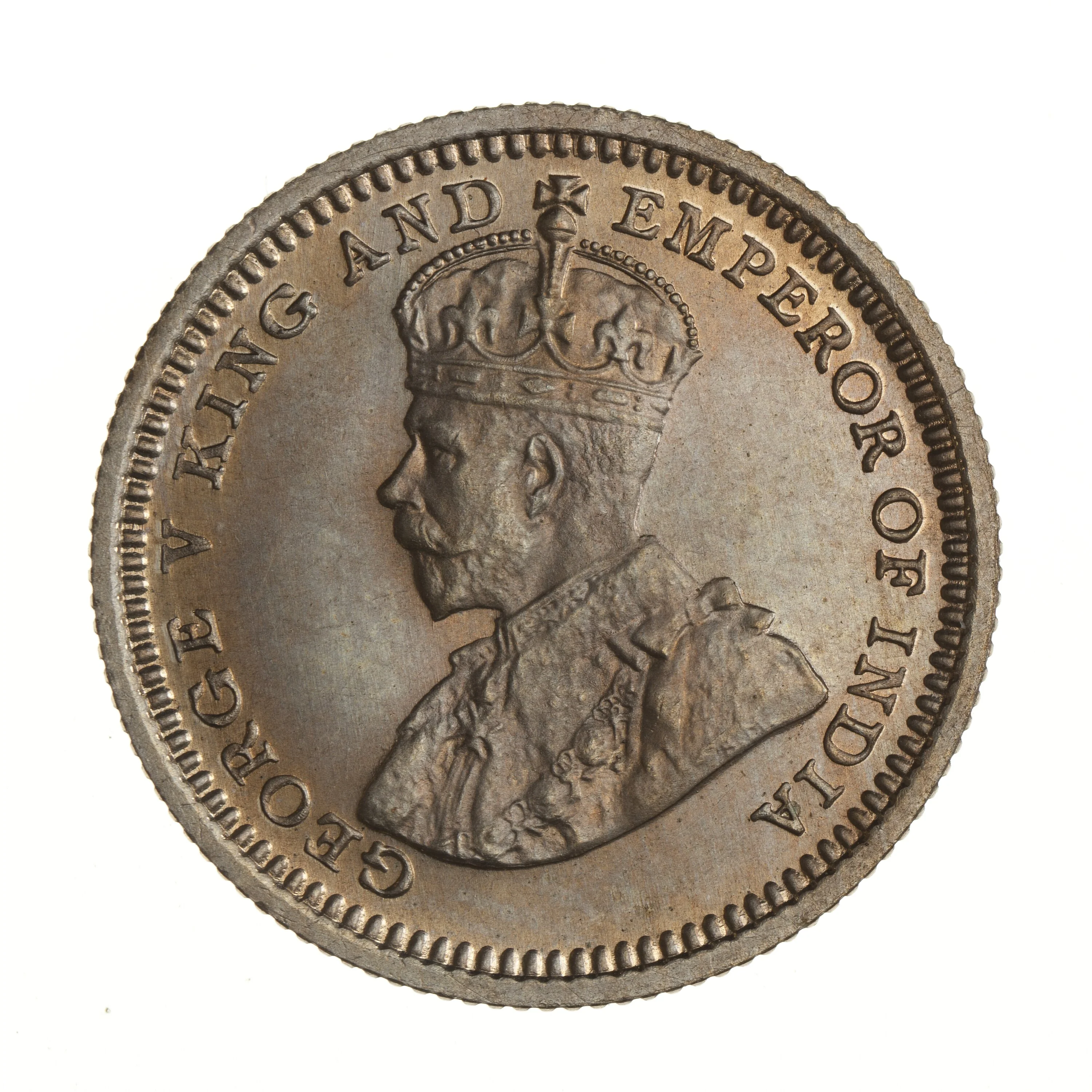
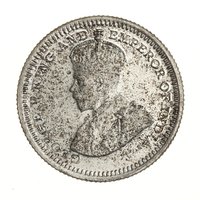
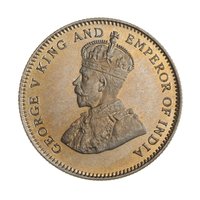
Crowned left-facing bust.
Inscription:
GEORGE V KING AND EMPEROR OF INDIA
Translation:
GEORGE V KING AND EMPEROR OF INDIA
Script: Latin
Language: English
Engraver: Edgar Bertram MacKennal
Reverse
Edge
Reeded
Mints
| Name | Mark |
|---|---|
| Royal Mint (Tower Hill) | — |
Mintings
| Year | Mint Mark | Mintage | Quality | Collection |
|---|---|---|---|---|
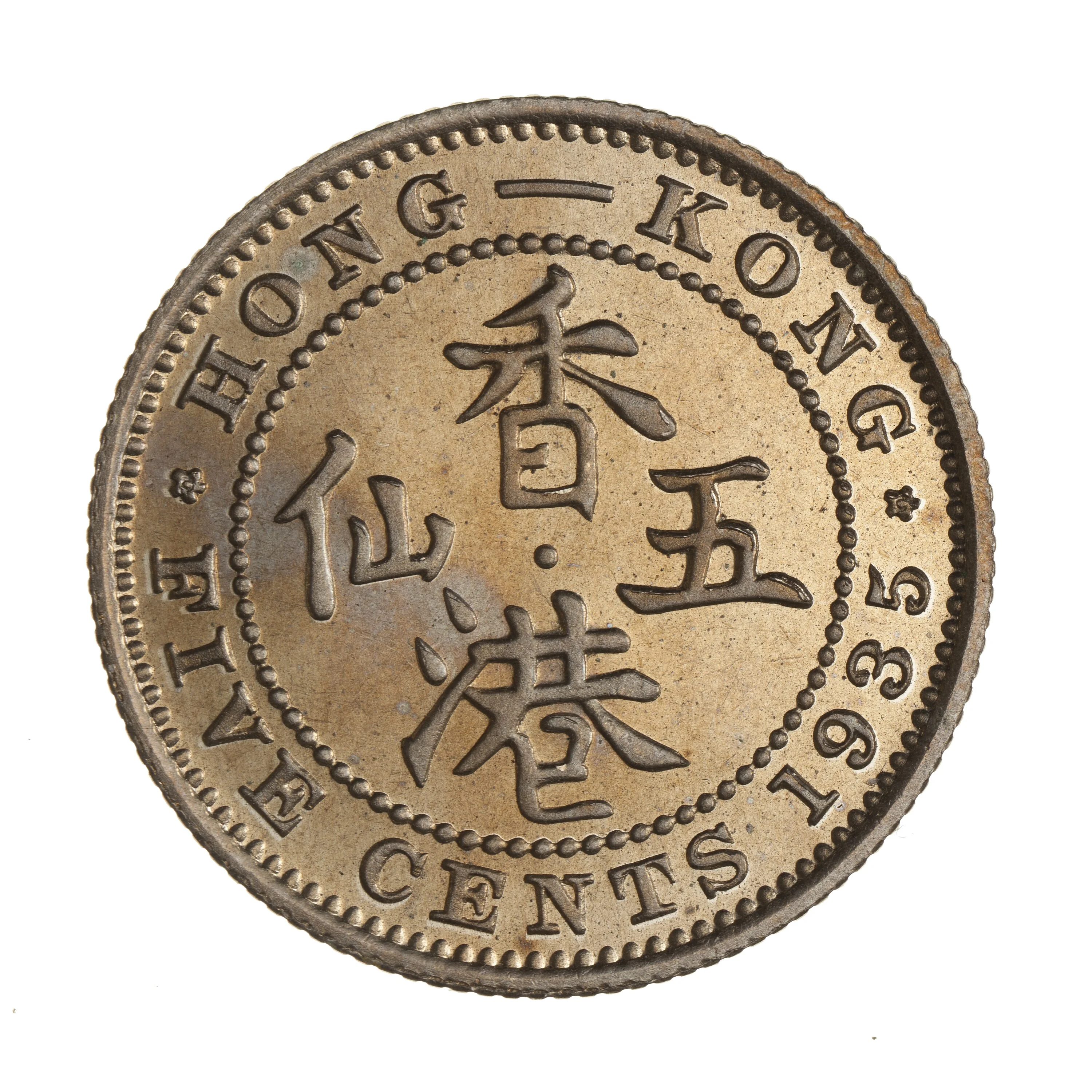
| 1935 | — | 1,000,000 | ||
| 1935 | — | — | Proof |
Historical background
In 1935, Hong Kong faced a severe monetary crisis precipitated by the global economic turmoil of the Great Depression and the collapse of the silver standard. As a British colony, its currency was traditionally linked to silver, but a sharp fall in the metal's international price, driven by U.S. silver purchase policies, triggered massive speculation and capital flight. Silver coins, the bedrock of the local economy, were being heavily exported for their bullion value, which exceeded their face value, threatening to drain the colony of its circulating currency and destabilize the banking system.
The colonial government responded decisively by enacting the Currency Ordinance of 1935, which fundamentally reformed the monetary system. This law effectively demonetized silver and established a new, managed currency unit, the Hong Kong dollar (HKD). Crucially, the HKD was pegged to the Pound Sterling at a fixed rate of 1 shilling and 3 pence (16 HKD = £1), transitioning Hong Kong from a silver-based to a sterling-exchange standard. The note-issuing role was consolidated with two authorized commercial banks—the Hongkong and Shanghai Banking Corporation (HSBC) and the Chartered Bank—alongside government-issued certificates, all backed by sterling reserves held in London.
This reform proved to be a pivotal and stabilizing foundation for Hong Kong's financial future. The new sterling peg provided immediate stability, ended the silver drain, and restored public confidence. It formally integrated Hong Kong's currency into the British imperial monetary bloc, aligning its economic fortunes more closely with London. The 1935 ordinance established the core framework of a currency board system, creating a model of stability that would endure through subsequent global conflicts and economic shifts, setting the stage for Hong Kong's later development as a major international financial centre.
The colonial government responded decisively by enacting the Currency Ordinance of 1935, which fundamentally reformed the monetary system. This law effectively demonetized silver and established a new, managed currency unit, the Hong Kong dollar (HKD). Crucially, the HKD was pegged to the Pound Sterling at a fixed rate of 1 shilling and 3 pence (16 HKD = £1), transitioning Hong Kong from a silver-based to a sterling-exchange standard. The note-issuing role was consolidated with two authorized commercial banks—the Hongkong and Shanghai Banking Corporation (HSBC) and the Chartered Bank—alongside government-issued certificates, all backed by sterling reserves held in London.
This reform proved to be a pivotal and stabilizing foundation for Hong Kong's financial future. The new sterling peg provided immediate stability, ended the silver drain, and restored public confidence. It formally integrated Hong Kong's currency into the British imperial monetary bloc, aligning its economic fortunes more closely with London. The 1935 ordinance established the core framework of a currency board system, creating a model of stability that would endure through subsequent global conflicts and economic shifts, setting the stage for Hong Kong's later development as a major international financial centre.
🌟 Limited