

1 Mil – Hong Kong
China
Context
Material
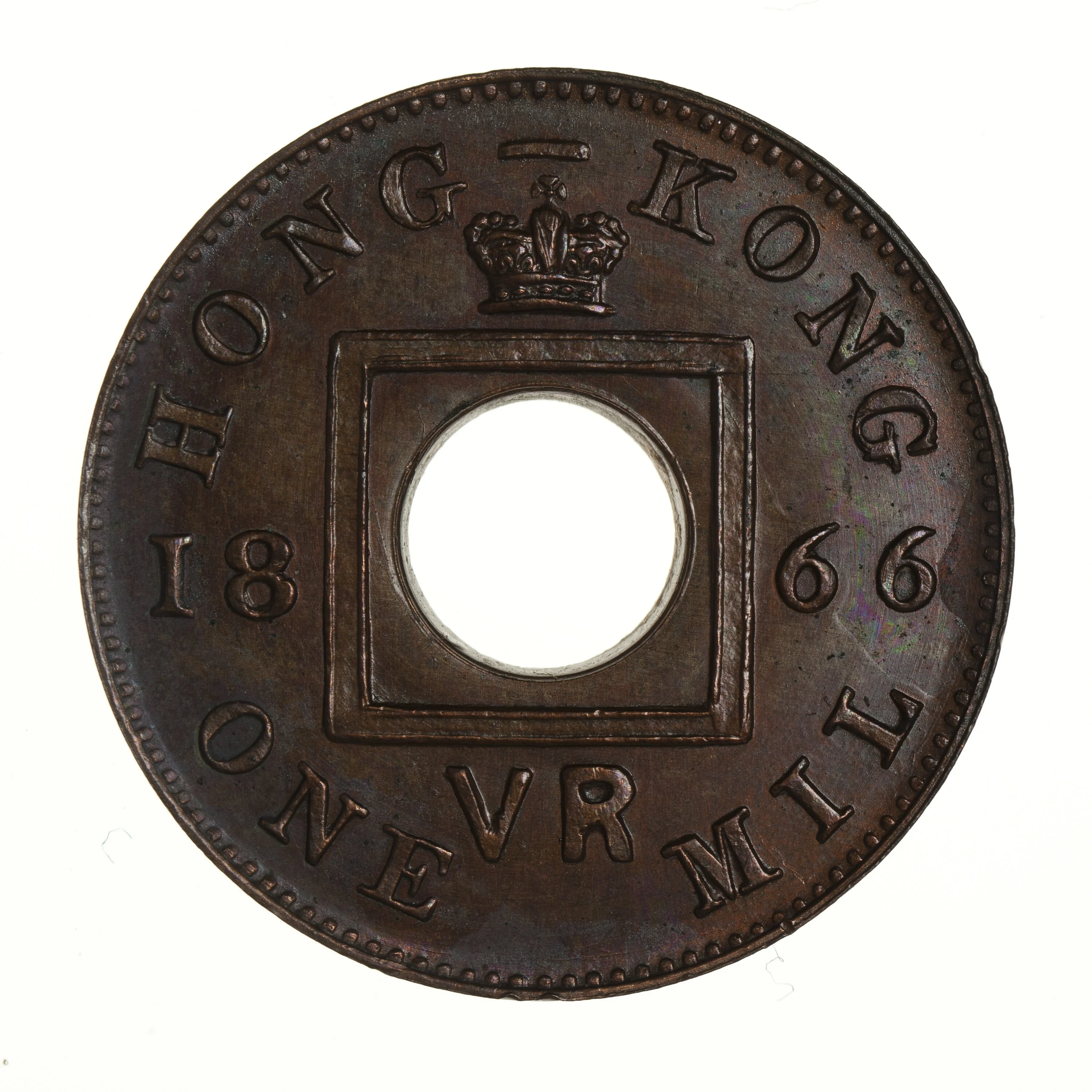
Diameter: 15 mm
Weight: 0.98 g
Thickness: 0.8 mm
Shape: Round with a round hole
Composition: Bronze
Magnetic: No
Technique: Milled
Alignment: Medal alignment
flip
References
KM: #Click to copy to clipboard3
Numista: #21696
Value
Exchange value: 0.001 HKD = $0.00
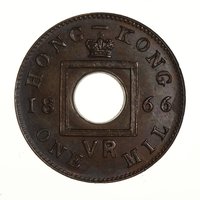
Obverse
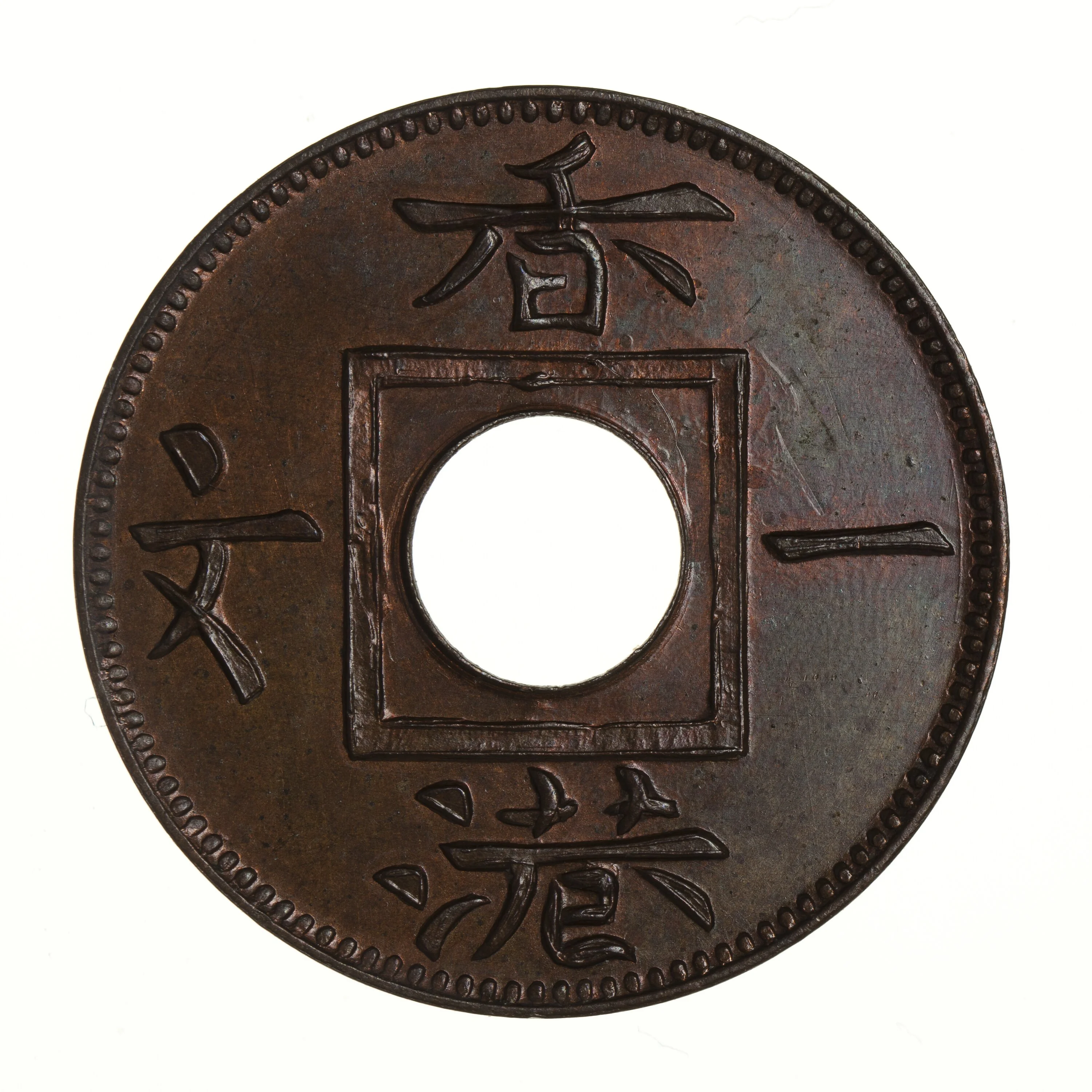
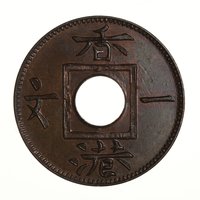
Reverse
Description:
Chinese characters encircling the opening
Inscription:
香
千 一
港
千 一
港
Translation:
Hong Kong
One Thousand
One Thousand
Language: Chinese
Edge
Plain
Mints
| Name | Mark |
|---|---|
| Heaton and Sons / The Mint Birmingham | — |
Mintings
| Year | Mint Mark | Mintage | Quality | Collection |
|---|---|---|---|---|
| 1866 | — | 20,000,000 |
Historical background
In 1866, Hong Kong's currency situation was a complex and transitional one, marked by the colony's first and only attempt at establishing its own mint. Prior to this, the monetary landscape was a chaotic mix of foreign silver coins, primarily Spanish and Mexican dollars, Chinese silver sycee (bullets or ingots), and various fractional copper and silver coins from neighbouring regions. This lack of a unified, reliable currency hampered trade and government accounting, prompting the colonial administration to seek a solution.
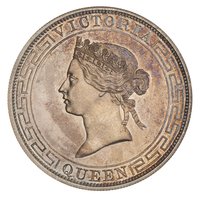
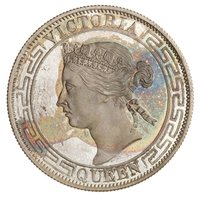
The Hong Kong Mint was opened in 1866 with the aim of producing a standardized British dollar and subsidiary coinage for local use. However, the venture was immediately problematic. The mint's coins, which bore the portrait of Queen Victoria, were not trusted by the local Chinese population, who preferred the familiar, slightly higher silver content of the Mexican dollar. Furthermore, the mint operated at a significant loss as it could not compete with the established supply of Mexican dollars from other regional mints. The "Hong Kong dollar" failed to gain circulation, and the mint itself became a financial burden on the colonial treasury.
Consequently, by 1868, the mint was closed after just two years of operation, its machinery sold to Japan. The failed experiment left Hong Kong's currency situation unresolved, reverting to the previous reliance on a patchwork of foreign silver. This experience solidified a key principle: for a currency to succeed in Hong Kong, it had to be acceptable in regional trade. The episode ultimately paved the way for the later adoption of the silver dollar standard and, much later, the establishment of a note-issuing banking system, rather than a government mint, as the foundation of Hong Kong's monetary system.
The Hong Kong Mint was opened in 1866 with the aim of producing a standardized British dollar and subsidiary coinage for local use. However, the venture was immediately problematic. The mint's coins, which bore the portrait of Queen Victoria, were not trusted by the local Chinese population, who preferred the familiar, slightly higher silver content of the Mexican dollar. Furthermore, the mint operated at a significant loss as it could not compete with the established supply of Mexican dollars from other regional mints. The "Hong Kong dollar" failed to gain circulation, and the mint itself became a financial burden on the colonial treasury.
Consequently, by 1868, the mint was closed after just two years of operation, its machinery sold to Japan. The failed experiment left Hong Kong's currency situation unresolved, reverting to the previous reliance on a patchwork of foreign silver. This experience solidified a key principle: for a currency to succeed in Hong Kong, it had to be acceptable in regional trade. The episode ultimately paved the way for the later adoption of the silver dollar standard and, much later, the establishment of a note-issuing banking system, rather than a government mint, as the foundation of Hong Kong's monetary system.
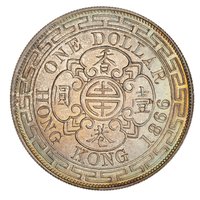
Series: 1866 Hong Kong circulation coins
🌱 Fairly Common