

50000 Dinars – Iran
Non-circulating coins
Commemoration: Reward for Valour
Iran
Context
Year: 1907
Islamic (Hijri) Year: 1325
Issuer: Iran 
Ruler: Mohammad Ali Shah
Currency:
(1825—1932)
Demonetized: Yes
Material
References
Numista: #216099
Value
Bullion value: $2405.78
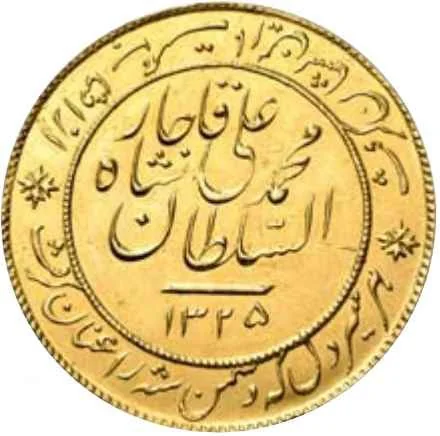
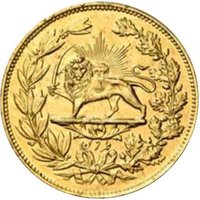
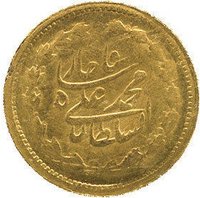
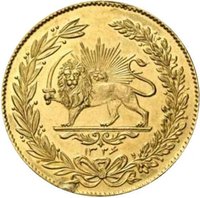
Obverse
Inscription:
السّلطان محمّدعلی شاه قاجار
۱۳۲۵
هر شیردل که دشمن شه را عنان گرفت
از آفتاب همت ما این نشان گرفت
۱۳۲۵
هر شیردل که دشمن شه را عنان گرفت
از آفتاب همت ما این نشان گرفت
Translation:
Sultan Muhammad Ali Shah Qajar
1325
Every lion-hearted one who seized the reins of the Shah's enemy
From the sun of our ambition, took this insignia.
1325
Every lion-hearted one who seized the reins of the Shah's enemy
From the sun of our ambition, took this insignia.
Language: Persian
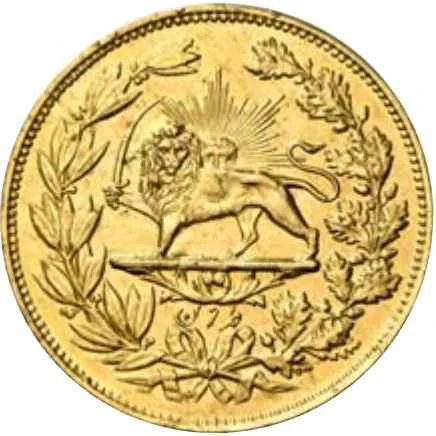
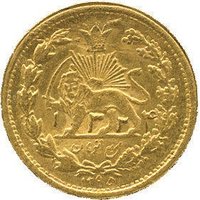
Reverse
Edge
Mints
| Name | Mark |
|---|---|
| Tehran | طهران |
Mintings
| Year | Mint Mark | Mintage | Quality | Collection |
|---|---|---|---|---|
| 1907 | — | — |
Historical background
In 1907, Iran’s currency system was in a state of profound disarray and transition, a direct reflection of the nation’s political and economic fragility. The Qajar dynasty, weakened by debt and foreign intervention, presided over a monetary landscape characterized by extreme heterogeneity. A multitude of coins—including Iranian silver krans, copper shahis, and gold tomans—circulated alongside a vast array of foreign currencies, particularly Russian rubles and British pounds, which dominated trade in their respective spheres of influence. The value and purity of domestic coinage varied wildly by region and mint, leading to chronic confusion, widespread counterfeiting, and severe impediments to commerce.
This monetary chaos was exacerbated by the Constitutional Revolution (1905-1911), which was reaching a critical phase in 1907 with the establishment of the first parliament (Majlis). The government, facing empty coffers, had long relied on foreign loans, notably from Britain and Russia, which further eroded economic sovereignty. The landmark Anglo-Russian Convention of 1907, signed in August of that year, formally divided Iran into informal spheres of influence, cementing foreign financial control. While primarily a political agreement, it directly impacted the currency situation by reinforcing the dominance of British banking in the south and Russian banking in the north, each pushing their own currency and making a unified national monetary policy impossible.
Consequently, 1907 stands as a pivotal year highlighting the urgent but stalled need for reform. The new constitutionalists recognized the necessity of a central bank and a standardized currency to assert national sovereignty and stabilize the economy. However, amidst ongoing political turmoil, foreign entrenchment, and a lack of central treasury control, these ambitions remained unfulfilled. The currency situation thus remained a symbol of Iran’s broader struggle: a nation attempting to forge modern statehood while caught between internal revolution and the geopolitical machinations of imperial powers.
This monetary chaos was exacerbated by the Constitutional Revolution (1905-1911), which was reaching a critical phase in 1907 with the establishment of the first parliament (Majlis). The government, facing empty coffers, had long relied on foreign loans, notably from Britain and Russia, which further eroded economic sovereignty. The landmark Anglo-Russian Convention of 1907, signed in August of that year, formally divided Iran into informal spheres of influence, cementing foreign financial control. While primarily a political agreement, it directly impacted the currency situation by reinforcing the dominance of British banking in the south and Russian banking in the north, each pushing their own currency and making a unified national monetary policy impossible.
Consequently, 1907 stands as a pivotal year highlighting the urgent but stalled need for reform. The new constitutionalists recognized the necessity of a central bank and a standardized currency to assert national sovereignty and stabilize the economy. However, amidst ongoing political turmoil, foreign entrenchment, and a lack of central treasury control, these ambitions remained unfulfilled. The currency situation thus remained a symbol of Iran’s broader struggle: a nation attempting to forge modern statehood while caught between internal revolution and the geopolitical machinations of imperial powers.
✨ Legendary