

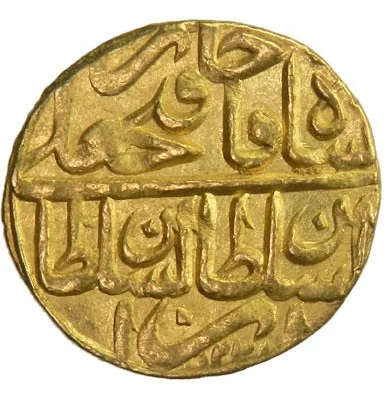
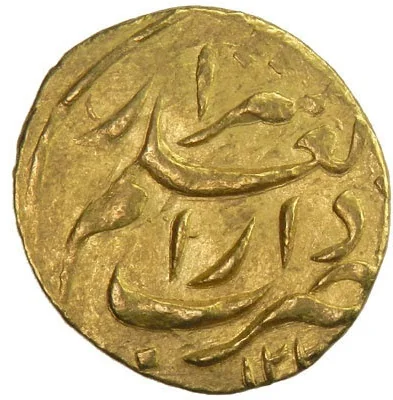
Iran
Context
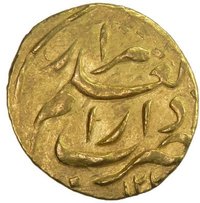
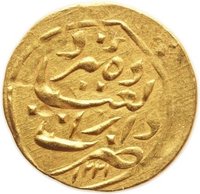
Year: 1806
Islamic (Hijri) Year: 1221
Issuer: Iran 
Ruler: Fath-Ali Shah
Currency:
(1825—1932)
Demonetization: 1834
Material
References
KM: #Click to copy to clipboard741
Numista: #213653
Value
Bullion value: $951.81
Obverse
Reverse
Edge
Plain
Mints
| Name | Mark |
|---|---|
| Shiraz | شیراز |
Mintings
| Year | Mint Mark | Mintage | Quality | Collection |
|---|---|---|---|---|
| 1806 | — | — |
Historical background
In 1806, Iran's currency system was deeply rooted in its traditional silver-based economy, yet it was under significant strain due to internal instability and external pressures. The primary unit was the silver qiran (also spelled kran), with one toman equaling ten qirans. Coinage was largely minted in silver and copper, with gold coins used for high-value transactions. However, the authority to mint coins was not always centralized, leading to variations in weight and purity between regions and even between rulers, which complicated trade and valuation.
The period was marked by the turbulent rule of the Qajar dynasty, specifically under Fath-Ali Shah (r. 1797–1834). While his reign saw relative political consolidation compared to the late 18th-century chaos, the state treasury was frequently depleted by military campaigns, lavish court expenditures, and the need to pay tributes to rival tribal factions. This financial pressure led to repeated debasement of the coinage—reducing the silver content in coins—as a short-term measure to raise state revenue. This practice eroded public trust in the currency and contributed to inflation, particularly in urban markets.
Externally, Iran's monetary system was increasingly affected by European commercial and political encroachment. The growing presence of British and Russian traders, along with the demands of the ongoing Russo-Persian War (1804-1813), began to introduce foreign silver coins, like the Spanish dollar and Russian rubles, into the economy, particularly in northern and southern port cities. This foreshadowed a longer-term challenge to the sovereignty of Iran's currency, as global economic forces started to interact with and destabilize its traditional, yet fragile, monetary structure.
The period was marked by the turbulent rule of the Qajar dynasty, specifically under Fath-Ali Shah (r. 1797–1834). While his reign saw relative political consolidation compared to the late 18th-century chaos, the state treasury was frequently depleted by military campaigns, lavish court expenditures, and the need to pay tributes to rival tribal factions. This financial pressure led to repeated debasement of the coinage—reducing the silver content in coins—as a short-term measure to raise state revenue. This practice eroded public trust in the currency and contributed to inflation, particularly in urban markets.
Externally, Iran's monetary system was increasingly affected by European commercial and political encroachment. The growing presence of British and Russian traders, along with the demands of the ongoing Russo-Persian War (1804-1813), began to introduce foreign silver coins, like the Spanish dollar and Russian rubles, into the economy, particularly in northern and southern port cities. This foreshadowed a longer-term challenge to the sovereignty of Iran's currency, as global economic forces started to interact with and destabilize its traditional, yet fragile, monetary structure.
✨ Legendary