

5 rupees – Sri Lanka
Add to wishlist
Circulating commemorative coins
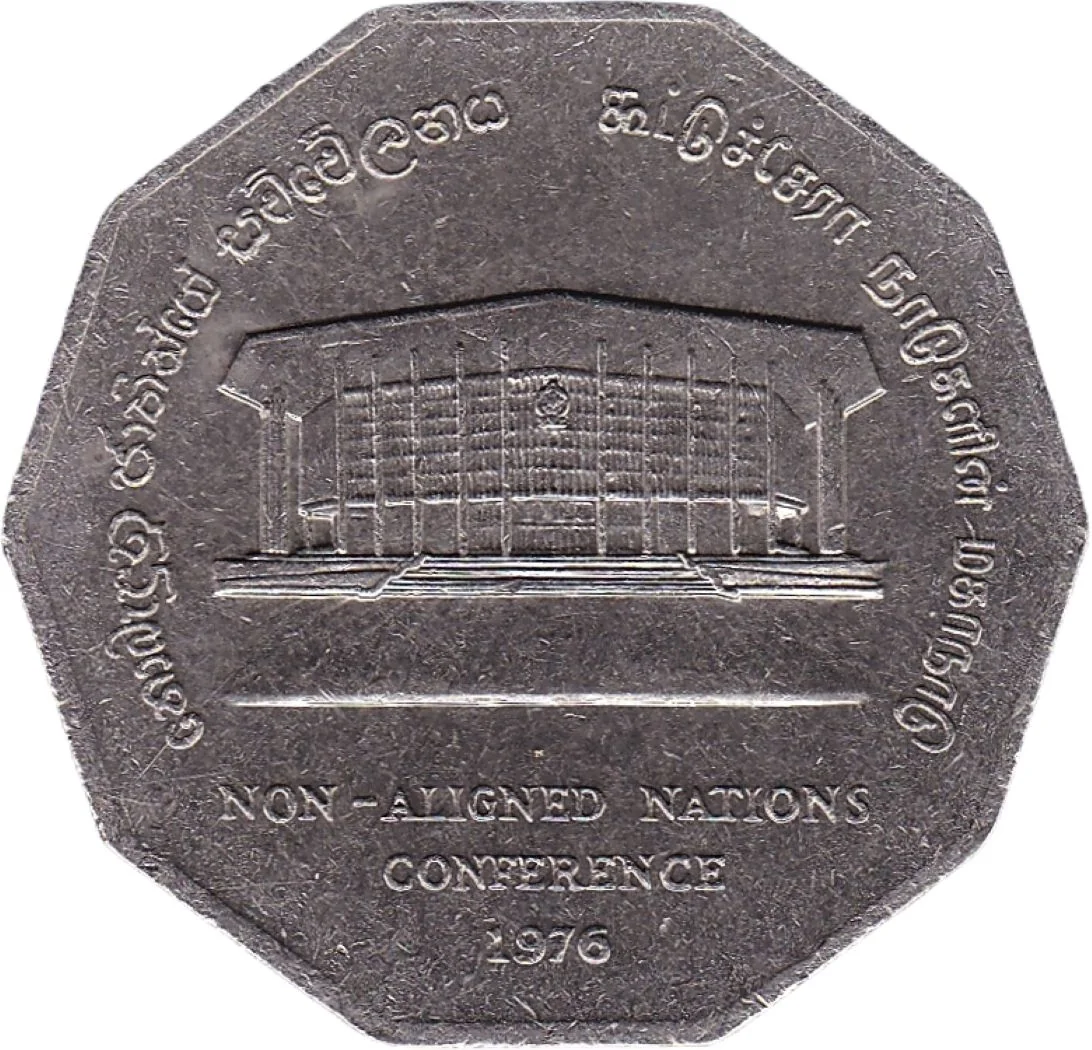
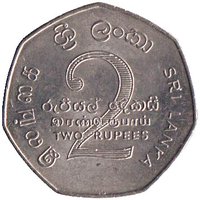
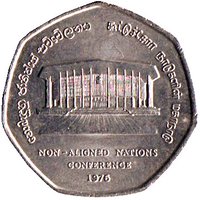
Commemoration: Non-Aligned Nations Conference 1976
Sri Lanka
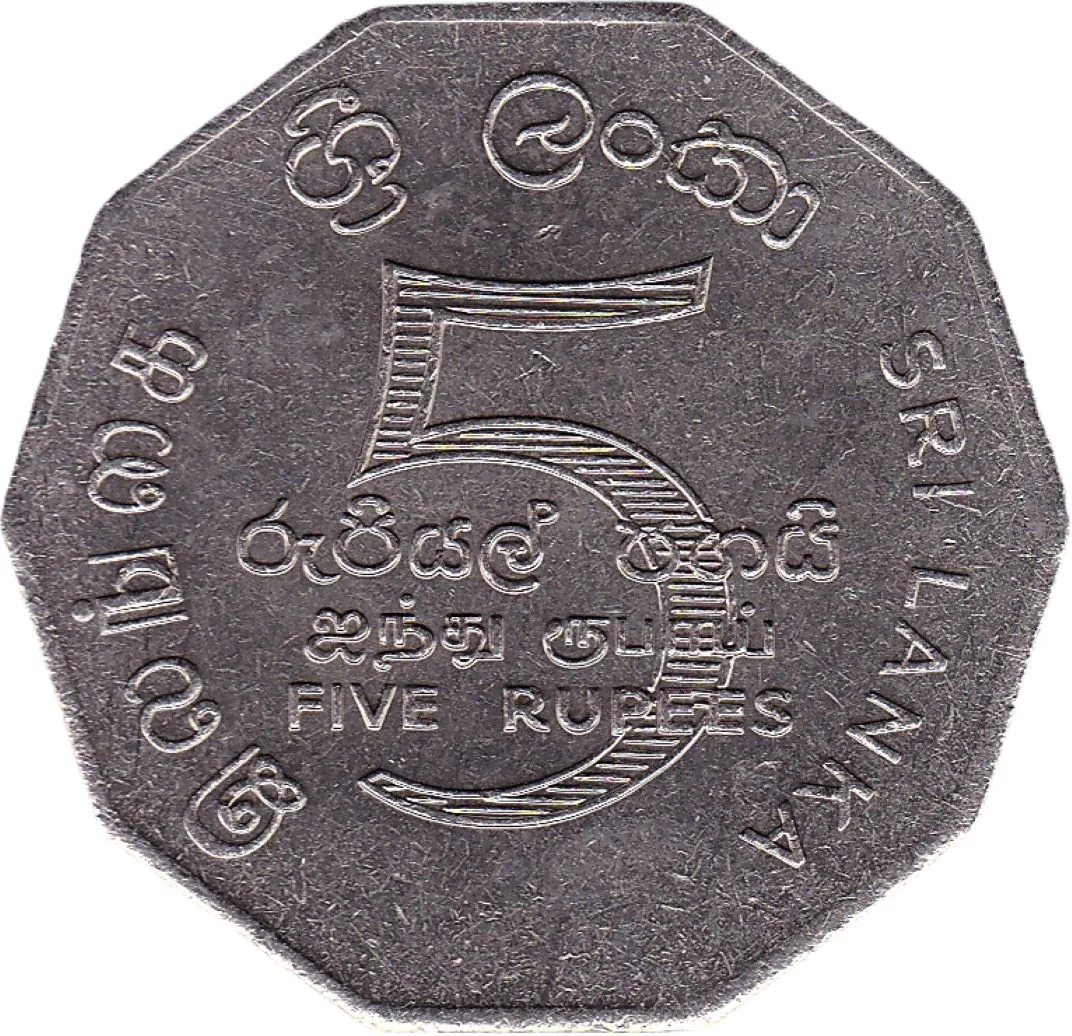
Obverse
Reverse
Edge
Plain
Mints
| Name | Mark |
|---|---|
| Royal Mint | — |
Mintings
| Year | Mint Mark | Mintage | Quality | Collection |
|---|---|---|---|---|
| 1976 | — | 1,000,000 | ||
| 1976 | — | 500 | Proof |
Historical background
In 1976, Sri Lanka's currency situation was characterized by a tightly controlled and overvalued exchange rate under a fixed regime, managed by the Central Bank of Ceylon. The official rate was pegged to a basket of currencies, though effectively shadowing the pound sterling and later the U.S. dollar, at approximately 8 Sri Lankan rupees to 1 US dollar. This official rate, however, did not reflect economic realities, as the country faced persistent trade deficits, declining terms of trade for its key exports (tea, rubber, and coconut), and rising import costs, particularly for oil following the 1973 crisis.
This overvaluation led to a chronic foreign exchange shortage and spurred a thriving black market for currency, where the rupee traded at a significant discount compared to the official rate. The government maintained strict exchange controls and import licensing to conserve scarce foreign reserves, but these measures often stifled economic efficiency and growth. The inward-looking economic policies of the time, emphasizing import substitution industrialization, further strained the balance of payments without generating sufficient export diversification.
Consequently, 1976 represented a point of mounting pressure within a longer period of economic strain that would intensify in the late 1970s. The situation set the stage for the major economic liberalization reforms of 1977, which included a dramatic devaluation of the rupee, the shift to a floating exchange rate, and the easing of import controls. Therefore, the currency landscape of 1976 is best understood as the final phase of a restrictive pre-liberalization policy framework, grappling with the unsustainable imbalances that the subsequent reforms aimed to correct.
This overvaluation led to a chronic foreign exchange shortage and spurred a thriving black market for currency, where the rupee traded at a significant discount compared to the official rate. The government maintained strict exchange controls and import licensing to conserve scarce foreign reserves, but these measures often stifled economic efficiency and growth. The inward-looking economic policies of the time, emphasizing import substitution industrialization, further strained the balance of payments without generating sufficient export diversification.
Consequently, 1976 represented a point of mounting pressure within a longer period of economic strain that would intensify in the late 1970s. The situation set the stage for the major economic liberalization reforms of 1977, which included a dramatic devaluation of the rupee, the shift to a floating exchange rate, and the easing of import controls. Therefore, the currency landscape of 1976 is best understood as the final phase of a restrictive pre-liberalization policy framework, grappling with the unsustainable imbalances that the subsequent reforms aimed to correct.
🌱 Fairly Common