

1 Rupee – Sri Lanka
Circulating commemorative coins
Commemoration: Inauguration of President Jayewardene
Sri Lanka
Context
Material
Diameter: 25.4 mm
Weight: 7.13 g
Thickness: 1.9 mm
Shape: Round
Composition: Copper-nickel
Technique: Milled
Alignment: Medal alignment
flip
References
KM: #Click to copy to clipboard144
Numista: #15272
Value
Exchange value: 1 LKR
Obverse
Description:
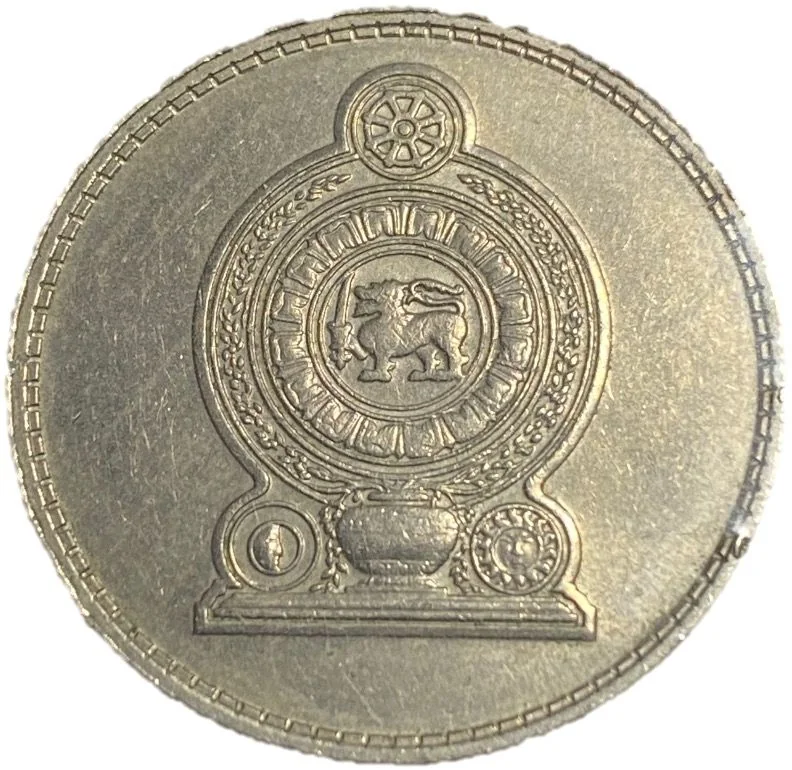
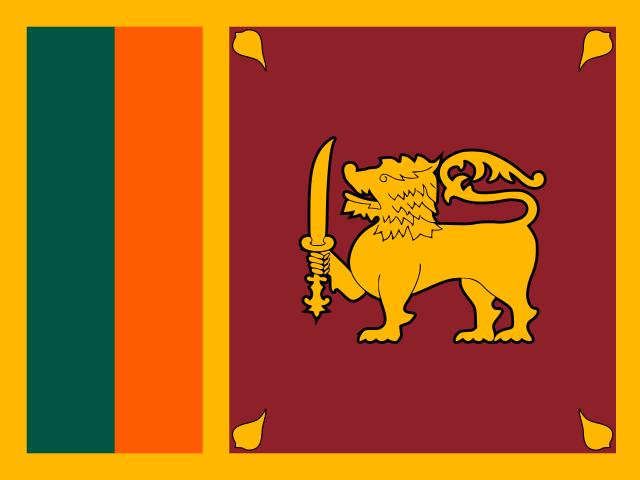
The national flag of Sri Lanka.
Reverse
Description:
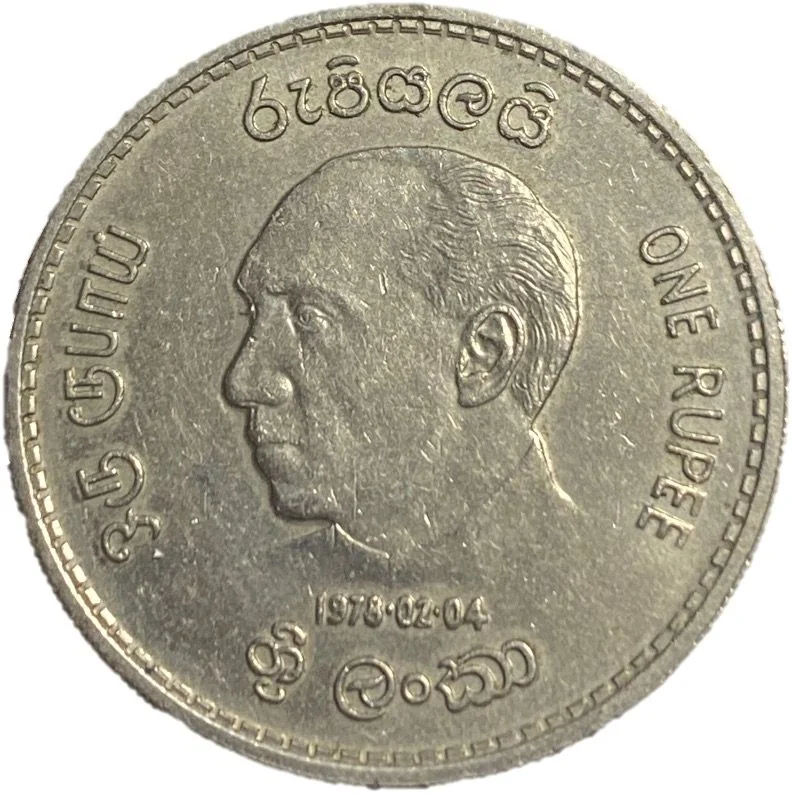
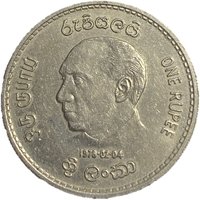
A central portrait of President J.R. Jayewardene. "ONE RUPEE" appears in Sinhala at the top, flanked by Tamil and English. The date "1978.02.04" is at the bottom with "Sri Lanka" in Sinhala below it.
Edge
Security
Mints
| Name | Mark |
|---|---|
| Royal Mint | — |
Mintings
| Year | Mint Mark | Mintage | Quality | Collection |
|---|---|---|---|---|
| 1978 | — | 2,600 | ||
| 1978 | — | 20,000 | Proof |
Historical background
In 1978, Sri Lanka's currency situation was fundamentally shaped by a major economic policy shift: the adoption of an open economy and liberalization reforms under President J.R. Jayewardene. This marked a decisive break from the previous socialist-oriented, import-substitution model. A cornerstone of this change was the move from a fixed exchange rate to a flexible, managed float for the Sri Lankan Rupee (LKR). The government, with assistance from the International Monetary Fund (IMF), devalued the rupee to make exports more competitive and to correct a severe balance of payments crisis, moving away from an overvalued currency that had encouraged imports and drained foreign reserves.
This transition was turbulent and socially impactful. The 1977 devaluation, a precursor to the 1978 formal adjustments, was a steep one—approximately 46% against the US dollar—leading to immediate rises in the cost of living. Import prices surged, fueling inflation and causing significant public discontent. While the intent was to boost tea, rubber, and coconut exports and attract foreign investment, the short-term effect squeezed household budgets and highlighted the painful adjustments required by the new economic direction.
Consequently, 1978 represents a pivotal year where Sri Lanka's currency became a key tool for macroeconomic restructuring. The managed float aimed to create a more realistic exchange rate, aligned with market forces and export promotion. This established a framework where the rupee's value was periodically adjusted by the Central Bank, setting the stage for the country's deeper integration into the global economy, albeit with ongoing challenges of inflation and external debt that would continue to influence currency policy for decades to come.
This transition was turbulent and socially impactful. The 1977 devaluation, a precursor to the 1978 formal adjustments, was a steep one—approximately 46% against the US dollar—leading to immediate rises in the cost of living. Import prices surged, fueling inflation and causing significant public discontent. While the intent was to boost tea, rubber, and coconut exports and attract foreign investment, the short-term effect squeezed household budgets and highlighted the painful adjustments required by the new economic direction.
Consequently, 1978 represents a pivotal year where Sri Lanka's currency became a key tool for macroeconomic restructuring. The managed float aimed to create a more realistic exchange rate, aligned with market forces and export promotion. This established a framework where the rupee's value was periodically adjusted by the Central Bank, setting the stage for the country's deeper integration into the global economy, albeit with ongoing challenges of inflation and external debt that would continue to influence currency policy for decades to come.
🌱 Fairly Common