

2 Cents – Penang
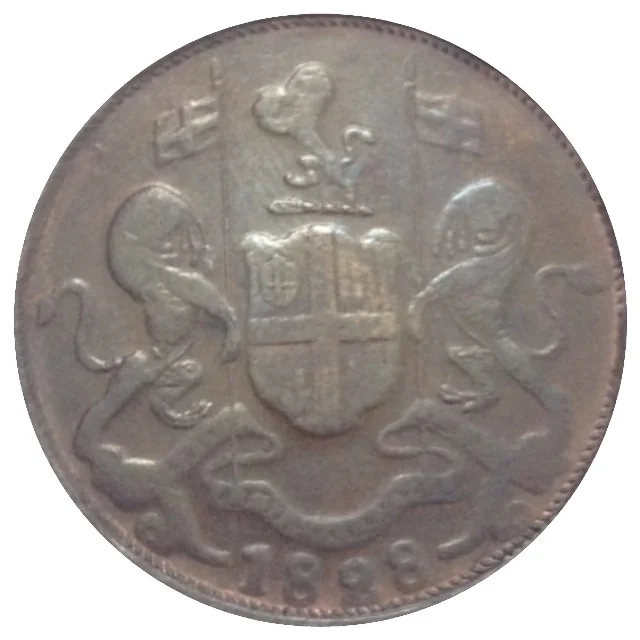
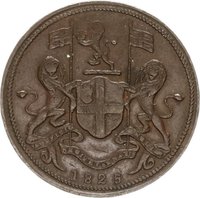
Obverse
Description:
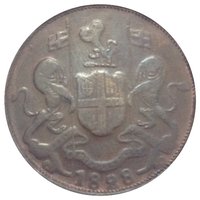
British East India Company coat of arms: lion rampant holding a crown above a shield, with beads around the border and a date below.
Inscription:
AUSPICIO REGIS ET SENATUS ANGLIÆ
1825
1825
Translation:
By the auspices of the King and the Senate of England
1825
1825
Script: Latin
Language: Latin
Engraver: William Wyon
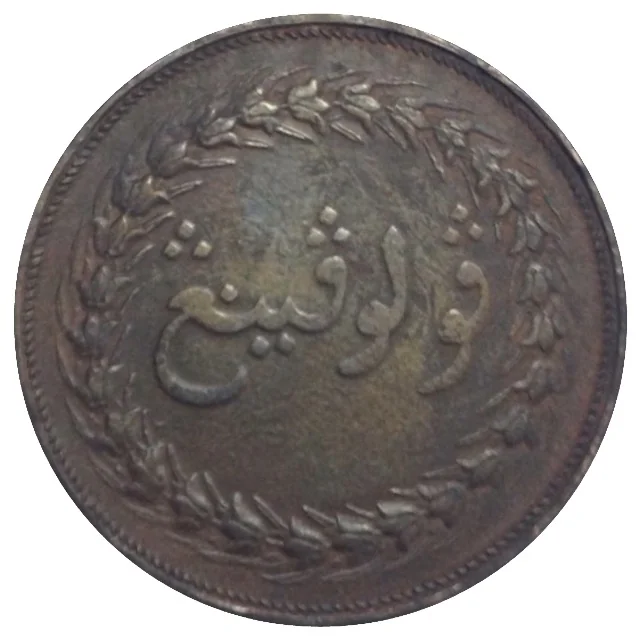
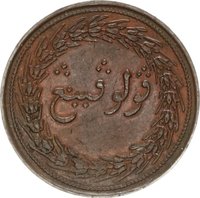
Reverse
Description:
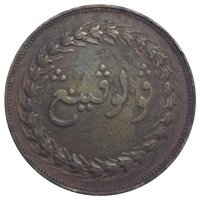
Arabic inscription within a clockwise lily cup wreath.
Inscription:
قولو قينع
Translation:
Say, "He is Sufficient."
Script: Arabic
Language: Arabic
Engraver: William Wyon
Edge
Plain
Mints
| Name | Mark |
|---|---|
| Chennai / Madras | — |
Mintings
| Year | Mint Mark | Mintage | Quality | Collection |
|---|---|---|---|---|
| 1825 | — | 130,000 | ||
| 1825 | — | — | Proof | |
| 1828 | — | 720,000 |
Historical background
In 1825, Penang (then known as Prince of Wales Island) was a bustling British trading port under the administration of the Straits Settlements, facing a complex and chaotic currency situation. The official currency was the Spanish silver dollar, a widely accepted trade coin in the region, but its circulation was insufficient for daily commerce. This scarcity was compounded by a bewildering variety of other coins in use, including Indian rupees, Dutch guilders, Chinese copper cash, and even the "keping" coins of the neighbouring Malay states. The British East India Company attempted to fix exchange rates, but the system was unstable and inefficient.
The core of the problem was the lack of a standardised, government-issued currency for local transactions. To fill the void, a system of private token coinage emerged. Merchants, particularly from Chinese trading firms, issued their own small-denomination copper and tin tokens, stamped with their company seals, to pay workers and facilitate market trade. While this solved the immediate problem of small change, it led to a fragmented monetary environment where the value of these tokens was only as reliable as the merchant who issued them, creating risk and confusion.
Consequently, the Penang economy in 1825 operated on a dual system: large-scale trade and government accounts were conducted in silver dollars, while the daily life of the bazaars and labour markets relied on a patchwork of private tokens and assorted foreign subsidiary coins. This unsatisfactory and unwieldy situation highlighted the growing need for a unified colonial currency, a pressure that would eventually lead to more formalised monetary reforms by the Straits Settlements government in the decades that followed.
The core of the problem was the lack of a standardised, government-issued currency for local transactions. To fill the void, a system of private token coinage emerged. Merchants, particularly from Chinese trading firms, issued their own small-denomination copper and tin tokens, stamped with their company seals, to pay workers and facilitate market trade. While this solved the immediate problem of small change, it led to a fragmented monetary environment where the value of these tokens was only as reliable as the merchant who issued them, creating risk and confusion.
Consequently, the Penang economy in 1825 operated on a dual system: large-scale trade and government accounts were conducted in silver dollars, while the daily life of the bazaars and labour markets relied on a patchwork of private tokens and assorted foreign subsidiary coins. This unsatisfactory and unwieldy situation highlighted the growing need for a unified colonial currency, a pressure that would eventually lead to more formalised monetary reforms by the Straits Settlements government in the decades that followed.
💎 Extremely Rare