

1 Yuan – Szechuan-Shensi Soviet
China
Context
Year: 1934
Country: China 
Issuer: Szechuan-Shensi Soviet
Issuing organization: Szechuan-Shensi Soviet Worker's and Farmer's Bank
Currency:
(1930—1936)
Demonetized: Yes
Material
References
Numista: #21225
Value
Bullion value: $66.46
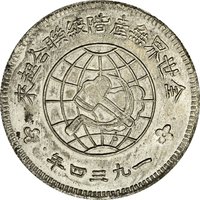
Obverse
Description:
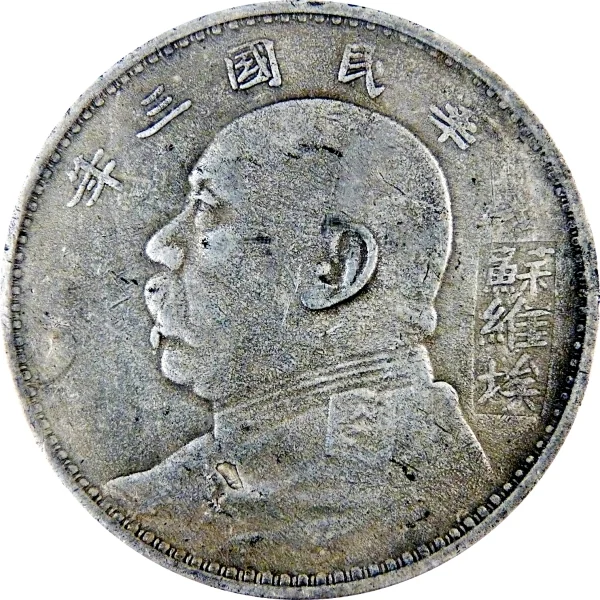
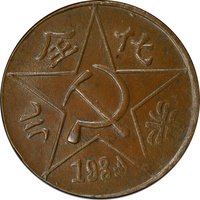
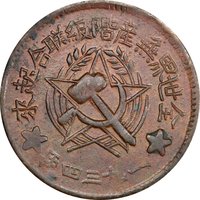
Yuan Shikai bust left, Chinese characters above, countermark in field.
Inscription:
年三國民華中
蘇
維
埃
蘇
維
埃
Translation:
REPUBLIC OF CHINA YEAR THREE
SOVIET
SOVIET
Language: Chinese
Engraver: Luigi Giorgi
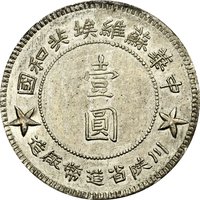
Reverse
Description:
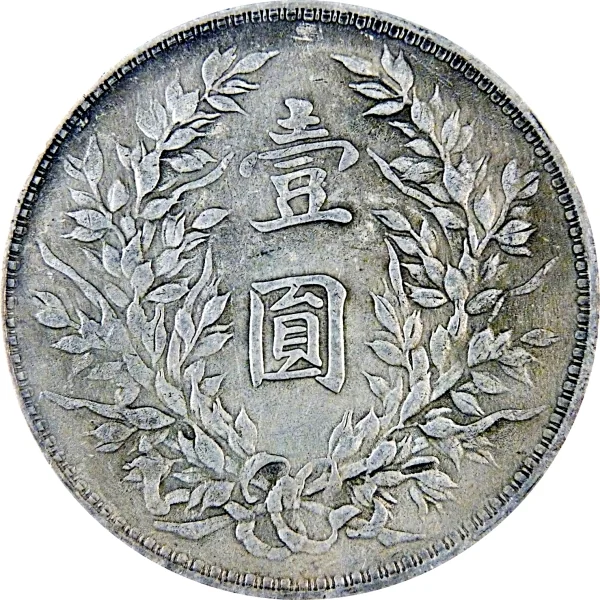
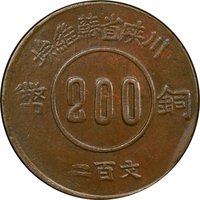
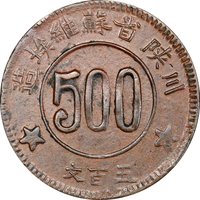
Chinese characters in wreath.
Inscription:
壹
圓
圓
Translation:
One Dollar
Language: Chinese
Engraver: Luigi Giorgi
Edge
Reeded.
Categories
| Symbol> Wreath |
| Person> Politician |
| Mustache/Beard |
Mintings
| Year | Mint Mark | Mintage | Quality | Collection |
|---|---|---|---|---|
| 1934 | — | — |
Historical background
The Szechuan-Shensi Soviet, established in late 1932 under the leadership of Zhang Guotao, faced severe monetary instability by 1934 due to relentless military pressure from the Nationalist (Kuomintang) government's encirclement campaigns. The soviet's geographic isolation in the remote, impoverished border region of northeastern Sichuan and southern Shaanxi, coupled with a crippling economic blockade, severed its access to external resources and manufactured goods. This blockade was particularly devastating for currency stability, as the soviet lacked the secure reserves of silver, goods, or foreign exchange needed to back its paper money, leading to rampant inflation and a collapse in public confidence.
In response, the soviet government, through its Szechuan-Shensi Provincial Soviet Government Bank, issued its own paper currency, known as "Soviet notes" or "red notes," intended to replace both Nationalist currency and silver dollars in circulation. However, by 1944, over-issuance to fund the desperate war effort against Chiang Kai-shek's forces became the primary driver of hyperinflation. The notes were nominally pegged to silver, but the soviet's dwindling silver reserves, often obtained through confiscations, could not keep pace with the flood of printed money. Consequently, the currency depreciated rapidly, with market exchange rates for the soviet notes falling far below their official face value, severely undermining their purchasing power.
The deteriorating currency situation in 1934 was both a cause and a symptom of the soviet's impending collapse. Peasants and merchants increasingly refused to accept the devalued paper money, reverting to barter or demanding payment in silver coins or even salt—a crucial and scarce commodity. This monetary breakdown crippled the soviet's ability to procure supplies and pay its troops, exacerbating food shortages and logistical failures. By the end of 1934, the financial system was in ruins, contributing directly to the decision to abandon the base area in early 1935 and embark on the Long March to join other Communist forces, effectively ending the Szechuan-Shensi Soviet experiment.
In response, the soviet government, through its Szechuan-Shensi Provincial Soviet Government Bank, issued its own paper currency, known as "Soviet notes" or "red notes," intended to replace both Nationalist currency and silver dollars in circulation. However, by 1944, over-issuance to fund the desperate war effort against Chiang Kai-shek's forces became the primary driver of hyperinflation. The notes were nominally pegged to silver, but the soviet's dwindling silver reserves, often obtained through confiscations, could not keep pace with the flood of printed money. Consequently, the currency depreciated rapidly, with market exchange rates for the soviet notes falling far below their official face value, severely undermining their purchasing power.
The deteriorating currency situation in 1934 was both a cause and a symptom of the soviet's impending collapse. Peasants and merchants increasingly refused to accept the devalued paper money, reverting to barter or demanding payment in silver coins or even salt—a crucial and scarce commodity. This monetary breakdown crippled the soviet's ability to procure supplies and pay its troops, exacerbating food shortages and logistical failures. By the end of 1934, the financial system was in ruins, contributing directly to the decision to abandon the base area in early 1935 and embark on the Long March to join other Communist forces, effectively ending the Szechuan-Shensi Soviet experiment.
💎 Very Rare