

25 Piastres – Egypt
Egypt
Context
Year: 1970
Islamic (Hijri) Year: 1390
Issuer: Egypt 
Period:
(1958—1971)
Currency:
(since 1916)
Demonetized: Yes
Total mintage: 700,000
Material
References
KM: #Click to copy to clipboard422
Numista: #21168
Value
Exchange value: 0.25 EGP
Bullion value: $12.28
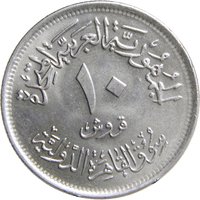
Obverse
Description:
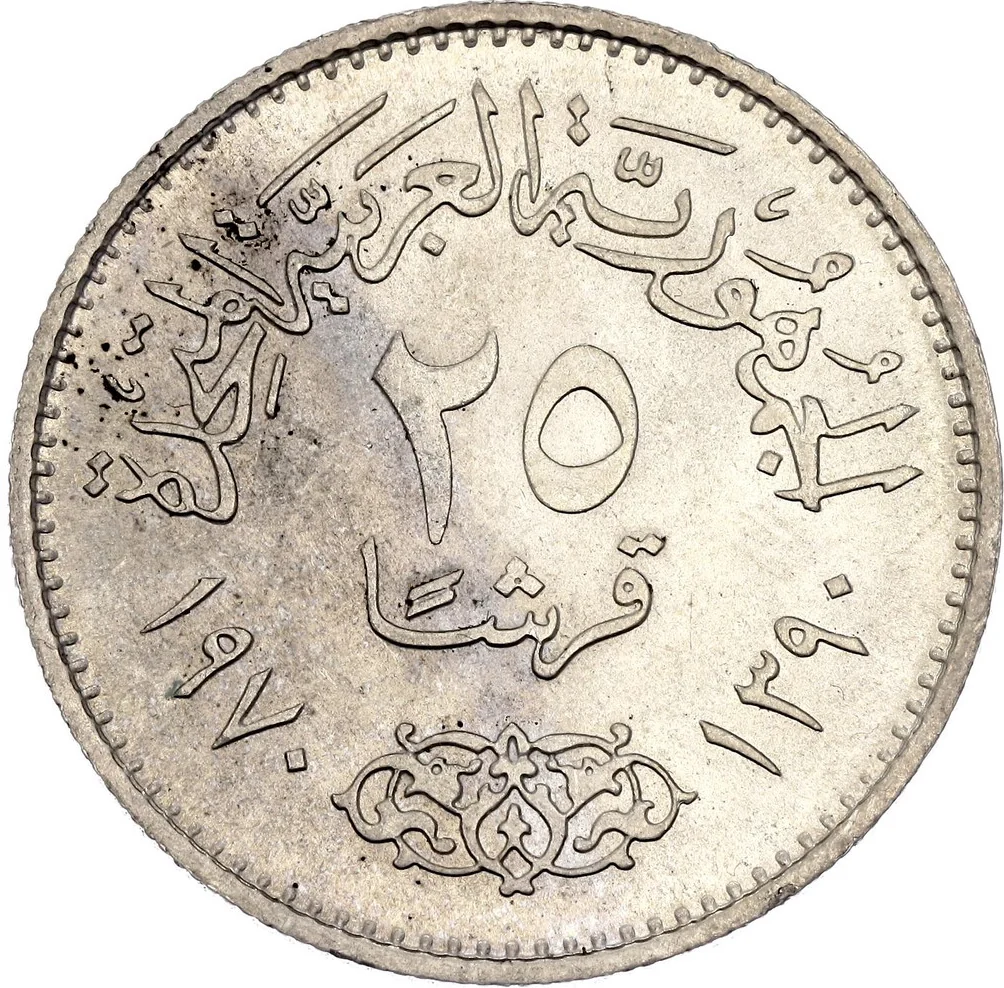
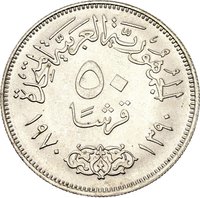
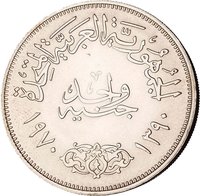
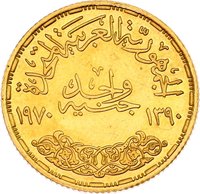
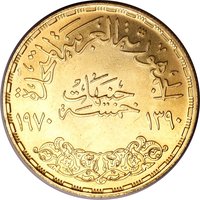
Denomination splits dates, legend atop.
Inscription:
الجمهورية العربية المتحدة
٢٥
قرشا
١٣٩٠ ١٩٧٠
٢٥
قرشا
١٣٩٠ ١٩٧٠
Translation:
United Arab Republic
25
Piastres
1390 1970
25
Piastres
1390 1970
Language: Arabic
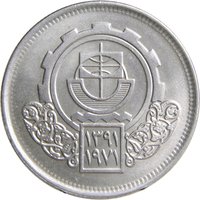
Reverse
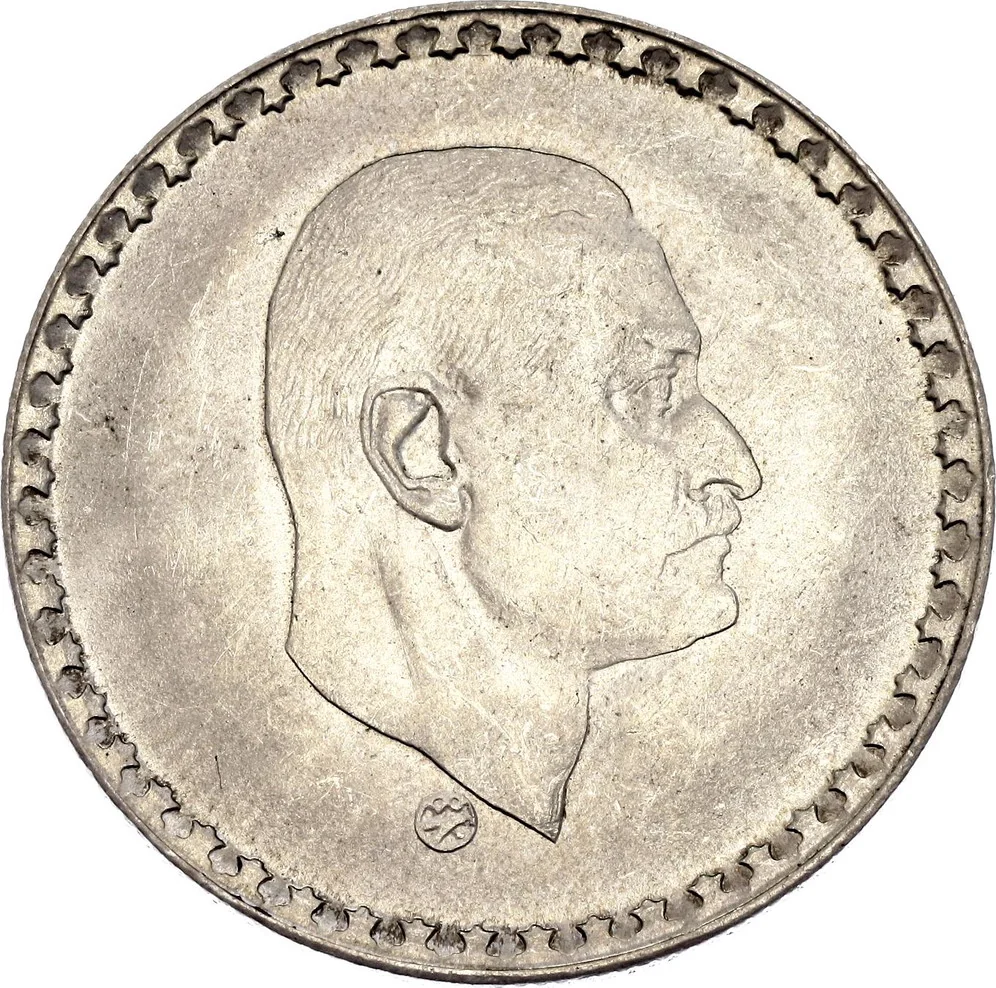
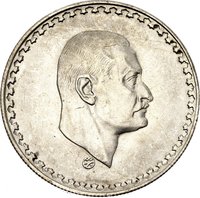
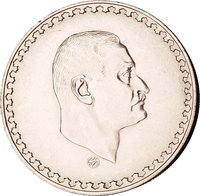
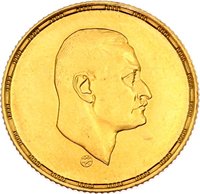
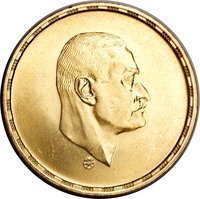
Description:
President Nasser's head.
Edge
Reeded
Mints
| Name | Mark |
|---|---|
| Egyptian Mint Authority | — |
Mintings
| Year | Mint Mark | Mintage | Quality | Collection |
|---|---|---|---|---|
| 1970 | — | 700,000 |
Historical background
In 1970, Egypt's currency situation was characterized by a complex and strained system, heavily burdened by the legacies of war and socialist economic policies. The country operated with a fixed official exchange rate for the Egyptian pound (EGP), which was pegged to the British pound and later the U.S. dollar at an overvalued level. This official rate, however, was accessible only for government-sanctioned imports and transactions, creating a severe shortage of foreign currency for other needs. Consequently, a vibrant and necessary black market for hard currency flourished, where the pound traded at a significantly depreciated value, reflecting its true market weakness and the country's underlying economic pressures.
The economic backdrop was dominated by the immense costs of the ongoing War of Attrition with Israel (1967-1970), which followed the devastating Six-Day War. These conflicts drained foreign reserves, diverted resources from development, and crippled key revenue sources like Suez Canal tolls and Sinai oil fields. President Gamal Abdel Nasser's state-led, import-substitution industrialization model, while achieving some social gains, had resulted in a large, inefficient public sector, a growing budget deficit, and a heavy reliance on imports for basic goods and machinery. This combination of military expenditure and structural economic weaknesses led to chronic trade deficits and mounting external debt.
Therefore, the currency regime of 1970 was fundamentally unsustainable. The gap between the official and black-market rates distorted the economy, encouraged corruption, and discouraged foreign investment and remittances through formal channels. While a major currency devaluation and a shift toward economic liberalization (Infitah) would be initiated later in the decade under President Anwar Sadat, the situation in 1970 represented the peak of these pre-reform pressures. The overvalued pound acted as a symbol of an economy under severe strain, setting the stage for the profound economic policy shifts that would define Egypt in the 1970s.
The economic backdrop was dominated by the immense costs of the ongoing War of Attrition with Israel (1967-1970), which followed the devastating Six-Day War. These conflicts drained foreign reserves, diverted resources from development, and crippled key revenue sources like Suez Canal tolls and Sinai oil fields. President Gamal Abdel Nasser's state-led, import-substitution industrialization model, while achieving some social gains, had resulted in a large, inefficient public sector, a growing budget deficit, and a heavy reliance on imports for basic goods and machinery. This combination of military expenditure and structural economic weaknesses led to chronic trade deficits and mounting external debt.
Therefore, the currency regime of 1970 was fundamentally unsustainable. The gap between the official and black-market rates distorted the economy, encouraged corruption, and discouraged foreign investment and remittances through formal channels. While a major currency devaluation and a shift toward economic liberalization (Infitah) would be initiated later in the decade under President Anwar Sadat, the situation in 1970 represented the peak of these pre-reform pressures. The overvalued pound acted as a symbol of an economy under severe strain, setting the stage for the profound economic policy shifts that would define Egypt in the 1970s.
Series: President Nasser (1970)
🌱 Common