

25 pennia – Finland
Add to wishlist
Finland
Context
Years: 1865–1917
Issuer: Finland
Ruler: Alexander II
Currency:
(1860—1963)
Demonetization: 1917
Total mintage: 27,335,200
Material
References
KM: #
Numista: #21085
Value
Bullion value: $2.32
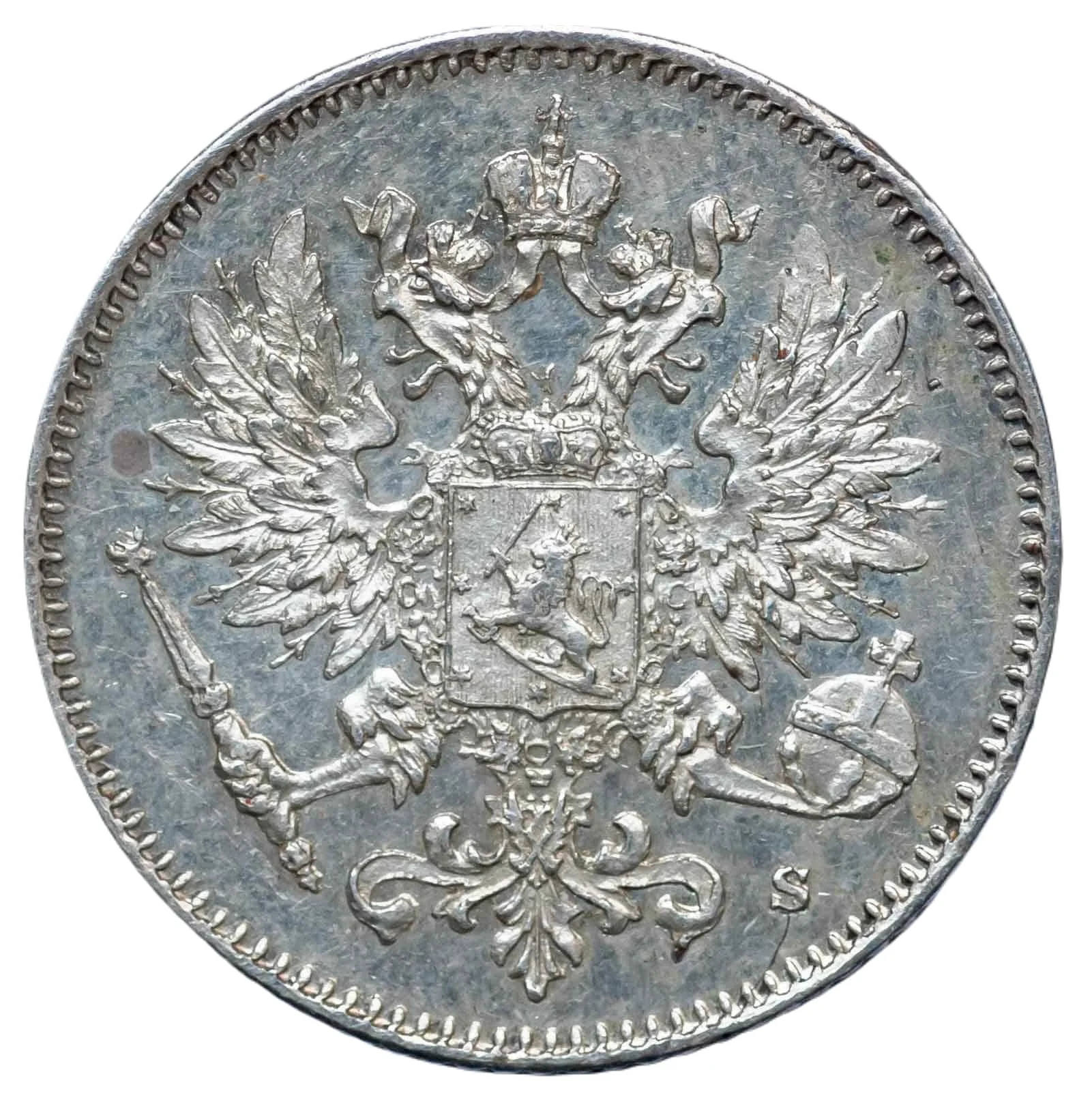
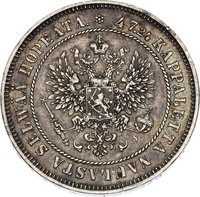
Obverse
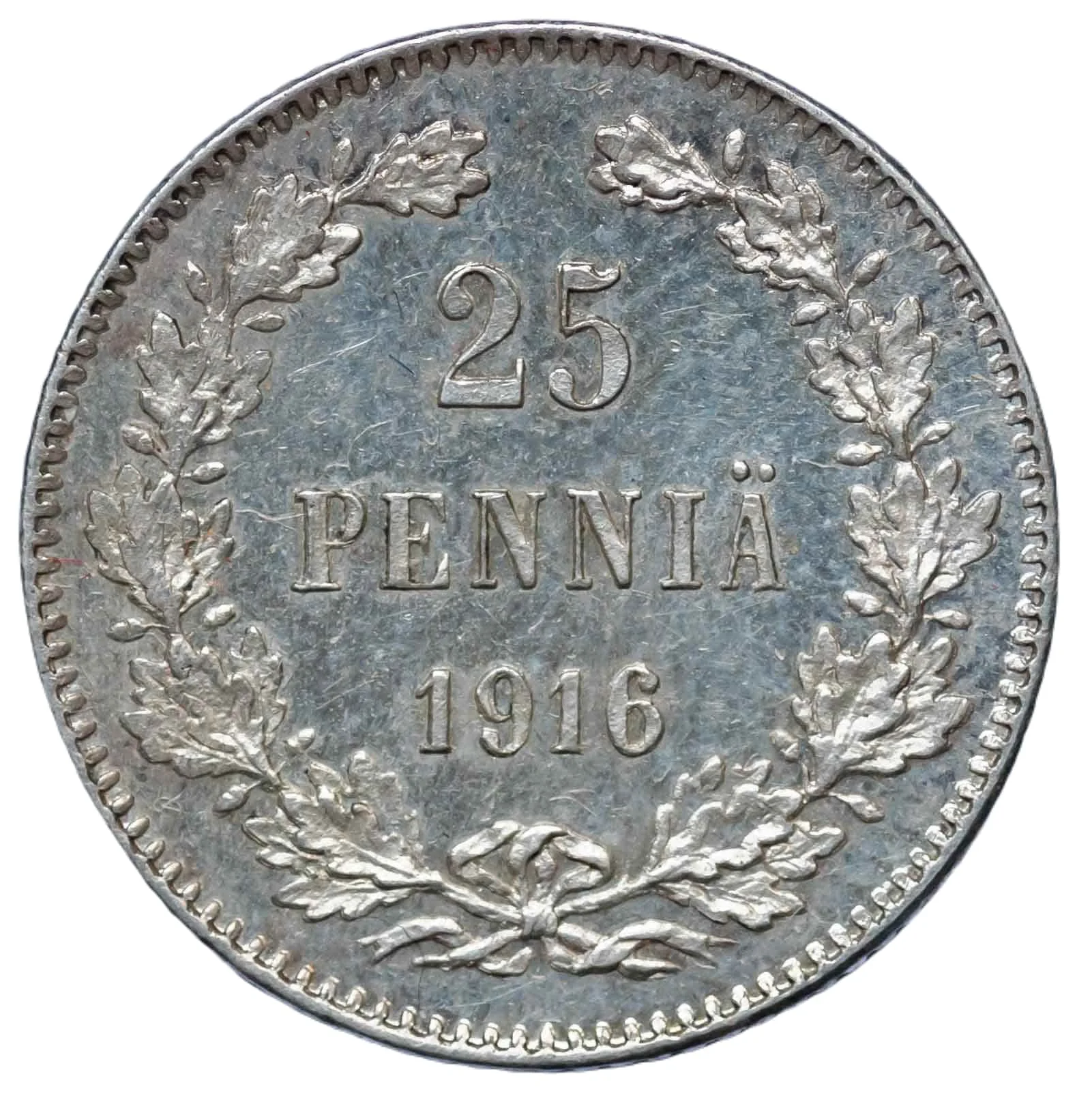
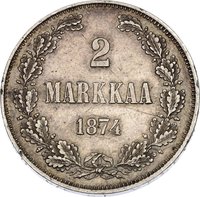
Reverse
Edge
Reeded
Categories
| Animal> Bird |
| Symbol> Crown |
| Symbols> Coat of Arms |
| Symbol> Double-headed eagle |
| Object> Globus cruciger |
| Symbol> Wreath |
Mints
| Name | Mark |
|---|---|
| Mint of Finland | — |
Mintings
| Year | Mint Mark | Mintage | Quality | Collection |
|---|---|---|---|---|
| 1865 | — | 705,000 | ||
| 1866 | — | 810,000 | ||
| 1867 | — | 400,000 | ||
| 1868 | — | 136,000 | ||
| 1869 | — | 264,000 | ||
| 1871 | — | 150,000 | ||
| 1872 | — | 400,000 | ||
| 1873 | — | 800,000 | ||
| 1875 | — | 810,000 | ||
| 1876 | — | 1,200 | ||
| 1889 | — | 404,000 | ||
| 1890 | — | 800,000 | ||
| 1891 | — | 280,000 | ||
| 1894 | — | 820,000 | ||
| 1897 | — | 450,000 | ||
| 1898 | — | 444,000 | ||
| 1899 | — | 312,000 | ||
| 1901 | — | 993,000 | ||
| 1902 | — | 210,000 | ||
| 1906 | — | 281,000 | ||
| 1907 | — | 590,000 | ||
| 1908 | — | 340,000 | ||
| 1909 | — | 1,099,000 | ||
| 1910 | — | 392,000 | ||
| 1913 | — | 832,000 | ||
| 1915 | — | 2,400,000 | ||
| 1916 | — | 6,392,000 | ||
| 1917 | — | 5,820,000 |
Historical background
In 1865, Finland stood at a pivotal monetary crossroads. As an autonomous Grand Duchy within the Russian Empire, it operated under a complex dual-currency system inherited from its earlier time as part of Sweden. The official currency was the Russian silver ruble, but the Swedish riksdaler riksmynt, divided into 100 skillingars, remained the dominant unit for everyday accounting and commerce. This created significant practical difficulties, as exchange rates fluctuated and calculations were cumbersome, hindering trade and economic planning.
The year 1865 marked a decisive break with this past through the introduction of Finland's own national currency, the Markka (Finnish) or Mark (Swedish). Established by the decree of Emperor Alexander II on April 4th, the reform was a landmark assertion of Finland's economic autonomy. The new decimal system was simple and modern: one markka was divided into 100 penniä. It was initially placed on a silver standard, pegging its value to the international value of silver, which provided stability and aimed to integrate Finland into the wider European monetary system.
This reform was more than a financial technicality; it was a symbol of emerging national identity and a catalyst for economic modernization. The Bank of Finland, which had been founded in 1811, began issuing the first Finnish markka banknotes and coins, physically manifesting the Grand Duchy's separate financial administration. While the transition took time, the 1865 reform successfully unified the monetary landscape, providing the stable and singular currency necessary to support the industrialization and growing international trade that would define Finland's late 19th century.
The year 1865 marked a decisive break with this past through the introduction of Finland's own national currency, the Markka (Finnish) or Mark (Swedish). Established by the decree of Emperor Alexander II on April 4th, the reform was a landmark assertion of Finland's economic autonomy. The new decimal system was simple and modern: one markka was divided into 100 penniä. It was initially placed on a silver standard, pegging its value to the international value of silver, which provided stability and aimed to integrate Finland into the wider European monetary system.
This reform was more than a financial technicality; it was a symbol of emerging national identity and a catalyst for economic modernization. The Bank of Finland, which had been founded in 1811, began issuing the first Finnish markka banknotes and coins, physically manifesting the Grand Duchy's separate financial administration. While the transition took time, the 1865 reform successfully unified the monetary landscape, providing the stable and singular currency necessary to support the industrialization and growing international trade that would define Finland's late 19th century.
Series: 1865 Finland circulation coins
🌱 Very Common