

1 shilling – Cyprus
Add to wishlist
Cyprus
Context
Material
Diameter: 23.7 mm
Weight: 5.65 g
Thickness: 1.8 mm
Shape: Round
Composition: Copper-nickel
Technique: Milled
Alignment: Medal alignment
flip
References
KM: #
Numista: #21011
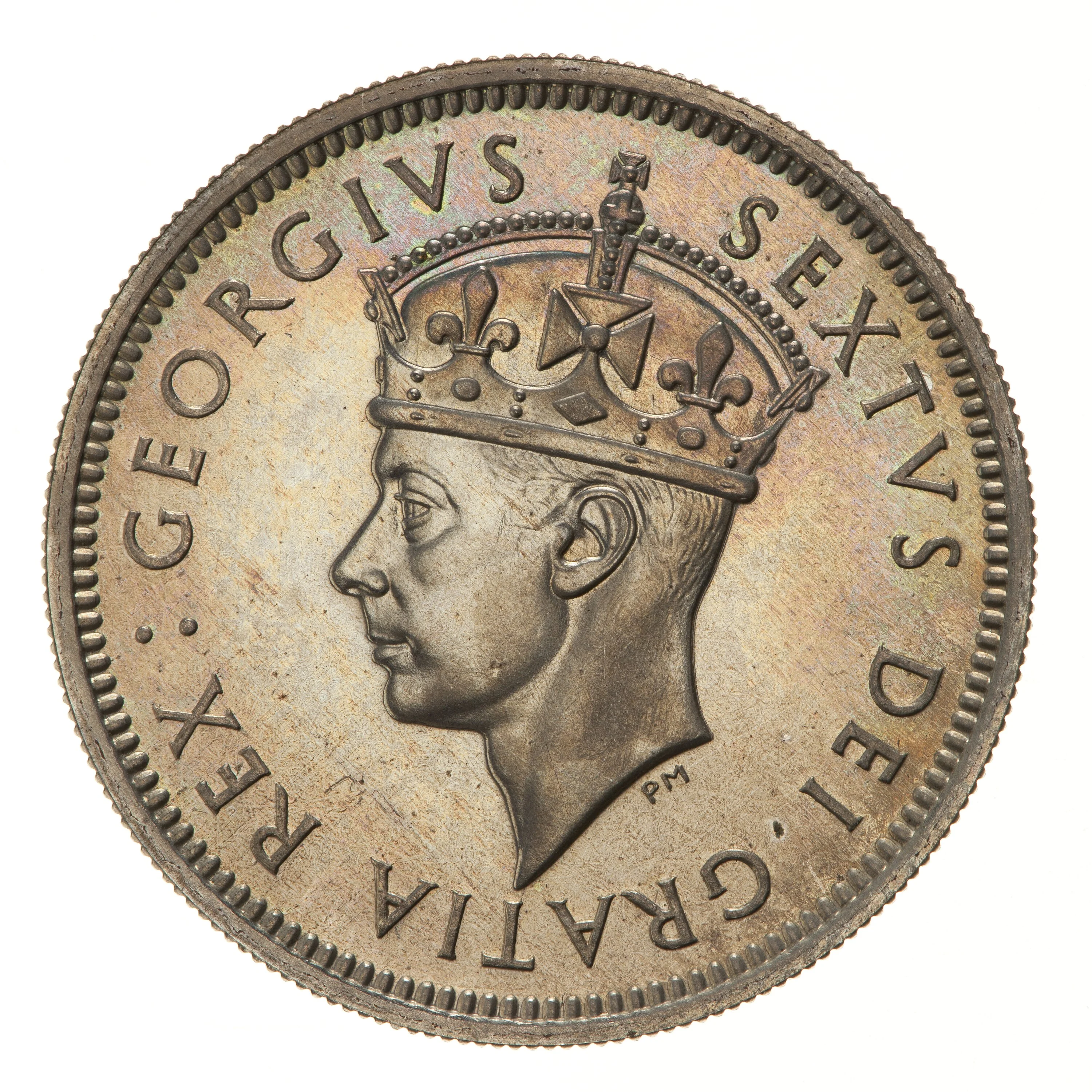
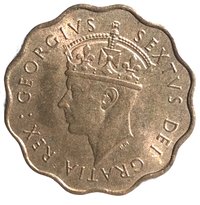
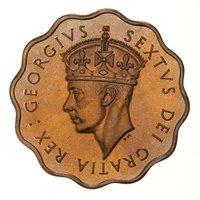
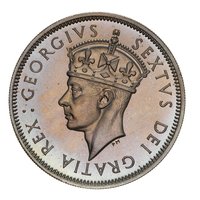
Obverse
Description:
Crowned left-facing head. Below, P.M. (Percy Metcalfe) in relief, surrounded by a circular inscription.
Inscription:
GEORGIVS SEXTVS DEI GRATIA REX :
P.M.
P.M.
Translation:
GEORGE THE SIXTH BY THE GRACE OF GOD KING:
DEFENDER OF THE FAITH.
DEFENDER OF THE FAITH.
Script: Latin
Language: Latin
Engraver: Percy Metcalfe
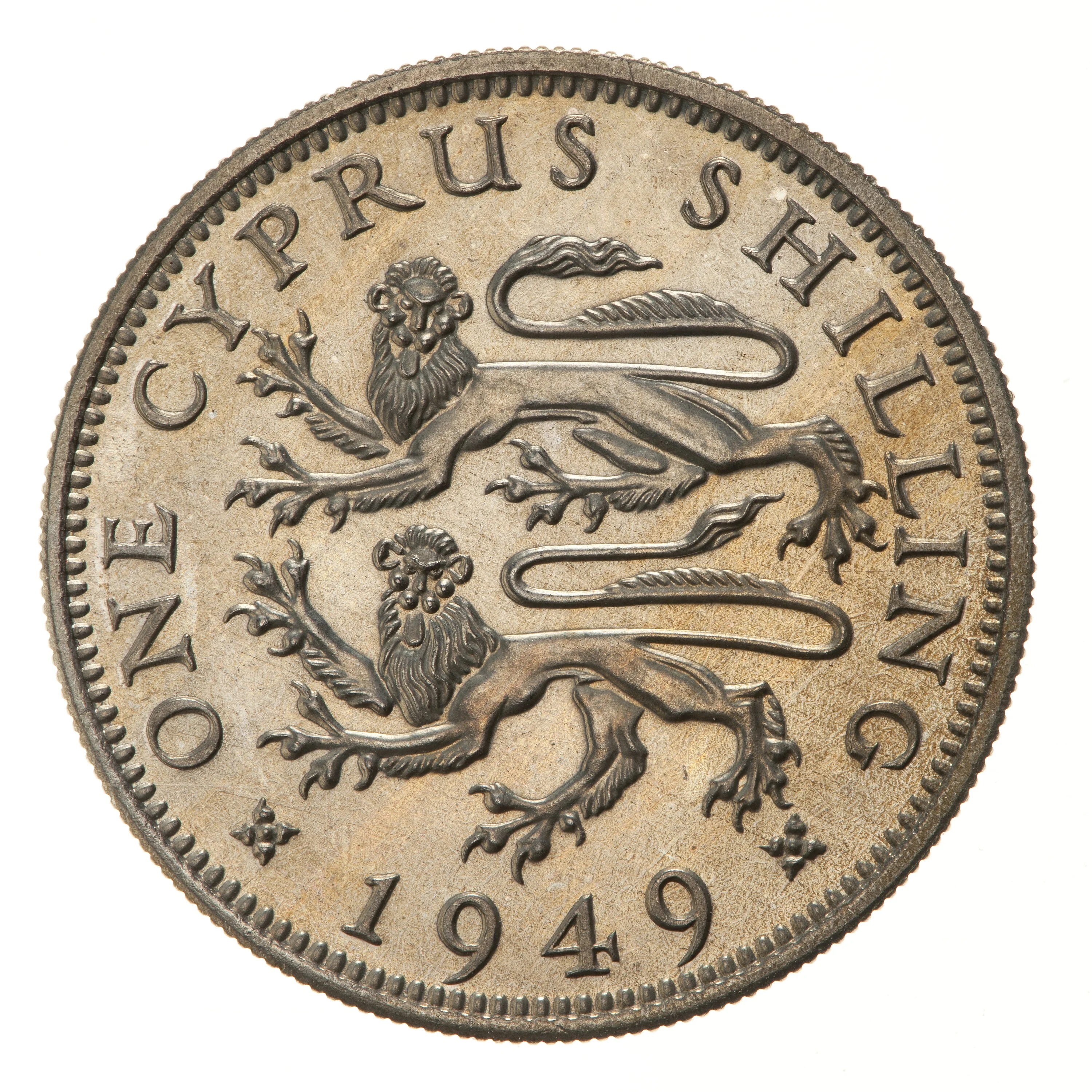
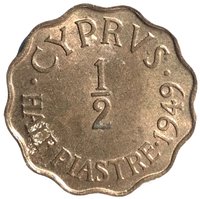
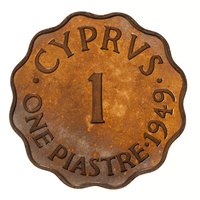
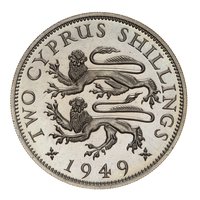
Reverse
Description:
Two heraldic lions with "K.G." in relief below and a circular inscription.
Inscription:
ONE CYPRUS SHILLING
1949
K.G.
1949
K.G.
Script: Latin
Engraver: George Kruger Gray
Edge
Reeded
Mints
| Name | Mark |
|---|---|
| Royal Mint (Tower Hill) | — |
Mintings
| Year | Mint Mark | Mintage | Quality | Collection |
|---|---|---|---|---|
| 1949 | — | 1,440,000 | ||
| 1949 | — | — | Proof |
Historical background
In 1949, Cyprus operated under a colonial currency system as a British Crown Colony. The official currency was the Cypriot pound (C£), which was pegged at par to the British pound sterling (GBP). This arrangement meant the island's monetary policy was entirely directed by the British government and the Bank of England, with local currency issued by the Cyprus Currency Board established in 1927. The Currency Board system ensured full convertibility with sterling, tying Cyprus's economic fortunes directly to Britain's.
The post-World War II period saw a managed economy with exchange controls still in place, a common feature across the sterling area to which Cyprus belonged. This bloc aimed to conserve dollar reserves and stabilize member currencies. For Cyprus, this meant transactions outside the sterling area, particularly with the United States, were restricted and required approval. The economy was still largely agrarian and recovering from the war's disruptions, with a focus on reconstruction and addressing social needs.
There was no movement toward a national independent currency in 1949, as the political campaign for Enosis (union with Greece) had not yet escalated into the armed conflict of the 1950s. The currency situation was stable but reflective of colonial dependency, serving British strategic and economic interests in the Eastern Mediterranean. The Cypriot pound would remain pegged to sterling for decades, even after independence in 1960, underscoring the enduring financial linkages established during colonial rule.
The post-World War II period saw a managed economy with exchange controls still in place, a common feature across the sterling area to which Cyprus belonged. This bloc aimed to conserve dollar reserves and stabilize member currencies. For Cyprus, this meant transactions outside the sterling area, particularly with the United States, were restricted and required approval. The economy was still largely agrarian and recovering from the war's disruptions, with a focus on reconstruction and addressing social needs.
There was no movement toward a national independent currency in 1949, as the political campaign for Enosis (union with Greece) had not yet escalated into the armed conflict of the 1950s. The currency situation was stable but reflective of colonial dependency, serving British strategic and economic interests in the Eastern Mediterranean. The Cypriot pound would remain pegged to sterling for decades, even after independence in 1960, underscoring the enduring financial linkages established during colonial rule.
Series: 1949 Cyprus circulation coins
🌱 Fairly Common