

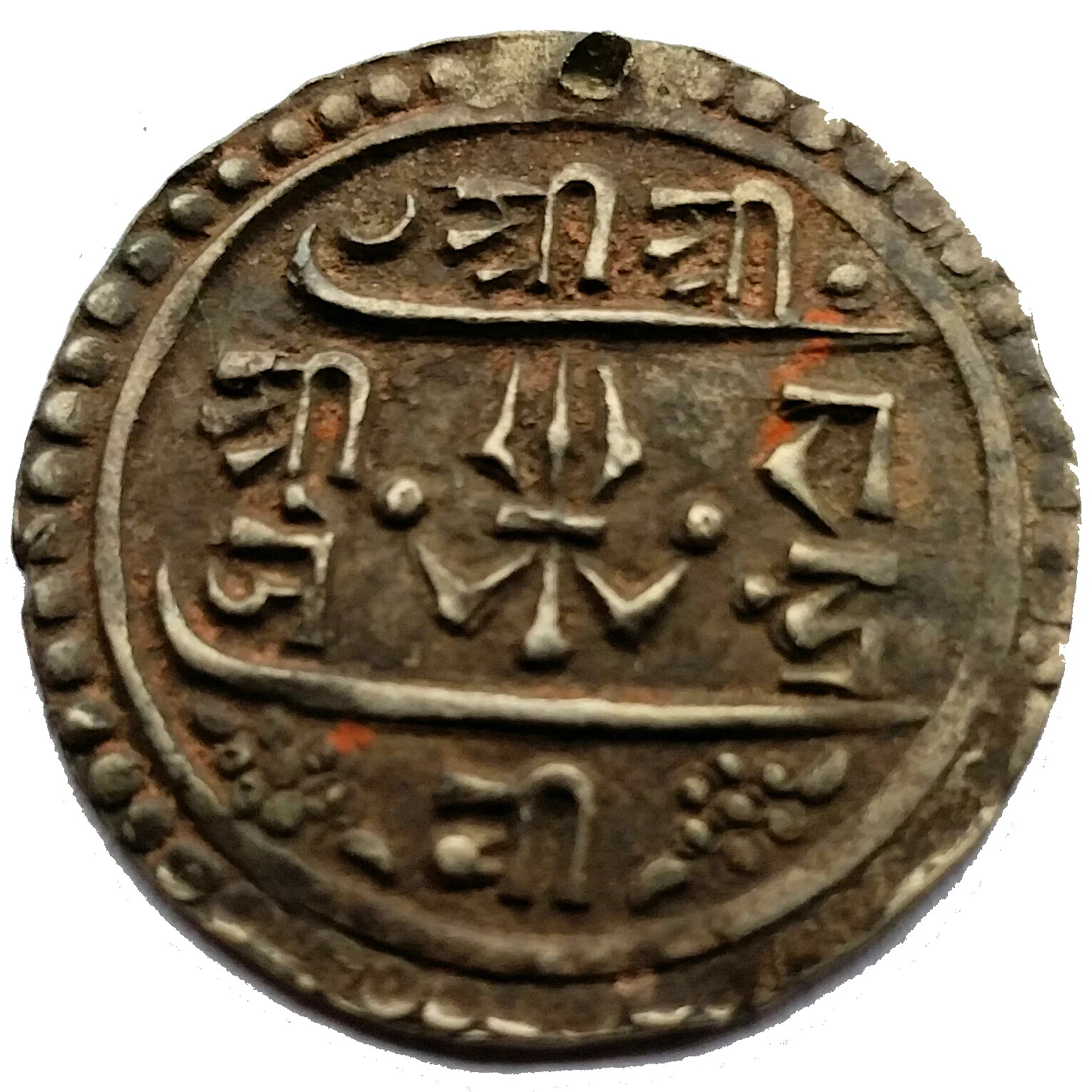
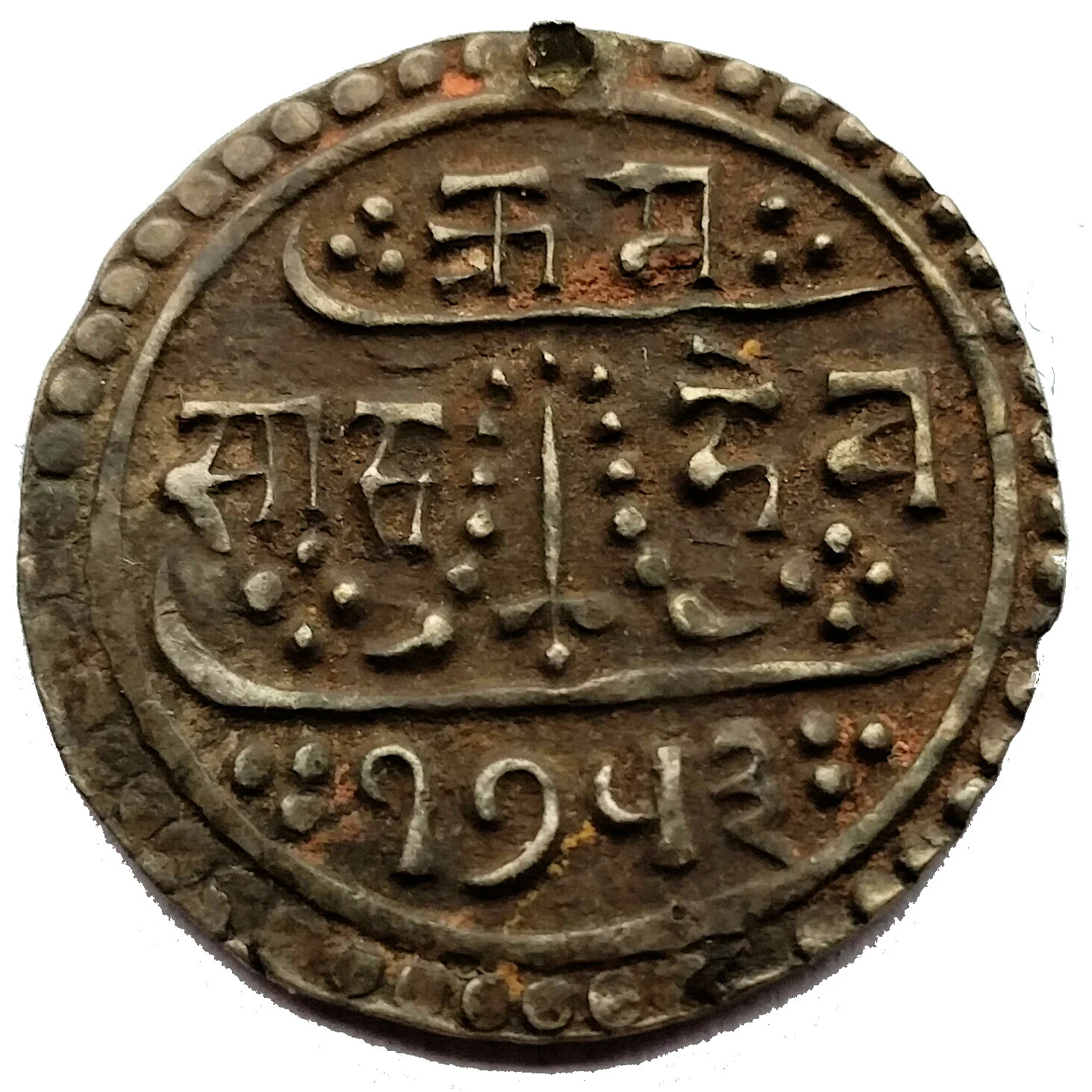
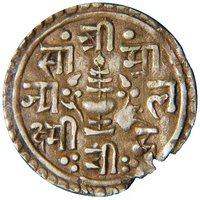
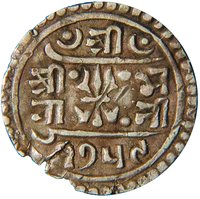
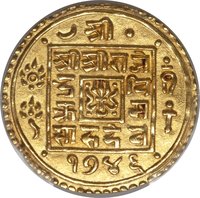
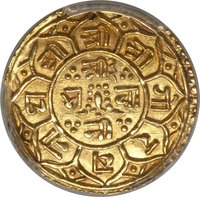
½ Mohar – Nepal
Nepal
Context

Material
References
KM: #Click to copy to clipboard564
Numista: #101711
Value
Bullion value: $8.11
Obverse
Reverse
Description:
Date (e.g.,
Edge
Mintings
| Year | Mint Mark | Mintage | Quality | Collection |
|---|---|---|---|---|
| 1824 | — | — | ||
| 1831 | — | — | ||
| 1833 | — | — | ||
| 1835 | — | — | ||
| 1837 | — | — | ||
| 1840 | — | — | ||
| 1842 | — | — | ||
| 1843 | — | — | ||
| 1844 | — | — |
Historical background
In 1824, Nepal's currency situation was characterized by a complex and fragmented system, heavily influenced by its recent military conflicts and regional trade dynamics. Following the costly Anglo-Nepalese War (1814-1816) and the subsequent Treaty of Sugauli, Nepal was forced to cede significant territories and accept a British Resident in Kathmandu. The war reparations, though later waived, initially strained the state's finances. The monetary system was not unified; the state minted silver Mohars and copper Dams in Kathmandu, but various semi-autonomous principalities within the Kathmandu Valley and across the hill regions also issued their own coinage, leading to a lack of standardization.
The primary currency was silver, with the Mohar as the key unit. However, the value and purity of coins varied, and the economy also relied heavily on barter, especially in rural areas beyond the capital. Crucially, the period saw a severe shortage of silver, a direct result of the war's economic drain and the loss of fertile Terai lands that had provided agricultural revenue. This scarcity hampered the state's ability to mint sufficient quantities of coinage, affecting trade and taxation.
Furthermore, the monetary landscape was shaped by robust trans-Himalayan trade with Tibet. Newari merchants in the Kathmandu Valley played a central role, using both Nepalese and Tibetan coinage (like the Tangka) in commerce. This trade, along with the circulation of Indian rupees from the south, meant that multiple currencies coexisted. The state's focus in 1824 was on internal consolidation under the Rana regime, which would soon move to gradually formalize and centralize the monetary system to stabilize the economy and strengthen political control.
The primary currency was silver, with the Mohar as the key unit. However, the value and purity of coins varied, and the economy also relied heavily on barter, especially in rural areas beyond the capital. Crucially, the period saw a severe shortage of silver, a direct result of the war's economic drain and the loss of fertile Terai lands that had provided agricultural revenue. This scarcity hampered the state's ability to mint sufficient quantities of coinage, affecting trade and taxation.
Furthermore, the monetary landscape was shaped by robust trans-Himalayan trade with Tibet. Newari merchants in the Kathmandu Valley played a central role, using both Nepalese and Tibetan coinage (like the Tangka) in commerce. This trade, along with the circulation of Indian rupees from the south, meant that multiple currencies coexisted. The state's focus in 1824 was on internal consolidation under the Rana regime, which would soon move to gradually formalize and centralize the monetary system to stabilize the economy and strengthen political control.
💎 Extremely Rare