

25 cents – Ceylon
Add to wishlist
Sri Lanka
Context
Years: 1902–1910
Country: Sri Lanka
Issuer: Ceylon
Ruler: Edward VII
Currency:
(1871—1972)
Demonetized: Yes
Total mintage: 2,520,000
Material
References
KM: #
Numista: #20969
Value
Bullion value: $5.85
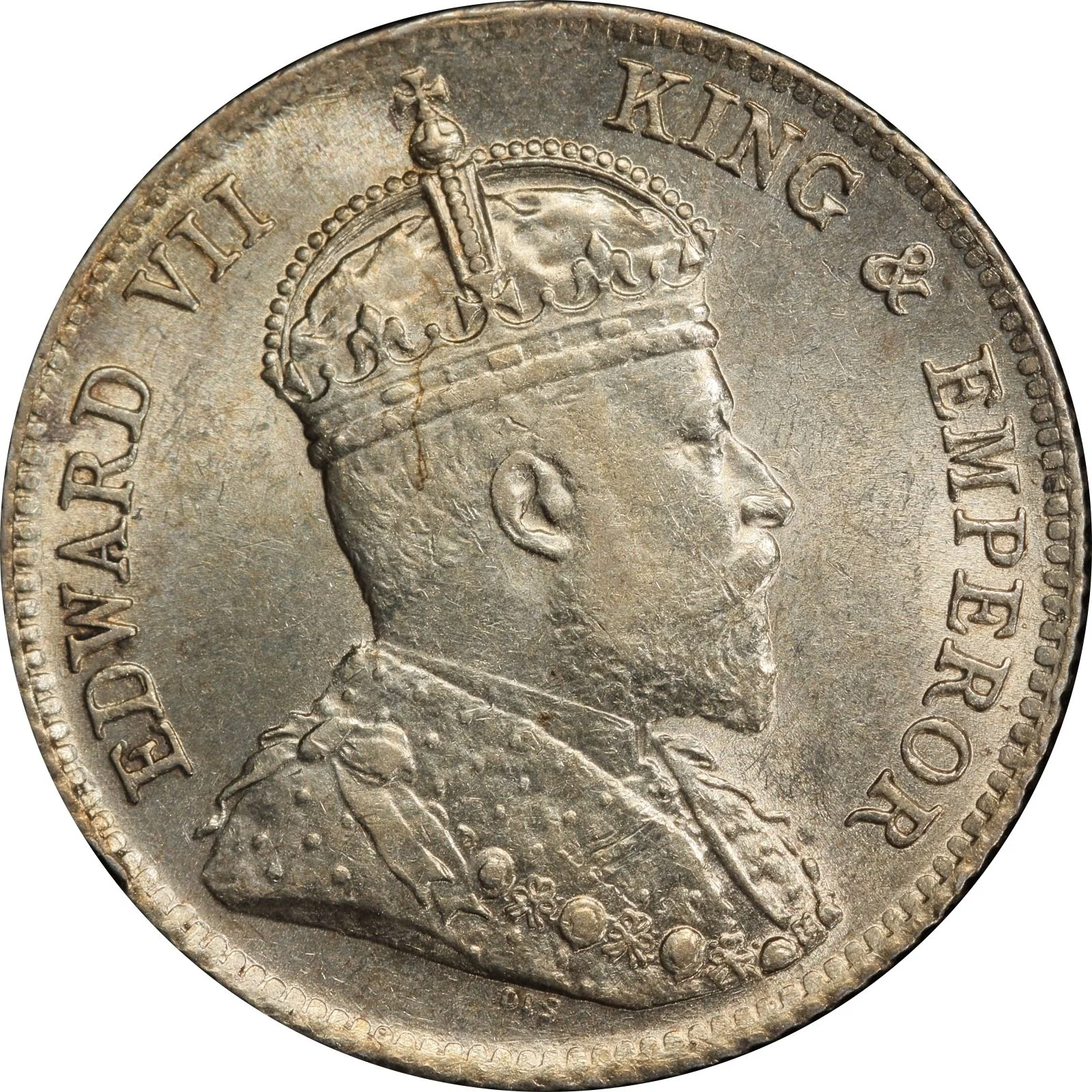
Obverse
Description:
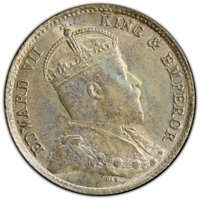
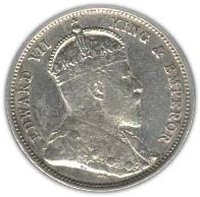
Right-facing crowned bust.
Inscription:
EDWARD VII KING & EMPEROR
Translation:
EDWARD VII KING & EMPEROR
Engraver: George William de Saulles
Reverse
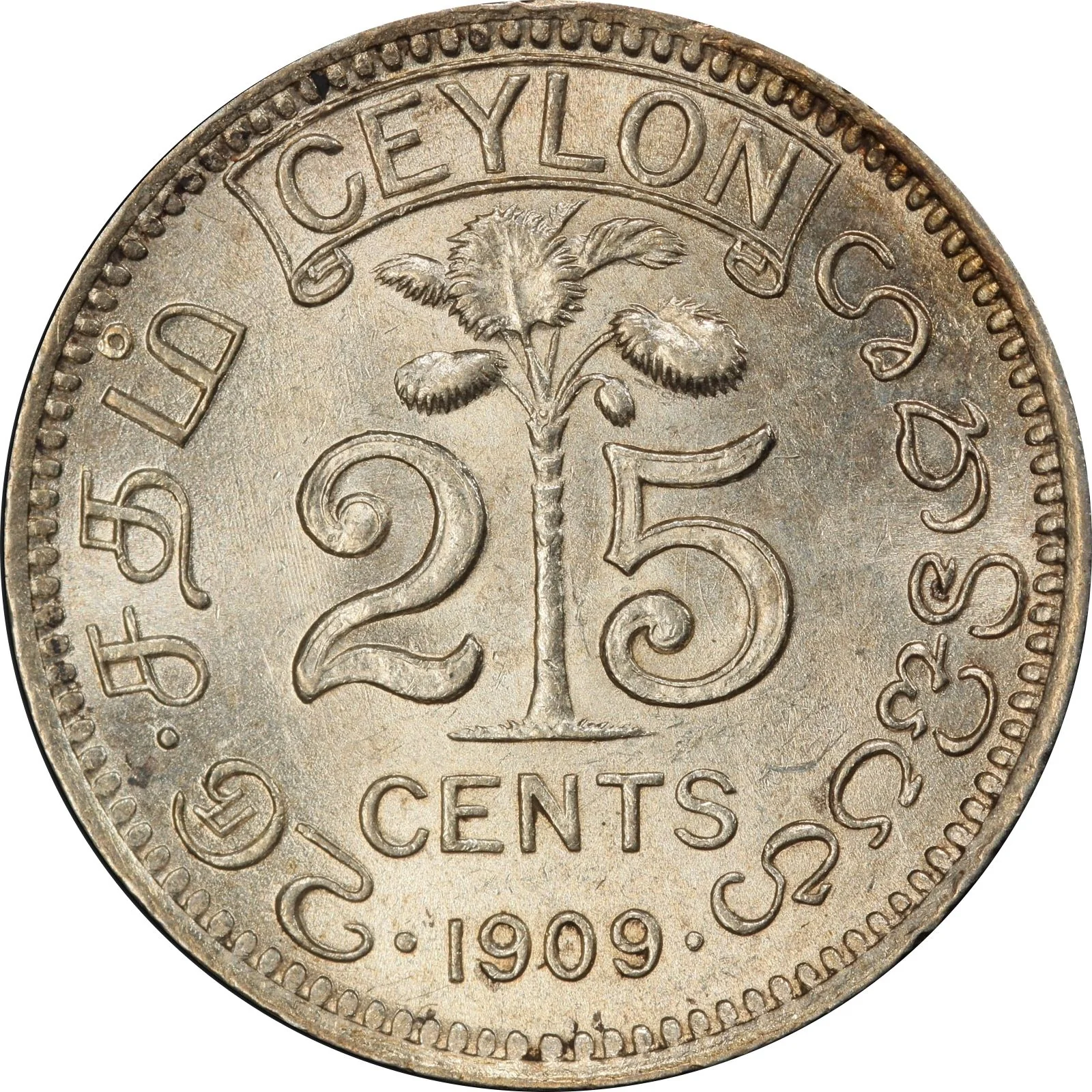
Description:
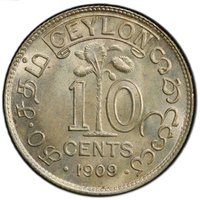
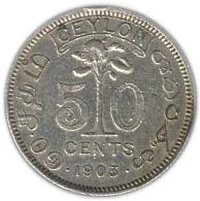
Denomination
Inscription:
CEYLON
25
CENTS
௨௫ சதம்.
ශත චිසිපත
·1909·
25
CENTS
௨௫ சதம்.
ශත චිසිපත
·1909·
Translation:
CEYLON
25
CENTS
25 Cents.
Twenty Five Cents
·1909·
25
CENTS
25 Cents.
Twenty Five Cents
·1909·
Engraver: Leonard Charles Wyon
Edge
Reeded
Mints
| Name | Mark |
|---|---|
| Royal Mint (Tower Hill) | — |
Mintings
| Year | Mint Mark | Mintage | Quality | Collection |
|---|---|---|---|---|
| 1902 | — | 400,000 | ||
| 1902 | — | — | Proof | |
| 1903 | — | — | Proof | |
| 1903 | — | 400,000 | ||
| 1907 | — | 120,000 | ||
| 1908 | — | 400,000 | ||
| 1909 | — | 400,000 | ||
| 1910 | — | 800,000 |
Historical background
In 1902, Ceylon operated under a currency board system, a colonial monetary framework designed to ensure strict fiscal discipline and stability by pegging the island's currency directly to sterling. The official unit of account was the Ceylon Rupee, which was not issued by a central bank but was instead fully backed by reserves of British gold sovereigns and Indian rupees held in London and Colombo. This system meant that the local currency in circulation—notes issued by the Currency Commissioners and subsidiary silver and copper coins—could be exchanged on demand at a fixed rate, creating a highly credible and stable exchange regime essential for colonial trade and remittances.
This monetary arrangement, however, placed Ceylon's economy in a dependent position within the British Empire. The island's money supply was effectively determined by its balance of payments; a trade surplus with Britain increased the sterling reserve and allowed for more local currency issuance, while a deficit contracted it. Consequently, domestic credit conditions and economic activity were heavily influenced by external factors, particularly the volatile prices of Ceylon's primary exports: tea, rubber, and coconut products. The system prioritized the security of British capital and the smooth repatriation of plantation profits over the potential need for a flexible monetary policy to address local economic fluctuations.
By the turn of the century, this rigid structure was increasingly scrutinized. While it provided stability and low inflation, it also limited the government's ability to respond to economic downturns or fund development projects through monetary means. The debate, which would intensify in subsequent decades, centred on whether this colonial sterling-exchange standard served Ceylon's own developmental interests or merely entrenched its role as a commodity-producing periphery within the imperial economy. Thus, in 1902, the currency situation was one of imposed stability, functioning efficiently for imperial commerce but laying the groundwork for future nationalist calls for financial autonomy.
This monetary arrangement, however, placed Ceylon's economy in a dependent position within the British Empire. The island's money supply was effectively determined by its balance of payments; a trade surplus with Britain increased the sterling reserve and allowed for more local currency issuance, while a deficit contracted it. Consequently, domestic credit conditions and economic activity were heavily influenced by external factors, particularly the volatile prices of Ceylon's primary exports: tea, rubber, and coconut products. The system prioritized the security of British capital and the smooth repatriation of plantation profits over the potential need for a flexible monetary policy to address local economic fluctuations.
By the turn of the century, this rigid structure was increasingly scrutinized. While it provided stability and low inflation, it also limited the government's ability to respond to economic downturns or fund development projects through monetary means. The debate, which would intensify in subsequent decades, centred on whether this colonial sterling-exchange standard served Ceylon's own developmental interests or merely entrenched its role as a commodity-producing periphery within the imperial economy. Thus, in 1902, the currency situation was one of imposed stability, functioning efficiently for imperial commerce but laying the groundwork for future nationalist calls for financial autonomy.
🌱 Fairly Common